
Executive Summary
Since Russia’s invasion in 2022, Bitcoin has already demonstrated its value to Ukraine. In the critical early weeks, permissionless cryptocurrency donations, including roughly 20% in Bitcoin, provided timely liquidity. When traditional payment channels lagged, digital assets like Bitcoin provided relief, delivering around $220 million to government and charity wallets. Now, as the conflict enters its fifth year with signs of a potential ceasefire sometime before year six, Ukraine faces the immense challenge of rebuilding while preparing for future resilience. Bitcoin, particularly through mining, offers a practical and innovative tool to accelerate recovery without relying solely on traditional aid.
Energy lies at the heart of reconstruction. Russian strikes have slashed Ukraine’s dispatchable capacity from 36–38 GW pre-war to as low as 14 GW during peak winter demand, destroying much of the thermal and hydro infrastructure while leaving nuclear plants stranded due to damaged transmission. Distributed energy resources (DER), which are small-scale generation devices, have added temporary resilience, but they also complicate grid management and increase curtailment. Bitcoin mining data centers, however, provide an immediate, flexible buyer for this stranded baseload power, especially from the three operational nuclear power plants. Modular, behind-the-meter data centers can be deployed in 6–9 months with minimal bandwidth needs and no strict uptime requirements. Monetizing even 750 MW could generate roughly $1 billion over five years, creating new revenue to service reconstruction debt while employing veterans and requiring no direct capital outlay from the government.
The benefits of installing Bitcoin mining infrastructure extend beyond short-term relief. Bitcoin miners serve as ideal demand-response partners, helping balance the grid’s supply variability from DER assets and enabling more efficient baseload utilization. In the medium to long term, this flexibility supports Ukraine’s ambition to become a net energy exporter to Europe, putting a price floor on unsold power in day-ahead and intraday markets.
Bitcoin as an asset also unlocks novel financing and sovereignty. Payments for electricity can be received in USD, EUR, stablecoins, or Bitcoin itself, reducing FX risk. Integration with the U.S.-Ukraine Reconstruction Investment Fund (USURIF) and concepts like Bitcoin-backed “BitBonds” could lower borrowing costs while attracting capital interested in Bitcoin exposure. For trade, Bitcoin enables uncensorable, rapid settlement, vital for Ukraine’s growing defense tech exports. Finally, sovereign Bitcoin holdings could seed a “Ukrainian Heritage Bitcoin Fund,” blending Norway’s model of national wealth with targeted citizen accounts akin to the Trump Accounts Program for youth, veterans, and families to rebuild demographics and public trust through transparent, on-chain governance.
Bitcoin will not rebuild Ukraine alone, but its unique properties of energy flexibility, permissionless transfer, and growing global liquidity position it as a powerful multiplier for innovation, resilience, and optimism. By embracing Bitcoin mining and strategic holdings now, Ukraine can begin building towards a sovereign, resilient, and energy-abundant future.
Introduction
Since the Russian invasion in February 2022, the main priority of the Ukrainian Government has been survival. Bitcoin played a small but notable role in aiding Ukraine’s efforts. In the year following the invasion, Ukrainian government and charity cryptocurrency wallets received around $220 million in donations, with approximately 20% of that amount given in Bitcoin.1 The store-of-value benefits of one digital asset over another were irrelevant given that all the funds were liquidated to contribute to defensive and humanitarian efforts, but the permissionless transfer properties associated with blockchain technology allowed the global community to immediately come to Ukraine’s aid. The amount of cryptocurrency donations would be eventually overshadowed by state-directed aid and donations through traditional financial rails. But the timeliness of digital asset donations was key, given that roughly 80% of the cryptocurrency donations came in the 40 days after hostilities began.2
The war is now in its fifth year, but there are signs that the inertia could be headed for a long-term ceasefire or armistice. The Ukrainian military has utilized innovative drone technology and tactics to penetrate deeper into Russian territory, even striking key targets in Moscow.3 This year’s Russian spring offensive has resulted in little gain, despite incredible costs of manpower.4 Several prominent Russian social media influencers normally loyal to the Kremlin have begun publicly citing strains on the Russian population, like the faltering economy and stress from the war.5 In late May 2026, even Putin said, “The situation on the battlefield is developing in such a way that it gives us the right to say the situation is nearing its end.”6
If a cessation of hostilities does occur, the daunting task of rebuilding the country would await. The Ukrainian Government would have to boost and restore productivity while also considering the prospect of a future additional attack. More than anything, conditions must be set for the Ukrainian people to return to everyday life and flourish. Can Bitcoin contribute to this goal?
Targeting Energy
Nothing is more correlated to the productivity of a nation than quantity and reliability of energy. This is precisely why the Russian military has relentlessly targeted the generation, transmission, and distribution infrastructure of the Ukrainian grid. At the beginning of 2022, the grid had between 36–38 gigawatts (GW) of electric capacity.7 Today, the grid can dispatch at most 14 GW during winter peak demand.8 By early 2026, Russia had conducted over 2,500 missile, drone, and artillery strikes on the grid, with over 1,200 alone in 2025.9 Over 80% of the thermal generation facilities (coal and natural gas) and half of the hydroelectric plants have been damaged.10 Additionally, the Russians currently occupy Zaporizhzhia nuclear power plant, which creates an additional deficit of 6 GW against the pre-war capacity.
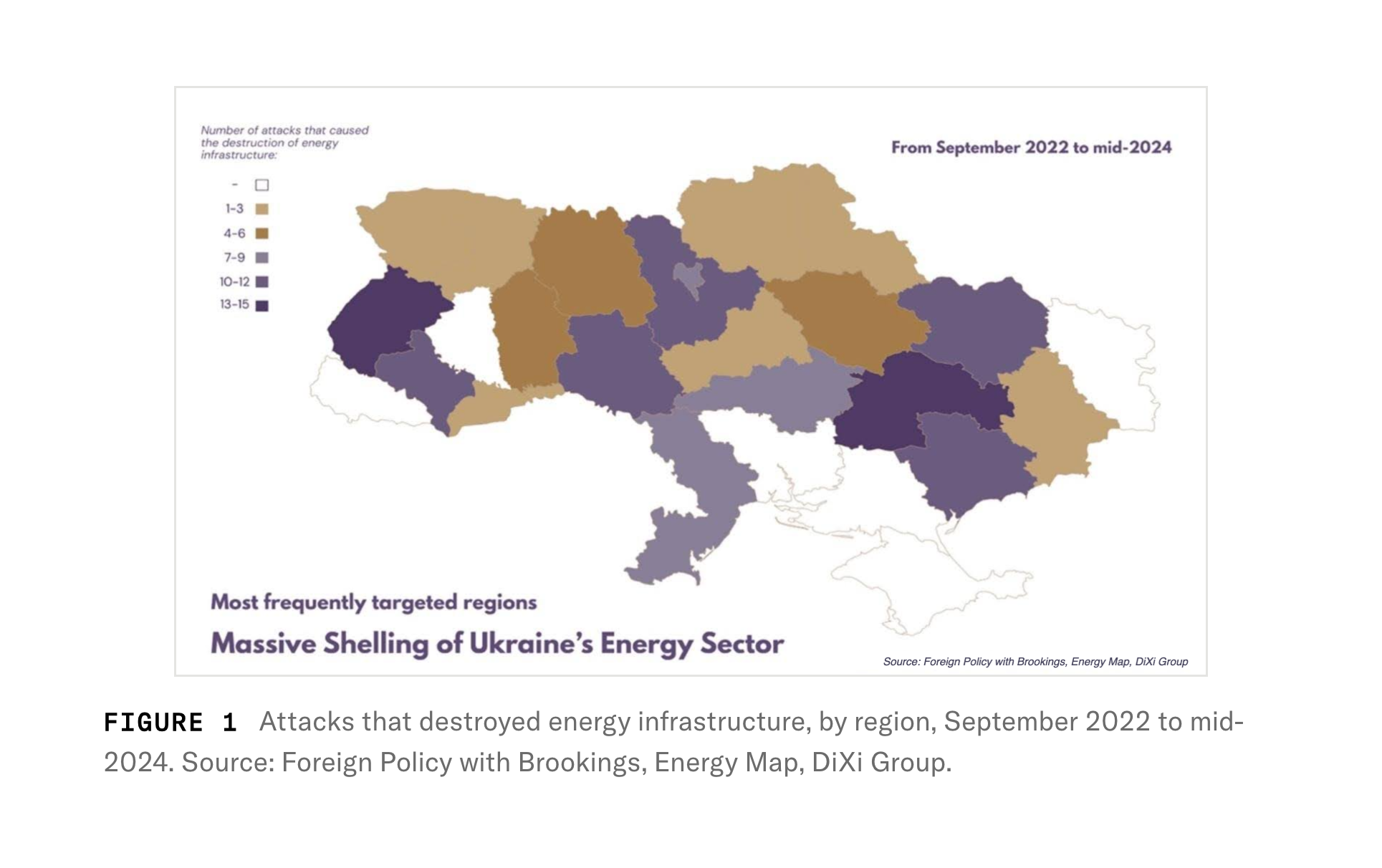
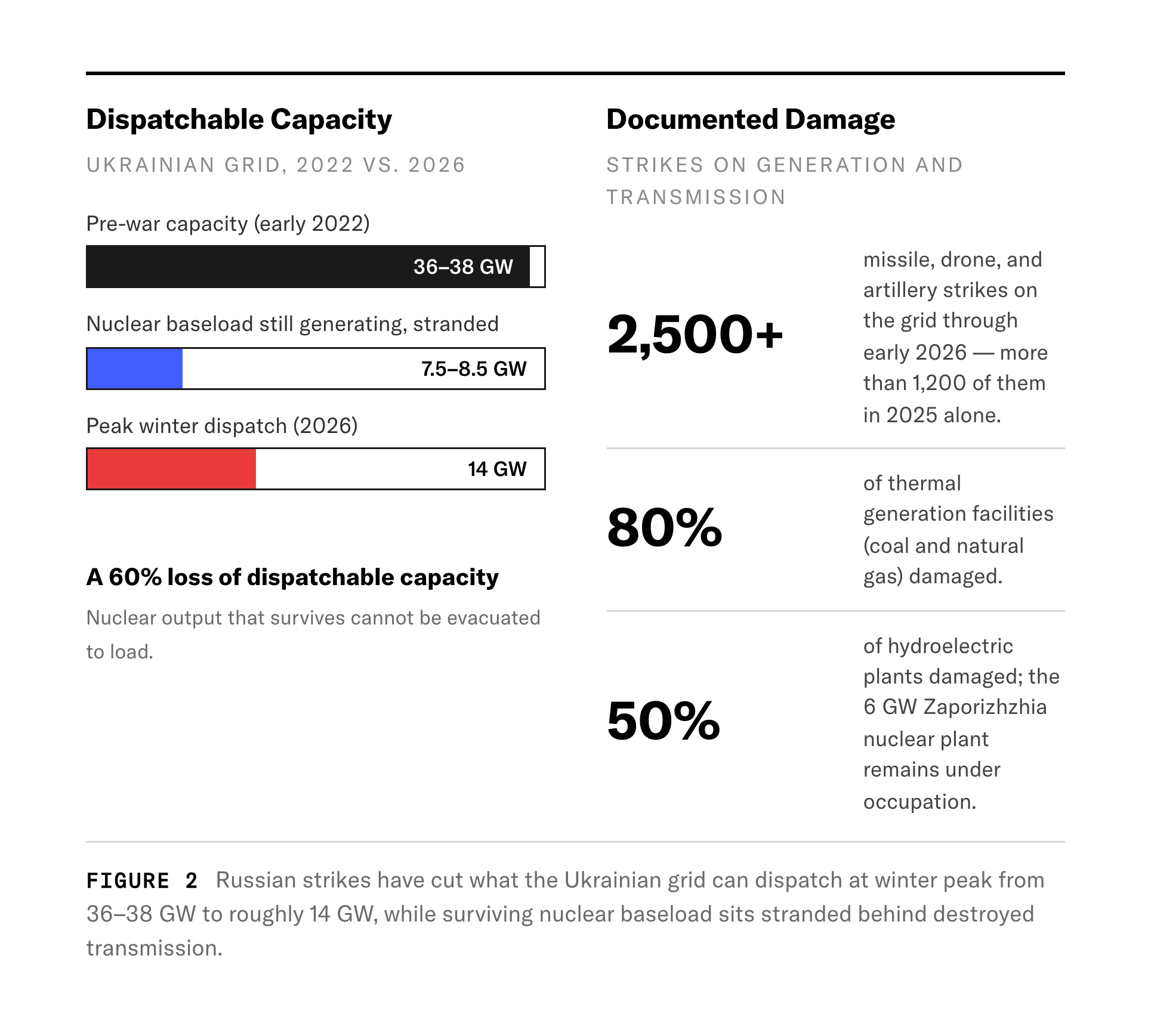
Other than the damaged generation assets, there are power plants still operational but without transmission to deliver it. For instance, Ukraine’s three other nuclear power plants (NPPs), Khmelnytskyi (KhNPP), Rivne (RNPP), and South Ukraine (SUNPP) are still capable of producing somewhere between 7.5–8.5 GW of baseload power.11 But all the substations tying those stations to the broader grid along with overhead transmission lines have been destroyed, forcing the grid operator to significantly lessen the power of the facilities as the electricity cannot be evacuated.12
Impressively, the Ukrainians have added about three GW of distributed energy resources (DER) consisting of solar, wind, battery energy storage systems (BESS), and small modular gas units since the start of the war.13 These DER assets are optimally dispersed, which allows them to produce electricity closer to offtake while being more difficult to target by Russian strikes. The destruction of these small power plants does not produce enough damage to the grid or the economy to justify the munitions used to destroy them. These DER assets allow for compartmentalization of the grid, so if connecting transmission lines or substations are destroyed, there can be mini-grids centered around the DER generation.
Priorities for Rebuilding the Grid
The first task after signing a ceasefire or armistice will be to start reconstituting the power sector as all other rebuilding efforts and productivity in general is reliant on access to abundant energy. This task must be done with factors such as speed, cost, and resilience to future attacks in mind. Additionally though, none of those aspects can supersede the functionality of the grid and the utility’s ability to operate it. After all, a cheap, hardened grid built quickly that doesn’t offer reliable power access to its citizens, industry, or defense apparatus is close to useless. Ukrenergo, the Ukrainian grid operator, can avoid that risk by rebuilding the grid with an eye toward greater efficiency and resilience and with the help of novel technologies.
While the resilience provided by DER assets is clear, it also makes a grid operator’s job considerably more difficult. Once hostilities have ceased, the distributed nature of these power plants makes coordinating generation capacity more complex. The subsequent variability of capacity being put onto the grid requires Ukrenergo to plan even more conservatively than they would with more centralized generation, leading to more curtailment and waste. Still, DER generation is the cornerstone of the energy rebuilding plan, according to the Ukrainian Government, the European Union, and the International Energy Agency.14
The supply-demand mismatch is a phenomenon present for all grids today for various reasons, and in no way unique to Ukraine. A high concentration of DER assets, however, adds to the imbalance between supply and demand. One of the best ways to counter this issue is with high-capacity baseload power. Baseload is a term for electricity produced at a consistently constant rate. Ukraine still possesses three of their nuclear power plants, which produce baseload power, but it must rebuild the infrastructure connecting them to the largest concentrations of demand. If Ukrenergo prioritized rebuilding the high voltage lines to bring power from the NPPs to the identified priority areas of Kyiv, Odessa, Mykolaiv, and Zaporizhzhia, it would likely take upwards of $10 billion and 3–5 years.15
How Bitcoin Mining Can Provide Immediate Relief
Finding a productive use for the stranded generation capacity should be a priority, but few solutions exist without rebuilding the transmission, creating a vicious feedback loop. Any revenue that could be garnered could shave years off rebuilding the grid, but the grid must be at least partially rebuilt to monetize any bit of that energy. There is perhaps a way out of that cycle though, thanks to a novel energy technology: Bitcoin mining.
Bitcoin data centers use servers known as application specific integrated circuits (ASIC) to turn computational power into security for the Bitcoin network. In return for this work, they receive a programmatic subsidy from the network. As most of this subsidy is comprised of newly minted Bitcoin, the process earned the nickname “Bitcoin mining.” These facilities, like any data center, consume a great deal of electricity to conduct their work. This is, however, one of the only commonalities between Bitcoin and conventional data centers.
Traditional data centers, including colocation, cloud, artificial intelligence (AI) and high-performance compute (HPC), all require extreme uptime with tolerance for being offline less than 24 hours cumulatively out of the year. Additionally, they require large fiber optic lines facilitating the high upload and download bandwidth necessary for the extensive regular data packet transfer. These characteristics are essential to fulfill the needs of the customers who demand unfettered access to these data centers’ services.
By contrast, Bitcoin data centers process transactions on a decentralized network, which means there is no strict uptime requirement. Furthermore, the Bitcoin mining process does not necessitate a high bandwidth internet connection, just a low latency one. A rudimentary fiber optic line, satellite internet, or potentially even data from a cellular tower will suffice for connectivity. The result is the most flexible buyer of electricity ever conceived.
For Ukraine, this flexibility could bear fruit immediately upon initiation of a grid rebuild. Bitcoin data centers are modular in nature, usually consisting of repurposed 40-foot shipping containers housing ASICs connected to an electric substation. Such a data center can be commissioned in about 6–9 months after initiation, with a great deal of that time comprised of the logistics to deliver the equipment. Additionally, the data center can be placed directly next to a power plant, drawing its power directly from the generation source. This practice is referred to as getting power “behind the meter.”
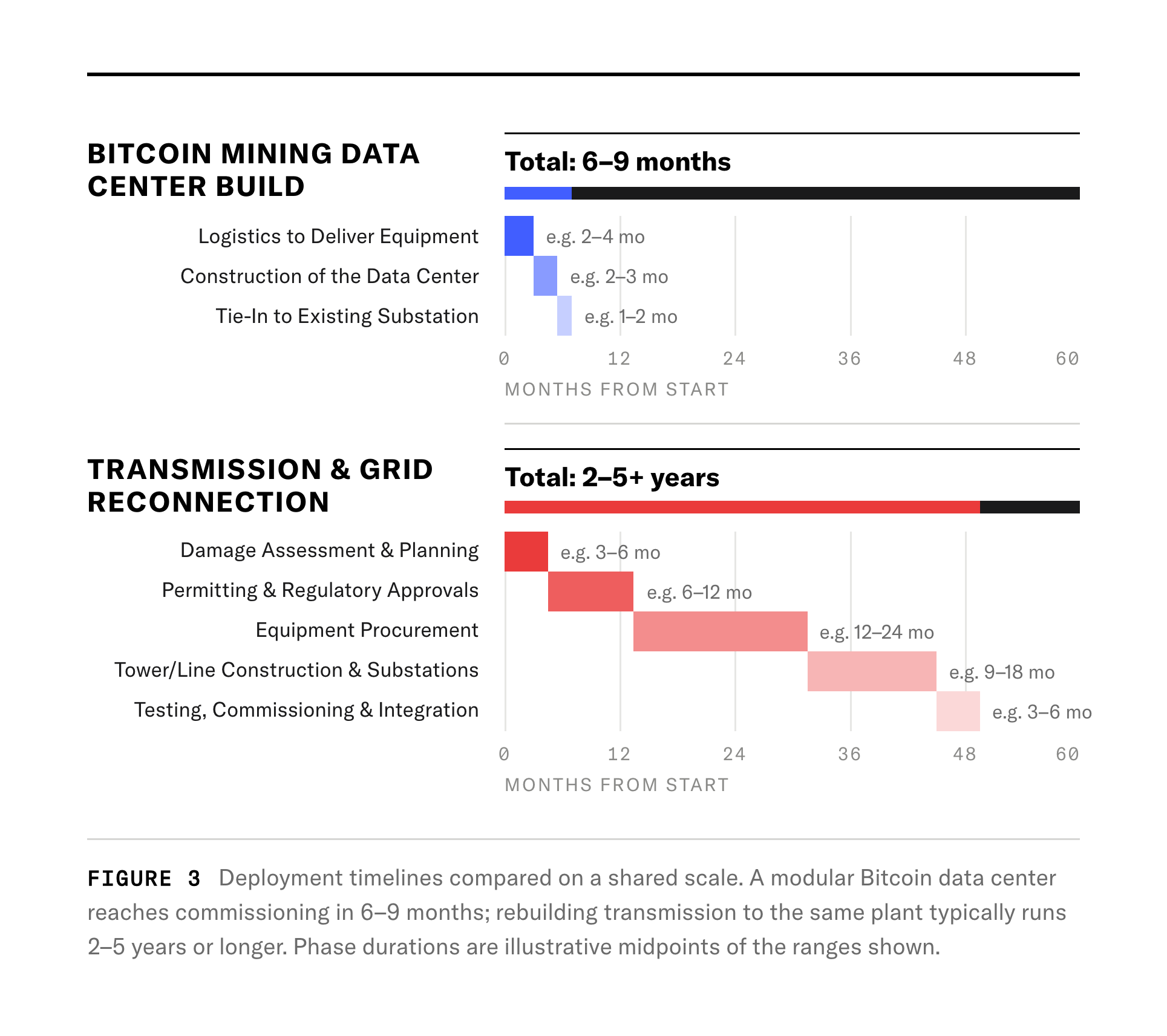
In the context of Ukraine, this means that Bitcoin data centers could be placed at any of the three NPPs and consume power behind the meter. In effect, these data centers would overcome the destroyed transmission infrastructure by exporting the energy over the internet. While this statement is metaphorical, it is factual to classify Bitcoin mining as the only way to monetize the stranded energy from Ukraine’s NPPs until the transmission is rebuilt, which will take years even with prioritization.
Financial Impact
The World Bank estimates that Ukraine will need approximately $588 billion to rebuild the country after the war.16 The global community will shoulder a great deal of the initial funding, but it is important for the Ukrainian economy to restart revenue-generating activities, as well as look for any new income sources. Unfortunately, most sectors of the economy are akin to the energy field in that they require rebuilding efforts before they can fully resume. Furthermore, they are all reliant on the energy grid itself growing in capacity and reach.
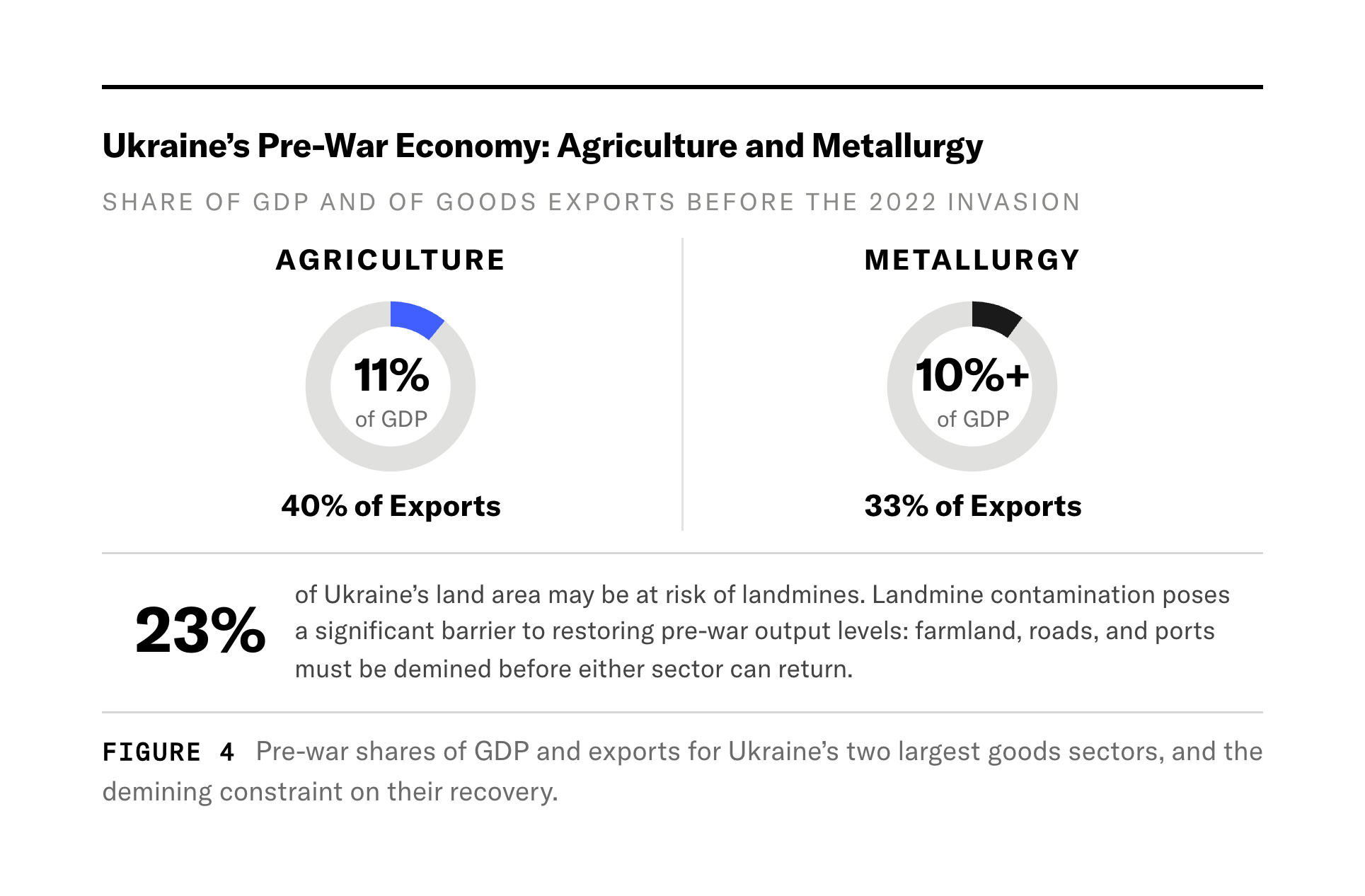
Prior to the war, agriculture accounted for 11% of Ukrainian GDP and 40% of their exports. But up to 23% of the land area of Ukraine could be at risk of landmines.17 Farmland, roads, and ports need to be demined before agriculture can reach or surpass prewar levels. The metallurgical sector accounted for over 10% of Ukraine’s GDP and 33% of exports prior to the invasion. These untapped critical minerals deposits offer Ukraine the opportunity to compete in a market that has long been dominated by China. Similar to agriculture though, this industry is also reliant on demining.
On a positive note, defense tech manufacturing has turned into a growth area for the country due to the hard-earned expertise the Ukrainian military possesses.18 And the tech sector, consisting of IT and outsourced engineers, has remained surprisingly resilient despite the war.19 The commonality for all four of these sectors, however, is that it would be hard to envision either resumption or growth without significant refurbishment of the electrical grid.
For Bitcoin mining on the other hand, Ukrenergo’s provision of electricity to a private Bitcoin data center company, which notably it cannot sell to any other customer, would be all that was needed for the Ukrainian government to start this industry. The private company would take the capital risk and operate the data centers, allowing the Ukrainian government to focus on other priorities. These data centers will create jobs, which could be prioritized for Ukrainian military veterans returning to the workforce after their service. This job creation would help the government increase employment, all without diverting any funds from other infrastructure needs.
The speed at which Bitcoin mining could start producing revenue for the Ukrainian government is noteworthy. There are numerous parameters which would determine the exact costs. But if Ukrenergo dedicated 750 MWs, or roughly just 10% of the stranded electric capacity from the NPPs, they could expect to earn roughly $1 billion over a five-year period.20 That annual revenue could be dedicated to servicing the payments on a loan for unrelated Ukrainian infrastructure. Ukraine is expected to pay an interest rate for the rebuilding loans somewhere on a range from 0% if donors subsidized interest21 to around 9% if forced to pay the commercial rate.22 That means the electricity payments from the hypothesized Bitcoin mining project could service the debt on a loan with a 20-year term of a value of somewhere between $1.8 billion and $4 billion, depending on where it fell on the interest-rate spectrum.
Novel Financing
If the Ukrainian government wanted the Bitcoin mining company to scale the project considerably, there might be a need for novel fundraising solutions due to the capital expenditure requirements. A good example is the newly commissioned United States-Ukraine Reconstruction Investment Fund (USURIF). The USURIF is a joint public-private investment partnership established to support the post-war economic effort of Ukraine, specifically focusing on five major areas, including energy.23 The fund is designed to have equal contributions, governance, and royalties granted between the U.S. and Ukraine.
The initial size of the fund was announced as $150 million, but it is projected to grow to over $1 billion over the next ten years between further investment and royalties.24 The announced goal of the fund is to de-risk further private investment by acting as the first commitment of capital,25 thereby showing a level of government support. That confidence is further buoyed by the fact that the Development Finance Corporation (DFC), the international investment arm of the U.S. government, is the representative from the American side to the USURIF.
Given that Bitcoin has a global liquid market, the Ukrainian government could receive payment for the electricity in its currency of choice: dollars, euros, or Ukrainian hryvnias. Since most of the infrastructure projects and loans paying for them will be denominated in USD or EUR, it might be pivotal to have a regular source of the foreign currencies to lessen the FX risk for repayments. An innovative way of taking U.S. dollars with a higher level of sovereignty would be to accept USD stablecoins, which are gaining even greater adoption since the passage of the GENIUS Act in the U.S. The Ukrainian government could also choose to take some of the payment denominated in Bitcoin and join an ever-growing list of countries with some level of exposure to it.26
If Ukraine is forced to pay a higher interest rate on its loans instead of donor countries subsidizing the rate, they could divert Bitcoin paid for electricity into novel Bitcoin-backed bonds, or “BitBonds.” The concept, first developed by Bitcoin Policy Institute colleagues Andrew Hohns and Matthew Pines,27 theorized that 90% of bond proceeds could be allocated to conventional funding and 10% to purchasing Bitcoin as partial collateral. After the maturity of the bond, the bondholder would receive 100% of the Bitcoin appreciation which equaled the interest rate on the bond. Any additional Bitcoin appreciation would be equally split between the bondholder and the issuer, providing further upside potential.
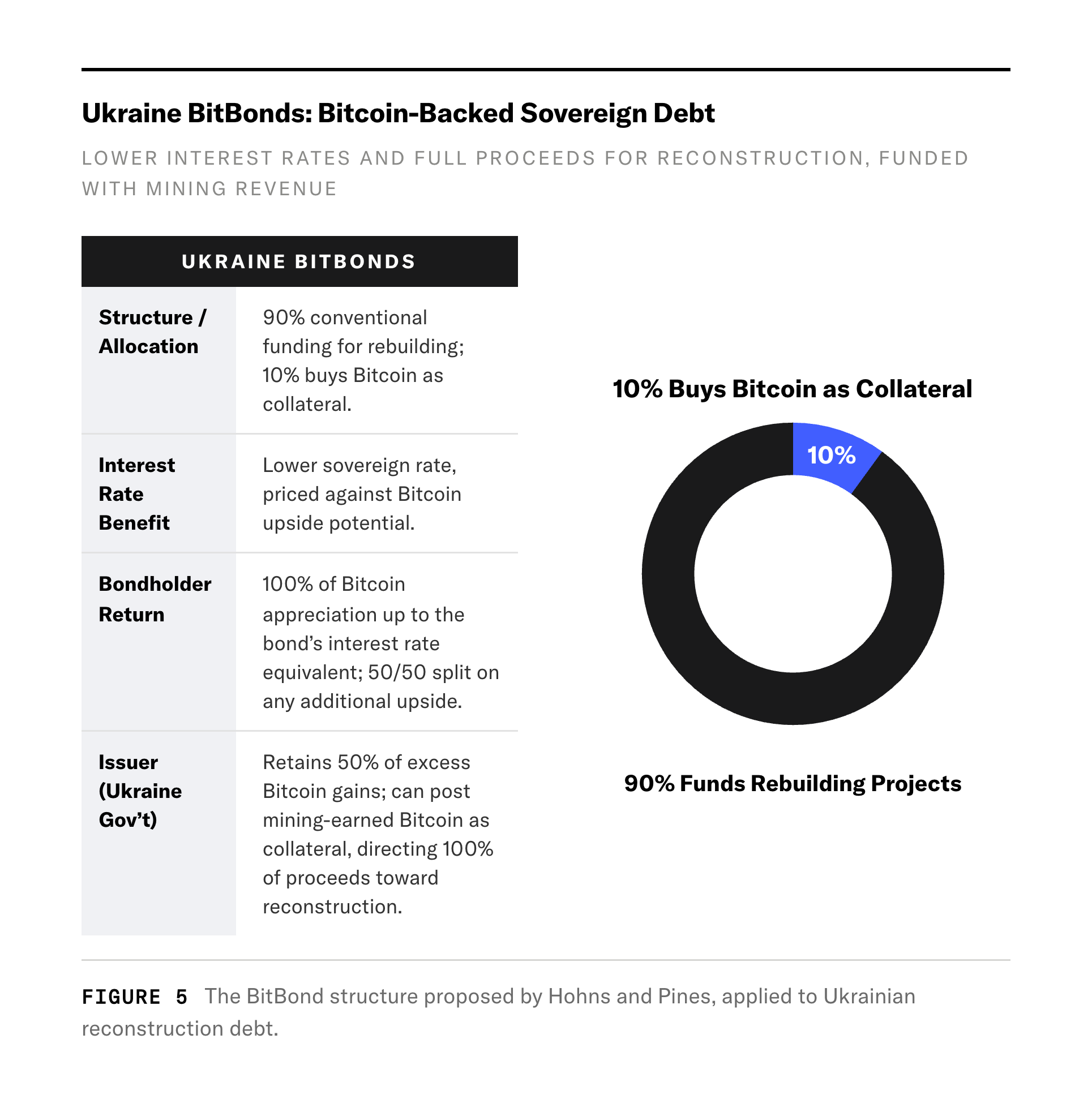
The purpose of adding this Bitcoin collateral to the bond, which can generate potential greater returns, is to lessen the interest rate. Additionally, there could be capital that is interested in getting Bitcoin exposure but is mandated to invest in fixed income. This could be a viable path for Ukraine on its own. But the government could also potentially use Bitcoin earned from Bitcoin mining as the collateral instead of 10% of the bond proceeds. The result of such a path would be the ability to use 100% of the BitBond proceeds toward rebuilding projects, with a lower interest rate relative to their normal sovereign debt, all for providing stranded energy to a company taking all the capital and operating risk.
Mid- to Long-Term Energy Enablement
While Bitcoin mining could certainly solve a short-term problem as discussed, the benefits extend beyond the immediate reconstruction efforts. Positioning significant mining capacity at one or multiple of the NPPs could help Ukrenergo build a more innovative and resilient grid for the future. The key to that innovation is the flexibility that Bitcoin mining can offer to solve grid operator’s biggest problem: supply-demand imbalance on the grid.
The electric generation or “supply” being put on the grid must always equal the demand or “load” being taken from the grid by consumers of electricity. This equilibrium is represented by the frequency of the grid. Most large electric generation assets are machines whose rotors spin in exact synchronism with the grid frequency. Too much supply will cause the frequency to rise, and conversely, too much demand will cause the frequency to fall.
The consequences of too much supply are not good but easier to guard against. Machines suffer increased wear from spinning faster than designed and can potentially break. Generation facilities will often disconnect from the grid to protect themselves. Any inverter-based generation like solar power plants can just self-curtail. Too much demand, however, is a bigger problem and harder to reverse once it has started. Cooling systems start to fail causing further stress to generators. At a certain point areas of the grid will be disconnected in a process of under-frequency load shedding (UFLS) to protect the rest of the grid. If that does not work, a system wide blackout can occur next.
Given the consequences of falling grid frequency, grid operators plan conservatively with a cushion of excess supply against the highest prediction of demand. DER assets like the ones the Ukrainians have built since the start of the war exacerbate this issue because of the increased variability of supply and the increased coordination difficulty for the grid operator. As discussed, DER assets are a central part of the Ukrainian grid reconstruction effort, which means more excess electricity will exist that will be curtailed and not put to productive use.
The Bitcoin mining operations placed at NPPs could help counteract this waste. The solution for the supply-demand mismatch is a process called “demand response,” in which a certain amount of the load on the grid can be curtailed at the time of the grid operator’s choosing. As an example, a study from Duke University found that if just 1% of the load in America was curtailable, it would free an extra 120 GW of capacity,28 or roughly an extra 10% increase.
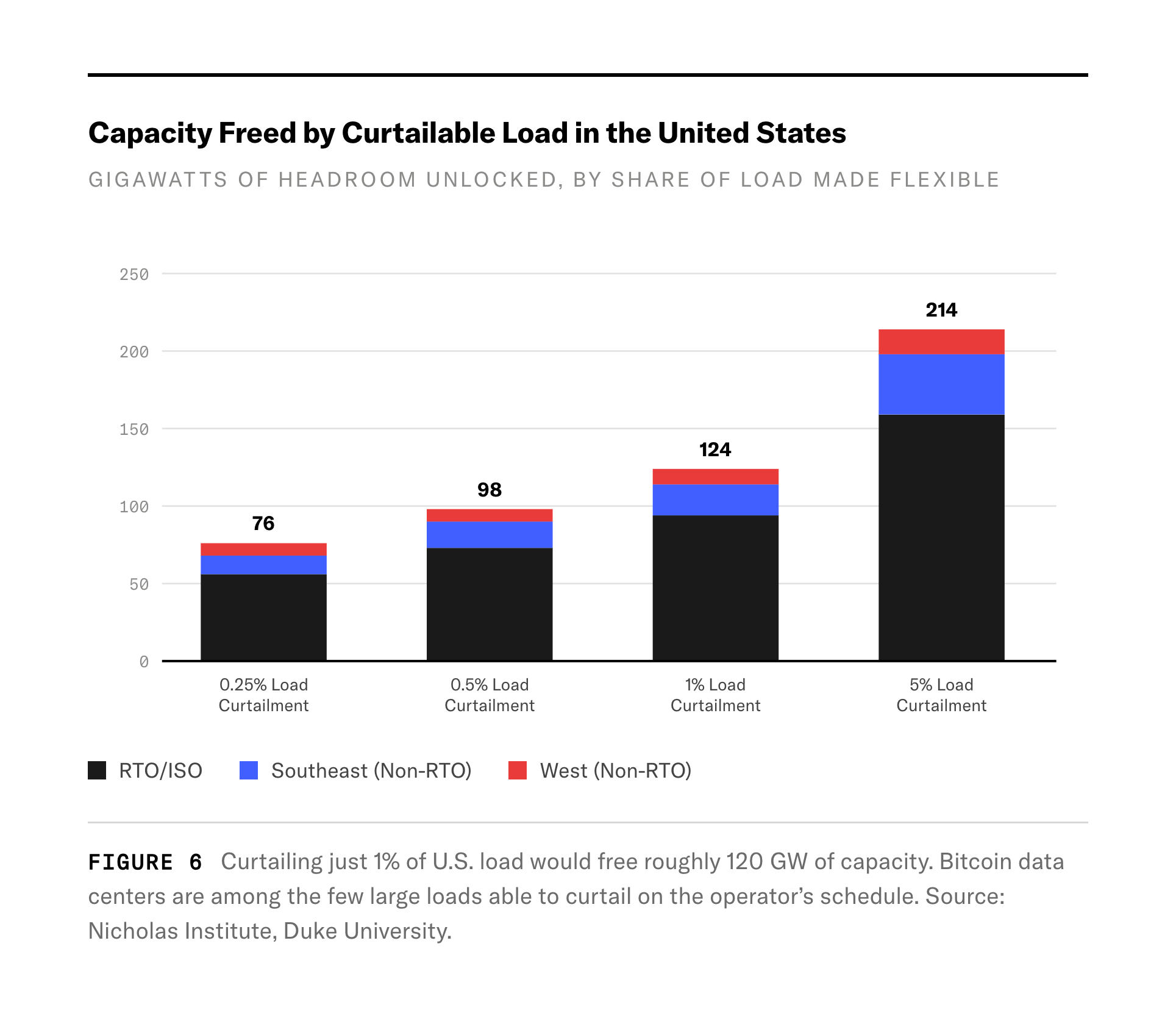
It is difficult to find large consumers of electricity like hospitals, factories, traditional data centers, or metallurgical mines that are willing or able to be curtailed at a time not of their choosing. Bitcoin mining, however, is a perfect demand-response partner. The individual workflows that ASICs conduct is sub-second in length, and the machines can power off and power on in minutes, even better with power management equipment like an uninterruptible power supply (UPS). This means that Bitcoin data centers built in coordination with the grid operator could be designed to modulate their power use or even fully curtail, governed by automated software.
Placement of the Bitcoin data centers at NPPs would be a perfect position for demand response. Baseload power is the foundation for any grid operator given its predictability. The irregularities can occur elsewhere on the grid from numerous reasons, such as unexpected spikes in demand due to weather events, disruptions to key transmission infrastructure, or collective variability of DER assets like a day that is unpredictably cloudy with little to no wind. The benefit of having a demand response asset like a Bitcoin data center at the source of baseload power is that there will almost certainly be power it can provide back at a central node of the grid.
In this sense, Bitcoin data centers act like a digital version of a peaker plant, which is a generation asset that exists just to use in case the grid’s frequency is falling disastrously low. Real peaker plants are some of the most inefficient uses of capital given they operate mere days out of the year by their nature. But they prevent long blackouts and significant damage to the grid. By integrating Bitcoin mining for demand response, Ukrenergo could create the benefit of peaker plants without the need for the physical, inefficient backup generation assets.
Future Energy Aspirations
In the long-term, Ukraine could become a net exporter of energy to the rest of Europe. That could be construed as an overly optimistic or premature statement given the war has not yet ended, much less the $91 billion-worth of infrastructure construction and repairs the Ukrainian energy sector is estimated to need post-war.29 Still, the conditions are present, such that if the rebuild was executed well, it could surpass the level of national self-sustainment needed to produce a valuable surplus.
One of the reasons for optimism is the opportunity created by Europe’s energy management. The war with Ukraine led the EU to drastically cut their reliance on Russian natural gas, from around 45% of its total imports to 12% as of mid-2026.30 That weaning off has significantly increased the cost of natural gas-derived energy, from €10–20/MWh to €30–40/MWh as EU countries now import from sources like the U.S., Qatar, and Algeria.31 This increase, combined with policies to phase out nuclear energy32 and coal33 to concentrate more on renewables (despite lower-than-average capacity factors), has led to a dramatic spike in energy prices.
This increase in energy prices has strategic implications. In 2024, industry in the EU paid over twice what American and Chinese industry were charged for electricity.34 Furthermore, the average retail all-in electricity tariff in the EU during the second half of 2025 was $0.31/kWh, as opposed to $0.17/kWh in the U.S. and $0.08/kWh in China. Lastly, such heavy reliance on renewables has led to a massive supply-demand imbalance. That imbalance is projected to get worse still. It is estimated that the pan-European ability to counter mismatches in supply and demand must double between 2025 and 2033.35
After the Russian invasion and subsequent targeting of Ukrainian energy infrastructure, the Ukrainian grid was synchronized with the European Network of Transmission System Operators for Electricity (ENTSO-E) so the EU could supply emergency power. That integration would allow Ukraine to eventually reverse the flow of electricity and export it to the EU, which has four member states that border Ukraine. This integration exists, even though Ukraine is not an EU member state and therefore does not need to abide by all EU policy.
Ukraine would be free to further lean into its acceptance of nuclear technology, of which it already possesses knowledgeable professionals. Instead of building large NPPs like the ones that already exist, it could use the “Build Back Better” plan to instead proliferate small modular reactors (SMR), which still provide baseload power but have better unit economics. Ukraine also has better availability of hydroelectricity and renewables due to water resources and vastly less population density than the rest of Europe. Ukraine will also likely have significantly lower input costs for the foreseeable future given the lower wages, project development costs, and fewer regulatory fees, such as carbon pricing, grid fees, and social/environment levies.
Should Ukraine realize this goal and become an energy exporter, it will have to account for even more demand variance. Ukraine will surely try to sign long-duration power purchase agreements (PPA) for greater predictability, but it is likely a great deal of energy will be sold in shorter notice duration. According to current ENTSO-E data from 2024–2026,36 around 30% of traded power in bilateral PPAs, futures, and forward contracts were termed for months or years. The largest block was the day-ahead market, accounting for roughly 50% of traded energy. The smallest, but not insignificant, timeframe was the Intraday/hour-ahead market, which made up around 20% of traded energy.
The more that Ukraine scaled its energy exports, the more unpredictable the demand would become if subjected to day-ahead or intraday auctions. In most efficient markets, like the EU, there will usually be a bid for any available power. There are times, however, that the economics do not make sense. For instance, there are scenarios when the transmission costs or “wheeling fees” usurp the value of the sold electricity, especially if the buyer is a large distance away. In other instances, transmission congestion can prohibit the successful delivery to fulfill an agreed-upon contract.
If Ukraine already had Bitcoin data centers integrated for demand response on its grid, the country could also help alleviate some of the uncertainty involved with energy export activities. It would have to be designed intelligently to dial in the economics. But whatever mining was available that could utilize unsold power would effectively put in a price floor for that tranche. The Bitcoin data center could act as the buyer of last resort.
Bitcoin for Trade
As discussed previously, Ukraine has a burgeoning defense tech sector, thanks mostly to its cutting-edge drone technological advances. A good example of this new industrial export is the collection of deals Ukraine signed with Gulf States in response to Iranian strikes. Ukraine announced deals with Saudi Arabia, the U.A.E. and Qatar,37 and alluded to an additional 11 countries in the Middle East and the Caucasus that had made requests.
Ukraine’s edge in drone manufacturing offers a promising opportunity to anchor beneficial trade relationships, given the strategic imperative every nation has to secure its own defenses. Of course, some countries might try to exert influence over Ukraine to convince the country to cancel deliveries of drones to rivals. Ukraine will have to decide how much autonomy it wants to exercise when signing these defense deals.
Whomever Ukraine decides to trade this materiel with, it will want as much sovereignty associated with these agreements as possible. An important aspect of exerting that sovereignty would be the ability to transact in a manner that could not be influenced or stopped by an adversarial power. Bitcoin would provide this ability. Because of Bitcoin’s decentralized nature, no government, company, or person can block the transfer of value on the network. Bitcoin also offers faster trade settlement than traditional payment systems.
Ukrainian Heritage Bitcoin Fund
In addition to rebuilding Ukraine’s infrastructure, it is essential to restore the economic opportunities of the Ukrainian people. Here, Bitcoin could play an important role.
If the Ukrainian government gained exposure to Bitcoin through mining, it could apportion part of those Bitcoin holdings for its citizens. There are precedents for this type of sovereign endowment to citizens. One is the Government Pension Fund Global (GPFG) of Norway.38
Established in 1990, the fund has grown to $1.7 trillion, roughly 3.5 times the annual GDP of the country. Profits from the state-owned oil and gas sector are channeled into the fund. While there is not individual distribution to individual citizens, the fund uses up to 3% of the fund’s value each year to contribute to generous healthcare, education, pensions, and infrastructure.
Another precedent is the Trump Accounts program launched in the United States under the One Big Beautiful Bill Act of 2025.39 Under this program, any child born between 2025 and the end of 2028 will receive $1,000 in seed capital that their parents can invest on their behalf in a tax-advantaged account similar to an IRA. With the combined annual growth rate of the S&P 500 for the last 10 years averaging 14–15%,40 these accounts were designed to give more American citizens a chance to participate in the economic growth of their country and therefore feel a part of that progress.
Ukraine could combine elements of both the sovereign wealth fund in Norway and Trump Accounts in the United States. It could establish the “Ukrainian Heritage Bitcoin Fund” (UHBF), which would be dedicated for the betterment of Ukrainian citizens. Each year, a certain amount of the fund could be spent on projects for the common good of Ukraine such as education scholarships, public transportation, free internet, etc. Profits from continued Bitcoin mining and the increased value of Bitcoin would exceed the annual spending, allowing the fund to continue to grow. This would be similar to the GPFG of Norway. Given the open distributed ledger nature of Bitcoin, all this funding could be made transparent to all, bolstering confidence in government spending.
In addition to the common good, some individuals could have individual accounts akin to the Trump Accounts program. Ukraine is facing a demographics crisis because of the war.41 The Ukrainian Government could create individual accounts for children under the age of 18 which entitle them to profits from the UHBF. The Ukrainian government would lock access to these accounts till holders reach adulthood. But young Ukrainians and their parents would be able to see the wealth growing in real time, instilling greater confidence in the future. A program like this could also benefit the roughly 6–7 million Ukrainian refugees42 after they return home after the war.
In addition to the youth, there could be an opportunity to help the veterans wounded in the war, or the survivors of those killed in action. It is estimated there could be as many as 200,000 casualties from the war,43 including as many as 30,000 civilians. As a sign of gratitude for their service and in recognition of their loss, the Ukrainian government could establish pension accounts for the wounded or bereavement accounts for next of kin of fallen soldiers. Similar to the youth accounts, the bereavement pensions could come from funds derived from government revenues from Bitcoin mining. This portion of the fund servicing veterans and next of kin could also accept outside donations, giving the global community the opportunity to contribute funds to help provide relief.
Conclusion
The conflict in Ukraine has now lasted longer than World War I, a war once optimistically dubbed “the war to end all wars.” Tragically, that hope has been repeatedly shattered, including by this latest protracted engagement again held on the European continent. As the fighting hopefully nears a cessation, Ukraine faces the immense task of rebuilding not only its infrastructure and economy, but also the personal freedoms and individual sovereignty that Russia’s war of aggression has sought to extinguish.
Bitcoin, as a freedom technology, offers a powerful tool for restoring these rights. By design, it maximizes personal choice, individual sovereignty, and resilience against coercive control. These qualities directly counter the centralized domination Russia has attempted to impose. As the war draws to a close, Bitcoin can play a meaningful role in Ukraine’s recovery by bolstering energy resilience through a flexible load that stabilizes grids, facilitating transparent and censorship-resistant trade, expanding financial inclusion for citizens and businesses, and connecting Ukraine more deeply to Bitcoin’s global network effects. The asset already demonstrated its value early in the conflict through rapid donations and aid channels that bypassed traditional bottlenecks. Looking ahead, it can continue to empower both the Ukrainian government and its citizens with greater autonomy and optimism for a self-determined future.
Ukraine’s collective sacrifice has earned more than mere survival; it has earned the chance to build a freer, more prosperous tomorrow. Embracing Bitcoin is one practical step toward claiming that future.
Footnotes
1 “Ukraine Receives Over $224M in Crypto Donations,” Crystal Intelligence, https://crystalintelligence.com/investigations/ukraine-receives-over-224m-in-crypto-donations/.
2 “Crypto Donations to Ukraine and Russia: Breaking Down the Numbers,” Elliptic, https://www.elliptic.co/blog/analysis/crypto-donations-to-ukraine-and-russia-breaking-down-the-numbers.
3 “At Least Three Died in Ukraine Drone Attack, Moscow Region Governor Says,” Reuters, May 17, 2026, https://www.reuters.com/world/europe/least-three-died-ukraine-drone-attack-moscow-region-governor-says-2026-05-17/.
4 “Russia’s War Is Going Badly—on the Ground and in the Air,” Wall Street Journal, https://www.wsj.com/world/russias-war-is-going-badlyon-the-ground-and-in-the-air-447ce204.
5 “Putin’s New Critics: Celebrity Influencers Warning Russians Might Snap,” NBC News, https://www.nbcnews.com/news/world/russia/putins-new-critics-celebrity-influencers-warning-russians-might-snap-rcna332146.
6 Mike Eckel (@mike_eckel), post on X, https://x.com/mike_eckel/status/2061020599342846199?s=42.
7 Scott L. Montgomery, “2026 Update on Ukraine Energy War: A Conflict of Electricity vs. Oil,” Forbes, February 24, 2026, https://www.forbes.com/sites/scottmontgomery/2026/02/24/2026-update-on-ukraine-energy-wara-conflict-of-electricity-vs-oil/.
8 “Russia-Ukraine War Report Card, May 27, 2026,” Russia Matters, Harvard Kennedy School, May 27, 2026, https://www.russiamatters.org/news/russia-ukraine-war-report-card/russia-ukraine-war-report-card-may-27-2026.
9 “Ukraine’s Energy System,” New York Times, March 12, 2026, https://www.nytimes.com/2026/03/12/world/europe/ukraine-russia-energy-system.html.
10 “Energy Minister: Russia Damaged 80% of Ukraine’s Thermal Power Plants, Half of Hydroelectric Ones,” Euromaidan Press, April 8, 2024, https://euromaidanpress.com/2024/04/08/energy-minister-russia-damaged-80-of-ukraines-thermal-power-plants-half-of-hydroelectric-ones/.
11 “How Attacks on Ukraine’s Nuclear Power Substations Could Cause a Total Blackout,” Reuters, January 23, 2026, https://www.reuters.com/business/energy/how-attacks-ukraines-nuclear-power-substations-could-cause-total-blackout-2026-01-23/.
12 “Ukrainian Nuclear Power Stations Operating at Reduced Power after Military Attack,” NucNet, November 2, 2025, https://www.nucnet.org/news/ukrainian-nuclear-power-stations-operating-at-reduced-power-after-military-attack-11-2-2025.
13 “Ukraine War and Renewable Energy,” Yale Environment 360, https://e360.yale.edu/features/ukraine-war-renewable-energy.
14 International Energy Agency, Empowering Ukraine through a Decentralised Electricity System (Paris: IEA), https://iea.blob.core.windows.net/assets/1cb1324f-e145-41c3-b0c2-d78561b4f1fd/EmpoweringUkraineThroughaDecentralisedElectricitySystem.pdf.
15 European Bank for Reconstruction and Development, “Ukrenergo Transmission Network Emergency Restoration: Board Report,” EBRD, https://www.ebrd.com/content/dam/ebrd_dxp/documents/project/54138/ukrenergo-transmission-network-emergency-restoration-board-report.pdf.
16 World Bank, “Updated Ukraine Recovery and Reconstruction Needs Assessment Released,” press release, February 23, 2026, https://www.worldbank.org/en/news/press-release/2026/02/23/updated-ukraine-recovery-and-reconstruction-needs-assessment-released.
17 “A Mines-to-Market Approach Would Best Support Ukraine’s Agricultural Recovery,” Centre for European Policy Studies, https://www.ceps.eu/a-mines-to-market-approach-would-best-support-ukraines-agricultural-recovery/.
18 “Ukraine’s 2026 Defence Exports Could Hit Several Billion Dollars, Official Says,” Reuters, February 20, 2026, https://www.reuters.com/business/aerospace-defense/ukraines-2026-defence-exports-could-hit-several-billion-dollars-official-says-2026-02-20/.
19 “UAH 50 Billion in Taxes and 800,000 Jobs: How Ukraine’s IT Sector Shapes the Economy,” Ministry of Digital Transformation of Ukraine, https://digitalstate.gov.ua/news/it-outsourcing/uah50-miliardiv-podatkiv-ta-800-000-robochykh-mists-iak-ukrayinskyy-it-sektor-formuye-ekonomiku.
20 This estimate is based on financial modeling from a prominent Bitcoin mining company.
21 European Parliament, “Briefing: BUDG,” European Parliamentary Research Service, 2026, https://www.europarl.europa.eu/RegData/etudes/BRIE/2026/785052/BUDG_BRI(2026)785052_EN.pdf.
22 “Ukraine Government Bonds,” World Government Bonds, https://www.worldgovernmentbonds.com/country/ukraine/.
23 U.S. International Development Finance Corporation, “DFC Announces U.S.-Ukraine Reconstruction Investment Fund Fully Operational,” press release, https://www.dfc.gov/media/press-releases/dfc-announces-us-ukraine-reconstruction-investment-fund-fully-operational-and.
24 Citi Institute, Global Perspectives & Solutions: Ukraine (Citigroup), https://www.citigroup.com/rcs/citigpa/storage/public/Citi_Institute_GPS_Report_Ukraine_FINAL.pdf.
25 U.S. International Development Finance Corporation, “DFC Kickstarts U.S.-Ukraine Reconstruction Investment Fund with $75 Million Seed,” press release, https://www.dfc.gov/media/press-releases/dfc-kickstarts-us-ukraine-reconstruction-investment-fund-75-million-seed.
26 “Global Exposure,” Bridger, https://www.bridgerbtc.com/global-exposure.
27 Andrew Hohns and Matthew Pines, “Bitcoin-Enhanced Treasury Bonds: An Idea Whose Time Has Come,” Bitcoin Policy Institute, https://www.btcpolicy.org/articles/bitcoin-enhanced-treasury-bonds-an-idea-whose-time-has-come.
28 “Rethinking Load Growth,” Nicholas Institute for Energy, Environment & Sustainability, Duke University, https://nicholasinstitute.duke.edu/publications/rethinking-load-growth.
29 “Ukraine Rebuilds Energy Grid as Russia War Continues,” Bloomberg, 2025, https://www.bloomberg.com/graphics/2025-ukraine-rebuilds-energy-grid-as-russia-war-continues/.
30 European Commission, “REPowerEU: Phase Out of Russian Energy Imports”, https://energy.ec.europa.eu/strategy/repowereu-phase-out-russian-energy-imports_en.
31 “EU Natural Gas,” Trading Economics, https://tradingeconomics.com/commodity/eu-natural-gas.
32 European Parliament, “Briefing,” European Parliamentary Research Service, 2023, https://www.europarl.europa.eu/RegData/etudes/BRIE/2023/751456/EPRS_BRI(2023)751456_EN.pdf.
33 European Commission, “EU Coal Regions in Transition”, https://energy.ec.europa.eu/topics/clean-energy-transition-initiatives/eu-coal-regions-transition_en.
34 BusinessEurope, “The High Cost of Energy”, https://www.businesseurope.eu/media-room/data-hub/high-cost-of-energy/.
35 ENTSO-E, “System Flexibility”, https://www.entsoe.eu/system-flexibility/.
36 ENTSO-E, “Transparency Platform”, https://transparency.entsoe.eu.
37 “Volodymyr Zelensky: The Drone Deal Includes a Unique Protection System,” Office of the President of Ukraine, https://www.president.gov.ua/en/news/volodimir-zelenskij-u-drone-deal-vhodit-unikalna-sistema-zah-103985.
38 Government of Norway, “The Government Pension Fund”, https://www.regjeringen.no/en/topics/the-economy/the-government-pension-fund/.
39 Internal Revenue Service, “Trump Accounts”, https://www.irs.gov/trumpaccounts.
40 “Average Historical Stock Market Returns for the S&P 500,” Trade That Swing, https://tradethatswing.com/average-historical-stock-market-returns-for-sp-500-5-year-up-to-150-year-averages/.
41 World Bank, “Updated Ukraine Recovery and Reconstruction Needs Assessment Released.”
42 UNHCR, “Ukraine Situation,” Operational Data Portal, https://data.unhcr.org/en/situations/ukraine.
43 “Ukraine War Casualties,” BBC News, https://www.bbc.com/news/articles/clyg7r3nd3ko.