
Executive Summary
This is a report about artificial intelligence and data centers and China-linked efforts to block the American buildout of both.
Data centers are a flashpoint in US politics. Americans have genuine concerns about how data centers may affect their electricity prices or strain local water resources. These concerns are authentic and need to be heard. As such, it is necessary to be clear from the start: the purpose of this report is not to cast doubt on the earnestness or even the veracity of claims made by Americans who oppose data centers. Indeed, most of the mobilizing taking place across the country is, on its surface, normal civic life in America functioning as it was designed to. Concerned citizens are organizing and affecting the political process.
But running parallel to this domestic, democratic movement is a foreign influence campaign that has worked to amplify public division and opposition to American AI infrastructure. At the center of this network is a Shanghai-based Marxist,1 one of the largest private funders of left-wing political organizing, and the subject of multiple congressional inquiries with documented ties to the Chinese Communist Party: Neville Roy Singham.
Singham is not solely responsible for the recent domestic backlash to data centers, but his network has worked to amplify it.
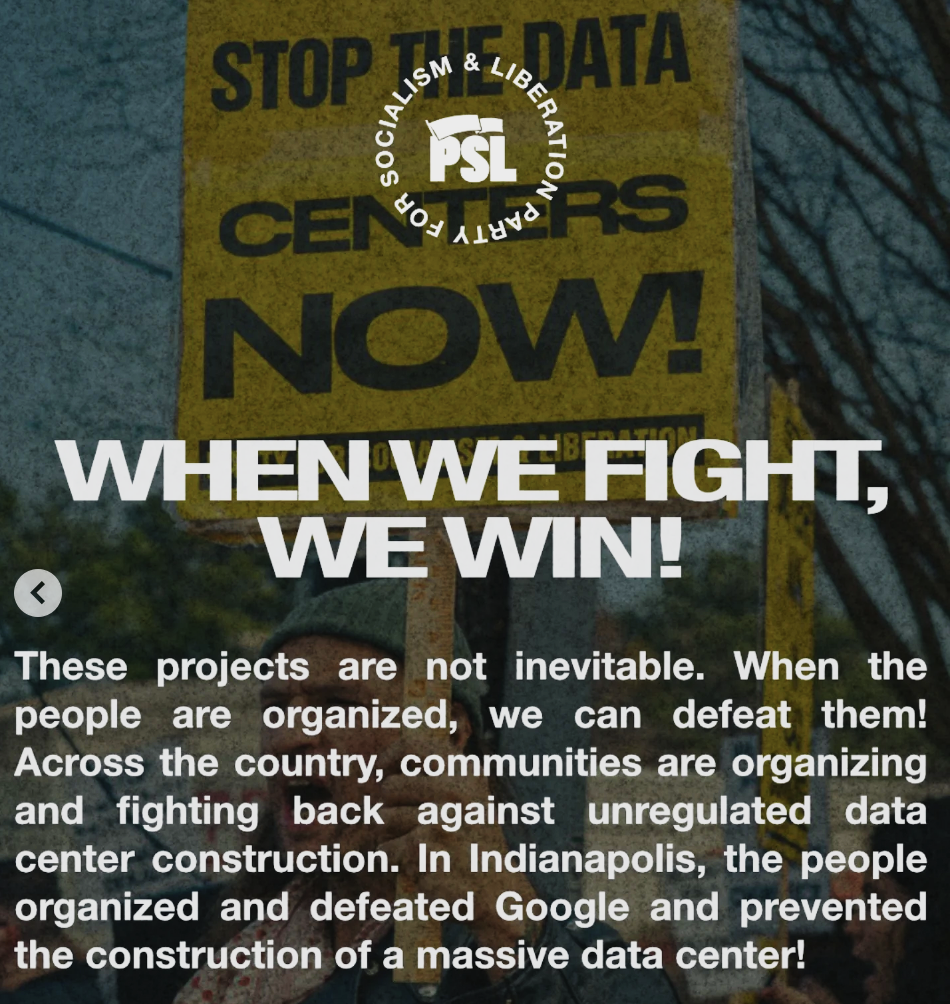
While Part I of our investigation, Foreign influence in the Campaign against American AI, traced the macro discourse and dollars shaping public policy and opinions on AI, Part II follows feet on the pavement: the rallies, petitions, packed council chambers, and town-by-town campaigns that have stalled the buildout of American AI infrastructure. At the heart of many of these campaigns is the Singham network.
Deeply enmeshed in these local fights is the Party for Socialism and Liberation, a Marxist-Leninist group with documented foreign ties whose stated mission is to dismantle American capitalism2 and whose leadership is drawn directly from the executives of Singham's nonprofits. The same people who have managed Singham organizations like The People's Forum, the ANSWER Coalition, BreakThrough News, and the Justice and Education Fund sit on the PSL's central committee and at the top of its presidential ticket. Under their leadership, the Party for Socialism and Liberation (or PSL) has convened hundreds of activists to push for permanent bans on data center projects throughout the country.
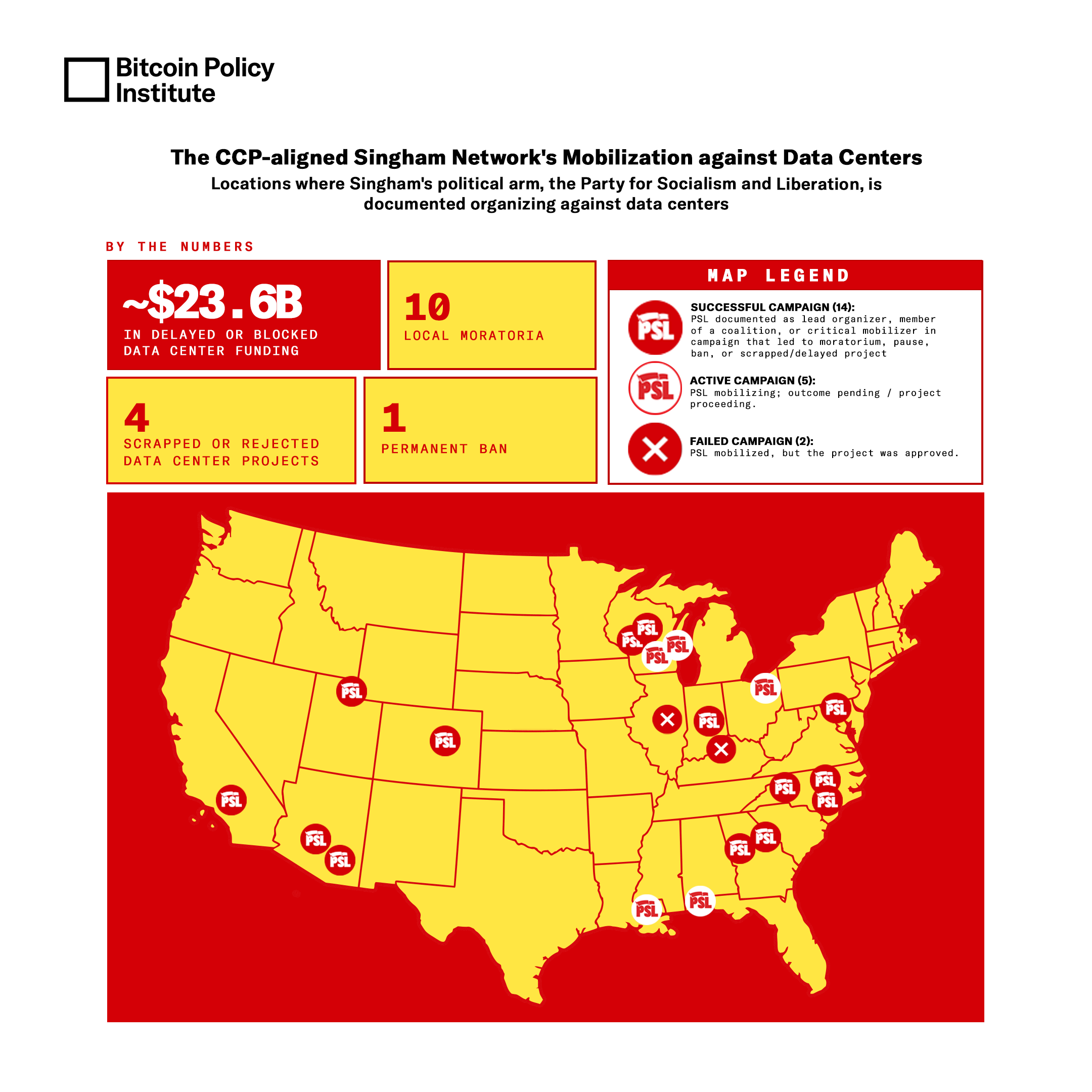
To put the PSL’s impact in material terms, it has been a critical mobilizer in efforts that delayed, scaled back, or blocked approximately $23.6 billion in proposed AI-infrastructure investment, in roles ranging from lead organizer to one member of a broader coalition. This report tracks 21 separate PSL campaigns across 14 states that have contributed to 10 data center moratoria, 1 permanent data center ban, and 4 rejected or scrapped data center projects.
Perhaps most concerning, the public cannot view the PSL’s fundraising apparatus or see who is financing this nationwide mobilization effort. Due to a gap in US election laws, the PSL’s finances are exempt from public reporting. So whether China or any other foreign actor is financing the PSL cannot be readily answered by the existing public record.
This report documents the ground game of the Singham network city by city and explains why the nationwide campaign of a Singham-linked activist group to ban data centers deserves the attention of the American people, Congress, and the White House. Across 18 separate case studies, this report presents evidence from open-source media that allows readers to decide for themselves the significance of the PSL’s role in each of these campaigns, whether it was determinative or simply contributory. Our position is that the influence of the PSL’s role in each case study is important to understand. But far more important is grasping the threat of China putting its thumb on the scale of the AI discourse in any capacity.
This report does not claim that opposition to data centers is wholly astroturfed. As previously stated, much American opposition to data centers is indisputably authentic. But two things can be true at once: 1) There is a foreign influence campaign against American AI; and 2) Americans have genuine concerns about data center buildout that need to be heard. Acknowledging the reality of the former does not refute the reality of the latter. There are both organic and inorganic strains in the debate surrounding data centers and American AI. The goal of this report is to ensure greater transparency in the debate by bringing concerns of repeated foreign influence to light so that policymakers can make better informed public policy decisions.
The conclusion we draw is straightforward, and we hope, noncontroversial: Americans deserve full transparency into the Singham network and its connections to the CCP. A group with documented foreign ties and undisclosed funding has embedded itself within a genuine opposition movement. A party that advances positions aligned with the Chinese government, amplifies its messaging, and seeks to abolish the US government3 through revolutionary means has distorted the discourse between public officials and American citizens on the topic of artificial intelligence and related infrastructure. The network’s methods and motivations in waging this campaign are worthy of investigation. This report shines a spotlight on both.
Introduction
The campaign against American AI was accelerated by: Chinese state outlets warning American audiences that data centers would raise their electricity bills; Singham-funded groups working to amplify this messaging; and a coalition of foreign-tied nonprofits championing the language that became the Sanders–Ocasio-Cortez moratorium bill.4 The first BPI report covered these three channels of foreign influence.
This report follows the campaign to the ground. Behind the op-eds and the model legislation is a parallel effort that is louder, more local, and arguably more effective at stopping shovels from hitting dirt. When a county executive pauses a $5 billion tech park, when a city council meeting is filled with protesters from out of town, when a developer withdraws an application minutes before a vote – these outcomes seldom happen on their own. They are often the results of sophisticated activism, supported by a disciplined and well-resourced organization. Across the country, that organization is increasingly the Party for Socialism and Liberation (PSL).
This report makes three claims.
First, the PSL functions as the political arm of the Singham network. The same people who run Singham-funded nonprofits serve as PSL executive leadership.
Second, the PSL has been an influential organizer in a national campaign against AI and data centers, including 21 fights across 14 states, that produced moratoria, zoning rejections, and cancelled projects worth billions. At times, the organization leads; at other times, it is one member of a coalition.
Third, funding for PSL issue-campaigns is kept private, and federal campaign-finance law does not require public disclosure of who funds that issue advocacy. The public deserves to know who is paying for advocacy this consequential and whether or not the money it receives is foreign. Beyond the PSL’s ties to Singham, the PSL is explicitly internationalist in its orientation. The party’s explicit goal is to advance the welfare of the global proletariat, not the American people as a whole. That internationalist orientation makes it an especially vulnerable target for foreign influence.
The Singham Network's China Ties
Neville Roy Singham is a US citizen who lives in Shanghai. In 2017, he sold the software consultancy Thoughtworks to the private-equity firm Apax Partners for a reported $785 million, and he previously worked as a consultant to the Chinese telecommunications giant Huawei.5 He identifies as a Marxist, and Vijay Prashad, who directs the Singham-funded Tricontinental Institute, has publicly called him exactly that.6
The New York Times investigated Singham's operation in August 2023 and found a network of nonprofits, spanning four continents, that produced content closely aligned with Chinese government positions on nearly every major geopolitical question. The reporters documented shared staff and office space and hundreds of instances of cross-posting among the groups. The Times reported that Singham works from a Shanghai office he shares with the Maku Group, a Chinese media firm that produces content for foreign audiences and describes its mission as telling "China's story well," the CCP's own phrase for its overseas propaganda work.7
In Singham’s office, a visitor once captured a photo of a banner that read "Always Follow the Party" and a plate depicting Xi Jinping on a shelf. The month before the story ran, Singham attended a Chinese Communist Party workshop on promoting the party internationally.8 A review of tax filings later traced roughly $278 million from Singham-controlled entities into six US nonprofits between 2017 and 2023.9
Singham's documented ties to the CCP are not a dormant question for American institutions. Since the first BPI report, federal scrutiny of the Singham network has intensified.
On June 4, 2026, the leadership of the House Energy and Commerce Committee wrote to the President's Council of Advisors on Science and Technology and to the FBI requesting an investigation into foreign efforts to block the American data center buildout, citing BPI's findings directly.10 Six days later, Senator Tom Cotton asked the Department of Justice to investigate Singham by name, noting that no entity in his network has registered under the Foreign Agents Registration Act.11 Those letters joined a standing line of inquiry: a House Ways and Means demand for documents from The People's Forum, BreakThrough News, and Tricontinental; a House Oversight referral to the Treasury Department; and a Senate Judiciary request that the DOJ rule on FARA registration for the network's affiliates.12
In its investigation into the Singham network, Congress has focused most of its attention on the nonprofits. But it has paid far less to the political vehicle that carries their agenda into the streets, turning the message into mobilization. That vehicle is the Party for Socialism and Liberation.
What Is the PSL?
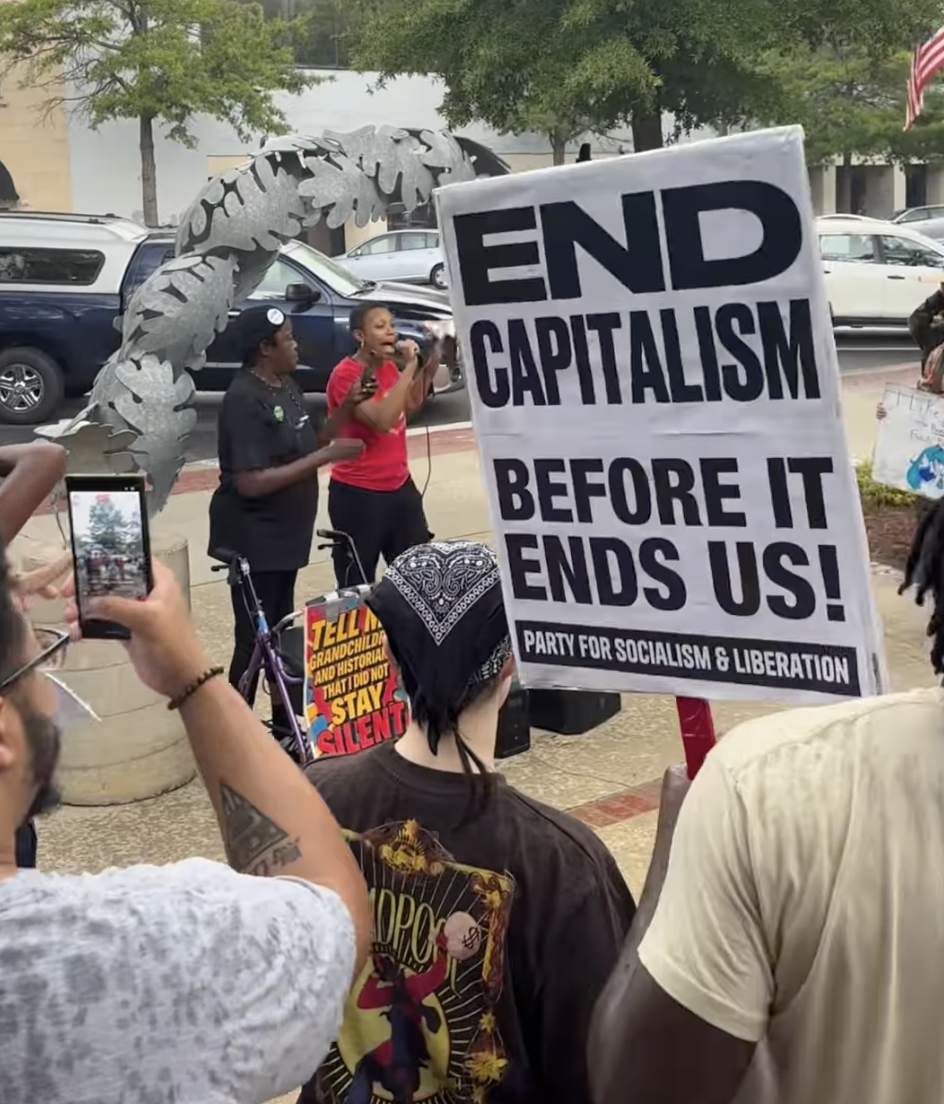
The PSL is a Marxist-Leninist organization that calls for abolishing "the corrupt, rotten and anti-people capitalist economy, state and governmental system" and replacing it with socialism. And it is explicit that the change will not come through elections: "Capitalism cannot be voted out of power—it will take a revolution."13 The program calls for the standing army and police to be "disbanded and replaced by the armed people."14 Its worldview is internationalist by design. The party describes the American working class as "but one section" of a global working class, locating its loyalty in a transnational movement rather than a nation.15
By the available public measures, the party is growing at a rapid pace. Its presidential vote nearly doubled between 2020 and 2024, from 84,905 for Gloria La Riva to 167,772 for the De la Cruz–Garcia ticket, which appeared on the ballot in 19 states and was tallied in 36. That was the largest result for an explicitly socialist presidential ticket since 1936.16
Its physical footprint is expanding too. The party now operates a national web of "Liberation Centers," storefront organizing hubs that it uses to run political education, train new members, and, in its own framing, “cultivate ‘revolutionary’ thought.” There are now at least 28 of these Liberation Centers in major and mid-major metropolitan areas across the country.17
The party is internationalist in both word and practice. The PSL is a longtime partner in the International Peoples' Assembly, a global anti-imperialist coalition that grew out of a 2015 process led by Brazil's Landless Workers' Movement and held its first world assembly in Caracas in February 2019, where Venezuela's then-president, Nicolás Maduro, addressed the delegates.18 The Singham-funded People's Forum anchors the assembly's North American chapter,19 and Cuba's Communist Party organ, Granma, published the assembly's solidarity statement in March 2026.20 By its own account, the PSL sees itself as part of an international movement it helped build with the governments of Venezuela and Cuba. These are substantive foreign relationships with OFAC-sanctioned countries.
The sharpest evidence that the PSL's loyalties lie abroad comes not from its opponents on the Right but from fellow leaders on the Left. The strongest critique comes from Trotskyists, who observe that the PSL lines up behind almost any authoritarian regime, no matter how brutal, so long as it stands against the United States. Socialists have a name for this reflex, “campism.” Campism describes the habit of splitting the world into two camps and backing the anti-American one no matter how it treats its own citizens.
Fueling the “campist” accusation is the roster of dictators the PSL has defended in the past. A point-by-point rebuttal in the socialist magazine Socialist Alternative accused the PSL of "championing any figure, no matter how rotten, who comes into conflict with U.S. imperialism," naming Slobodan Milošević, Saddam Hussein, Robert Mugabe, and Bashar al-Assad.21 The Freedom Socialist Party, pointing to the PSL’s defense of figures like Libya's Muammar Qaddafi, put the charge more bluntly: the PSL "refuses to condemn crimes against workers committed by figures it identifies as enemies of the U.S. ruling class."22
The PSL’s campism also explains its close relationship with China and Russia. Reviewing the PSL's record in 2024, the socialist newspaper Left Voice wrote that the party's coverage of China "reads like a Chinese government PR agency," and that the PSL had "acted as cheerleaders" for Venezuela's authoritarian president, Nicolás Maduro, even as he "cracked down on the workers' movement" at home.23 Others noted that the party adopted the Kremlin's own euphemism for the invasion of Ukraine, calling it a "special military operation."24 The common thread is the accusation that a self-described workers' party has put the interests of foreign authoritarian states ahead of the workers it claims to represent. Left Voice called this "the anti-imperialism of fools."
This long record of anti-American activism makes the PSL's presence in these data center fights all the more concerning. The PSL’s defining trait, even in the eyes of its fellow leftists, is reflexive loyalty to America's adversaries. The American people, then, have a right to know: What motivation does the PSL have in inserting itself into local battles over AI infrastructure? Whose interests is it serving and why? And what entities are financing these activities?
Singham's Primary Political Arm
The clearest evidence that the PSL is the Singham network's political arm is the roster. The people who run Singham's nonprofits are the same people who run the party.
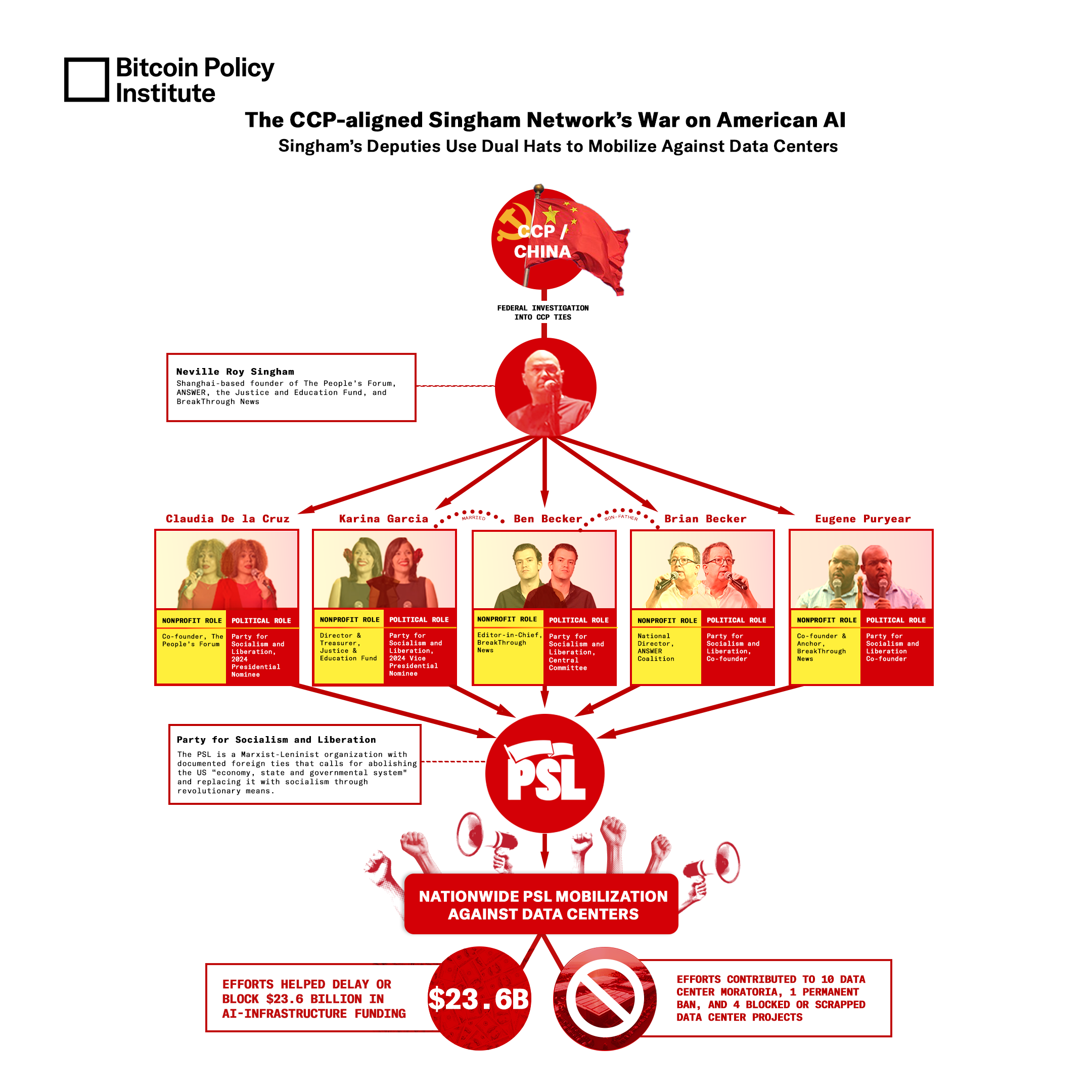
Claudia De la Cruz co-founded The People's Forum and was the PSL's 2024 presidential nominee. Her running mate, Karina Garcia, is director and treasurer of the Justice and Education Fund, a Singham-linked grant-making organization. Ben Becker is editor-in-chief of the Singham-funded BreakThrough News and sits on the PSL's central committee. His father, Brian Becker, directs the Singham-funded ANSWER Coalition and co-founded the PSL. Eugene Puryear co-founded BreakThrough News and the party alike. There is repeated, direct overlap between Singham-network nonprofit leadership and PSL leadership.
That overlap extends into the families. Karina Garcia is married to Ben Becker, the BreakThrough News editor-in-chief, a fact the 2024 campaign announced itself.25 A grant officer who directs funding married to the network's media chief echoes the arrangement at the top of the Singham network, where Singham is married to CodePink co-founder Jodie Evans.26 These are the relationships that connect the network’s money, media, and organizing.
Several of these figures maintain documented ties to states on the Treasury's sanctions lists. Eugene Puryear hosted a daily program for several years on Radio Sputnik, the Russian state broadcaster. The US companies that produced and aired Sputnik were compelled to register as foreign agents in 2017 and 2018.27
Manolo De Los Santos, co-director of The People's Forum, was received by Cuban president Miguel Díaz-Canel during a 2023 brigade he helped lead, and by his own account, lived in Cuba for several years studying at a seminary in Matanzas.28
Medea Benjamin, the CodePink co-founder whose organization partners with the International Peoples' Assembly, is now under Treasury scrutiny: the Office of Foreign Assets Control has issued administrative subpoenas to Benjamin and others over a March 2026 convoy to Cuba, and Benjamin has confirmed that Treasury contacted CodePink about the trip.29
Gloria La Riva, meanwhile, coordinates the PSL's Cuba and Venezuela solidarity work, and Brian Becker's ANSWER Coalition has mobilized in defense of the Maduro government.30 Several of these figures have publicly aligned themselves with the governments of China, Cuba, and Venezuela.
Of particular relevance is how other Marxist organizers describe the political operations of the Singham network. Renowned socialist commentator Hasan Piker recently shared his belief that Treasury subpoenaed Piker for his trip to Cuba with Singham executives in an attempt to gather more information on the inner workings of Singham’s broader political network: “I think the target is ultimately Singham and his operation, from PSL to ANSWER Coalition to Codepink – anything that he has ever financed.”31
Jereme "Fergie" Chambers, another prominent centimillionaire Marxist organizer and a former colleague of Singham’s, equated Singham with the PSL itself after a falling-out with Singham.32 In an April 2026 post on X, he went even further, alleging that Singham’s nonprofits and the PSL are one and the same, and that the PSL is the primary funding vehicle for Singham’s nonprofit network: “The People’s Forum is WHOLLY funded, staffed, and controlled by PSL, whose office is in the same building upstairs.” (The building Chambers is referring to is a Manhattan property where The People’s Forum is a tenant). Chambers continued, “BTN [BreakThrough News] is also in that [building] and also staffed and controlled by PSL central committee … ANSWER is a part of their formation, and the IPA (International People’s Assembly) is fully under their control.”33
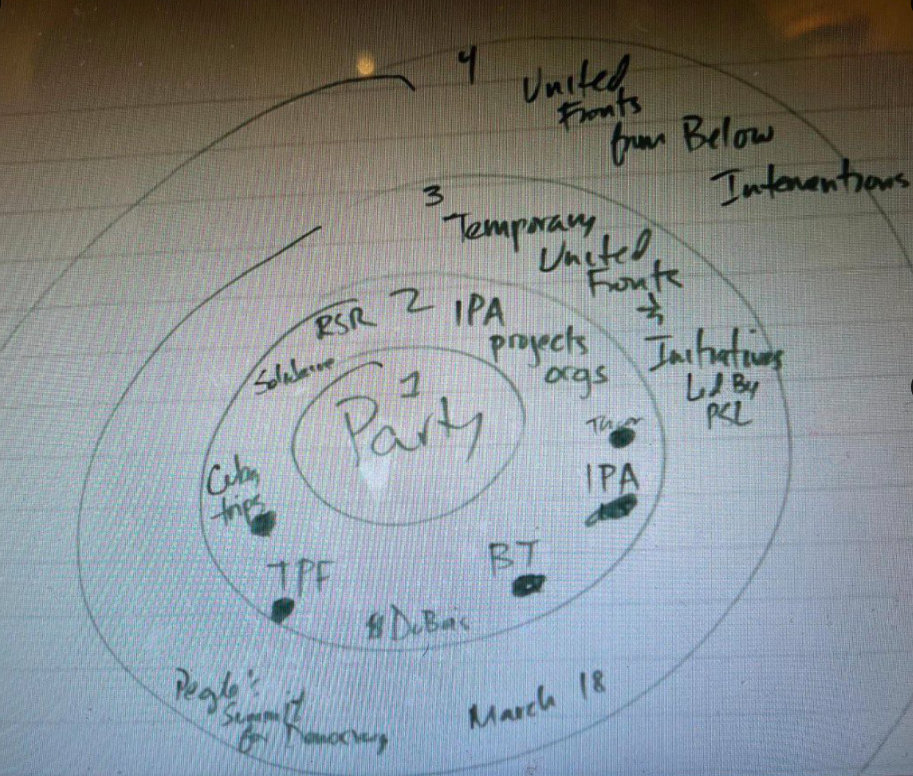
Chambers then posted a photo of an organizational chart that he alleges was drawn by Vijay Prashad and Ben Becker, two senior figures in Singham’s orbit, when the Singham network was courting Chambers’ support in 2023. The chart places the PSL at the center of the Singham networks’ operations, with BreakThrough News, The People’s Forum, the International People’s Assembly, and “Cuba trips” as its offshoots. Chambers, a self-identified communist with a net worth comparable to Singham’s, deems the PSL a “counterinsurgency” that threatens Chambers’ own Marxist movement. He was once a co-organizer with Singham but broke ties with his team in October 2023. His allegations should be weighed with that context in mind.
PSL’s Funding
This report does not assert that Singham funds the PSL, though it does not foreclose that possibility. It asserts that, at the very least, Singham funds the nonprofits that provide the intellectual backbone for the party's ideological agenda and employ its leaders, and that he plays a dominant role in the direction of the broader network.34
Who funds the PSL is a question the public record cannot fully answer. The party itself does not appear to be a registered tax-exempt organization: no 501(c)(3) or 501(c)(4) exists under its name in IRS records, and it files no public Form 990.35 It also maintains no standing national party committee at the FEC. The only federal disclosure our researchers could find came through the PSL candidates’ campaign committees, such as "Claudia De La Cruz for President" in 2024, which report to the FEC and itemize donors who give more than $200, but only for that election cycle and only for candidate activity.
All other funding appears to run outside that regime. The party solicits donations directly. Its own donation page notes that contributions are "not tax deductible," consistent with a political party rather than a charity. And it funds its year-round work (e.g., organizing, media, publications, travel, and local activity) through general party channels that produce no public donor record.
The PSL’s committees to elect federal candidates are required to disclose their donors. But it does not have to disclose donors for year-round issue organizing. And where the Singham network does use tax-exempt vehicles, the donor lists of 501(c)(4) social-welfare groups are not made public either. Public records do not appear to establish the party's full legal structure or every vehicle through which its activity is funded.
PSL says it is funded through membership dues, fundraising drives, and small-dollar donations, and that it takes no corporate or foundation money.36 But it appears that those claims cannot be tested against any public donor record for the party's general operations. As a result, the public record cannot establish who funds the bulk of PSL's non-election activism, who its largest non-campaign donors are, or whether its operating money comes only from the sources it names. Nor can it rule out funding from Singham or from foreign sources.
One possibility is that the PSL is an unincorporated political party. If it is, then the American public has no view into the party’s donations outside of federal elections, and the party has no legal obligation to report it.
The PSL’s opaque funding and legal status is cause for concern. The American people’s inability to see who or what is financing the PSL’s nationwide effort to slow the AI buildout presents a significant vulnerability for foreign influence that is worthy of closer examination.
The PSL Playbook against Data Centers
The PSL's modus operandi is recognizable across issue areas. It identifies a divisive national flashpoint, organizes aggressively around it, and works to widen the fracture among the American public. Artificial intelligence and data centers are its latest target.
It cannot be repeated enough: the American opposition to data centers is real and mostly homegrown. Residents worry about water draws, electricity prices, and strain on the grid, and those concerns deserve a fair hearing. The argument put forward in this report is not that the PSL invented the backlash, but that an organized, foreign-aligned party has worked to amplify and convert genuine grievances into actions that slow or degrade America’s buildout of data centers.
The Singham network’s campaign against American AI has been years in the making, with the Singham network's media seeding anti-data-center talking points well before the local fights began.
Singham-affiliated groups like Tricontinental built a years-long archive against US technology policy, from its 2021 dossier on "Big Tech" through a March 2026 paper arguing that China was overcoming American export controls.37 Similarly, in January 2026, CodePink published "The War Intervention: AI, Data Centers, and the Environment," naming specific Meta data center projects in Louisiana and Wyoming and framing the fight as part of "the new Cold War on China."38 On the same day in March 2026, Peoples Dispatch ran "Kill Chain," attacking American AI firms by name.39
On the political side of Singham’s network, the PSL's own paper, Liberation News, had been working the data center beat since at least mid-2025. In July 2025, it ran a feature tying spiking electricity bills in Illinois to the data center boom, charging that the facilities "are generating massive profits for some, but leave workers with more bills and devastate the environment."40
By April 2026, with local fights already underway from Tucson to Prince George's County, the paper made the stakes clear for its readers: "The nationwide fight against AI data centers is a struggle for who controls the future."41
State-by-State Case Studies
Building on the Singham network’s activism, dozens of PSL chapters have taken up the cause against data centers, and the party's Liberation Centers have given them the physical infrastructure to organize from. As the Manhattan Institute's investigative analyst Stu Smith observed of the PSL and other Singham network groups, "It is not just one group or one campaign. It is an ecosystem of overlapping organizations, causes, and front-facing projects that all reinforce each other locally."42 What follows is what that ecosystem produced.
Across the campaigns documented below — 21 in all, spanning 14 states — the Party for Socialism and Liberation has been a critical mobilizer in efforts that delayed, scaled back, or blocked approximately $23.6 billion in proposed AI and data center investment, including 10 data center moratoria, one permanent data center ban, and 4 rejected or scrapped projects (2 city-council zoning rejections and 2 withdrawn projects), with the wins concentrated in 9 states. At times, the PSL was the lead organizer in the campaigns documented below; more often, it was one member of a broad coalition.
What follows is the record where the PSL led, where it co-led inside a coalition, and where it offered critical support, along with the two campaigns where its effort to stop a data center or enact a moratorium failed.
Successful Campaigns
Case Study #1: Charlotte, North Carolina
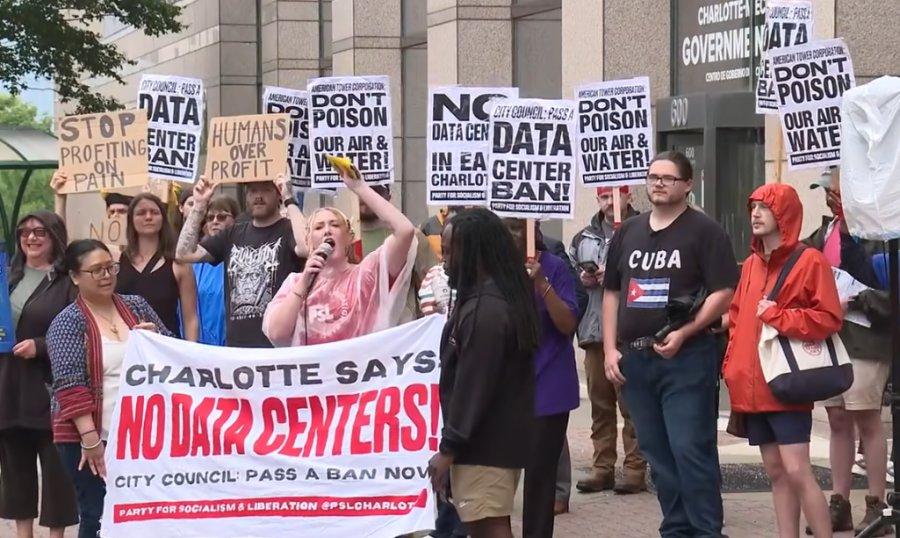
Two planned data center projects in East Charlotte set off the fight in Charlotte, North Carolina. The focal site, a facility owned by Boston-based American Tower Corporation, was to be built in a residential neighborhood where, by the organizers' account, most people did not yet know it was coming. In response, the Charlotte branch of the Party for Socialism and Liberation, or PSL Charlotte, ran a door-knocking campaign through that neighborhood, launched a petition, and worked with other community groups to hold press conferences and organize protests against the projects.43
Carolina Public Press, a nonpartisan nonprofit newsroom, identified PSL Charlotte as the organizing force and quoted chapter member Dana Alhasan describing the canvass: "Either people didn't know about it, or they found out about it earlier from one of their neighbors, or they found out about it from the petition that we had launched," she said. "When we would talk to people about it and the potential impacts, the residents were overwhelmingly extremely concerned about the data center."44
In the run-up to the vote, the chapter turned that canvassing into a visible presence: local coverage shows PSL Charlotte's banner leading a roughly 50-person demonstration, and 36 residents signed up to speak at the May 26 public hearing.45 On the night of June 8, 2026, the City Council voted 11–0, before a packed chamber filled with PSL activists, to enact a 150-day moratorium on new data centers. Alhasan credited the organizing for forcing the vote: "It really was the people that put enough pressure to bring forward the vote to consider a data center moratorium in the first place."46
The win has limits the party is candid about: state law bars North Carolina localities from pausing developments already in the pipeline, so the moratorium covers new projects rather than the two already moving in East Charlotte. But PSL Charlotte is now pressing for a permanent ban. Both a mainstream newsroom and a conservative outlet, A.P. Dillon, independently named the PSL chapter as the organizing force.47
Case Study #2: Prince George's County, Maryland
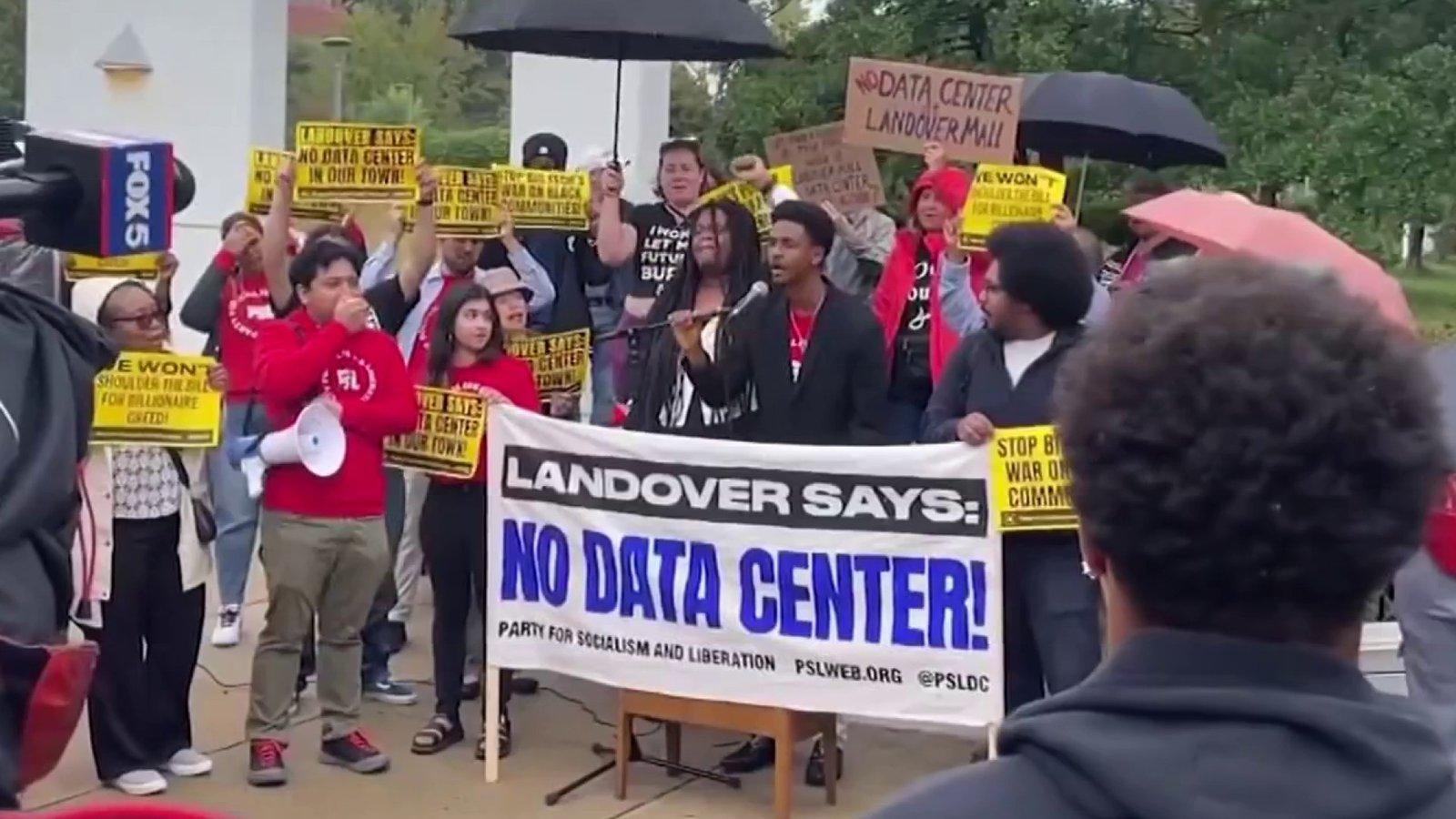
Prince George's County is another example of the PSL leading from the front. WAMU, the NPR affiliate in Washington, captured the group’s impact in a December 2025 headline: "This socialist party is leading the fight against data centers in Prince George's County." By the station's account, the party's DC-area chapter had been coaching residents, including at a session in the Bladensburg Library, to knock on doors against a data center proposed for the former Landover Mall site. Its videos on the issue went viral online, its petition against the project cleared 20,000 signatures, and its rallies and town meetings regularly drew crowds in the hundreds, imposing enough pressure that the county moved to pause data-center permitting.48
The target was Brightseat Tech Park, a roughly $5 billion development by Lerner Enterprises. When the county's data center task force met in Largo in September 2025, turnout was heavy enough that the auditorium and overflow room both filled and many were turned away. The PSL held a rally beforehand, with chants of "Hey, hey, ho, ho, these data centers have got to go" and signs reading "Stop big tech's war on Black communities."49
"We should all be incredibly proud of ourselves," an organizer told the crowd. "The community has shown up 100-fold."50 Isabella Dominique, who has organized with the PSL for five years, told WAMU that "the people of PG County were ready to stand up and fight back, and we felt it was partially our responsibility to help facilitate that," adding that "a lot of elected officials have said they haven't seen this level of mobilization in quite some time."51
The pressure produced results. County Executive Aisha Braveboy ordered a pause on data center permits while the task force finished its work, and council members moved toward a longer moratorium. Braveboy conceded that a 2021 law streamlining data center approvals "was a huge mistake."52 PSL organizer Selah Goodson Bell framed the outcome as a lesson in local mobilization: "Collectively, when they're organized, [residents] have way more power than the politicians at the council, than the task force members, than planning board bureaucrats." Here, too, the PSL is now demanding a permanent ban rather than a pause.53
Case Study #3: Tucson, Arizona
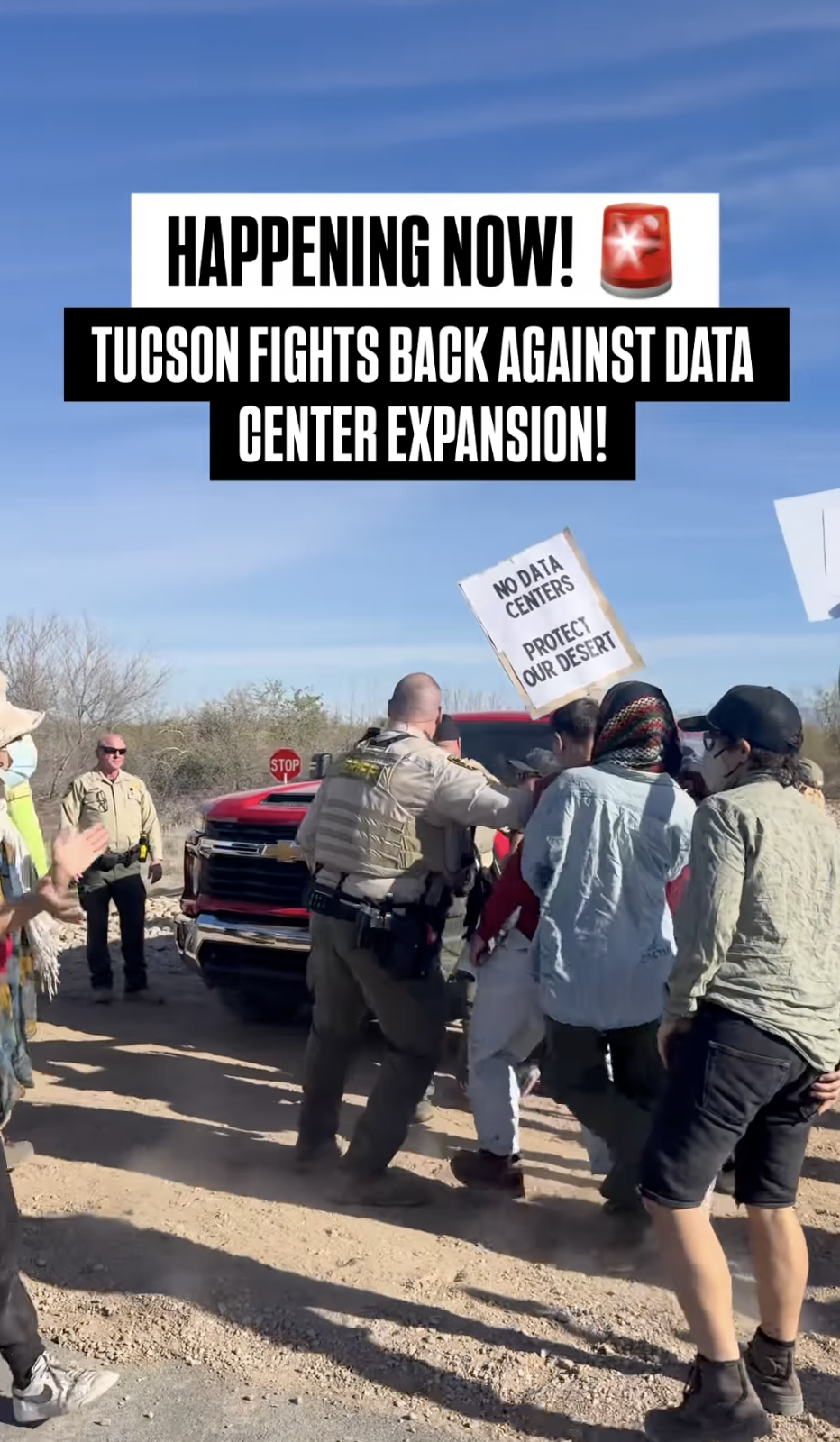
PSL Tucson was one of the three activist groups — alongside the No Desert Data Center Coalition and the Tucson DSA — that, by CaloNews's account, surfaced Project Blue, a roughly $3.6 billion campus tied to Amazon, and "quickly fill[ed] city halls with concerned residents" once people learned of it. In response to that opposition, the City Council rejected the annexation and rezoning 7–0 in August 2025, and Amazon withdrew that December after the developer was forced to switch from water- to air-cooling. The project was delayed for months and forced to reroute to unincorporated Pima County, where it is now proceeding.54 PSL Tucson has since stayed in the fight. When construction began near the Pima County Fairgrounds in April 2026, PSL joined a dawn protest in which demonstrators purposely blocked construction vehicles from entering the site, which the organization documented on its own channels.55
Case Study #4: Chandler, Arizona
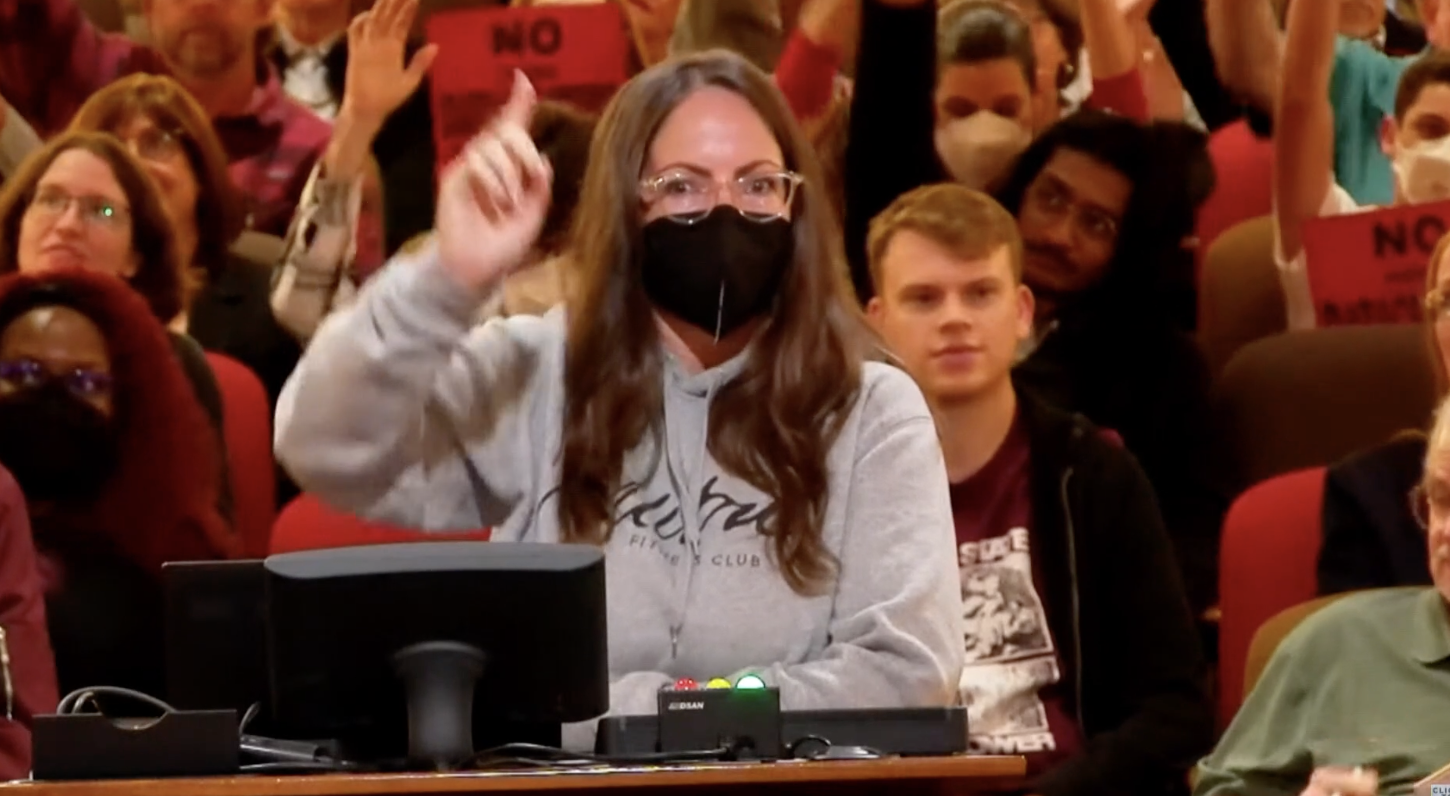
Once residents learned of a roughly $2 billion AI data center rezoning in Chandler, Arizona, PSL Phoenix and PSL Tucson began posting about it and turning people out to city hall. CaloNews described PSL Phoenix as "a local group that has been at the forefront of the fight against AI data centers in the Valley and across Arizona," and quoted its organizer, Lexsiri Coronado, on why the party intervened. Data centers, she said, "are really putting a strain on the energy and water use here in the Valley, and instead of the corporations behind the data centers paying for the increased energy use, it is instead the day-to-day person who has to pay." The council rejected the rezoning 7–0 in December 2025 — a zoning defeat rather than a formal moratorium.56
Case Study #5: Franklin Township, Indiana

The PSL's Indianapolis Liberation Center threw itself into the fight against a $1 billion Google rezoning project in Franklin Township, Indiana, publishing organizing content and then celebrating publicly when Google withdrew its petition on September 22, 2025, minutes before an Indianapolis City-County Council vote at which at least 17 members had pledged to say no. The lead organizers were a local residents' group; PSL was a documented participant that amplified the campaign and touted the win. A non-binding council pause followed.57
Case Study #6: Madison and Dane County, Wisconsin
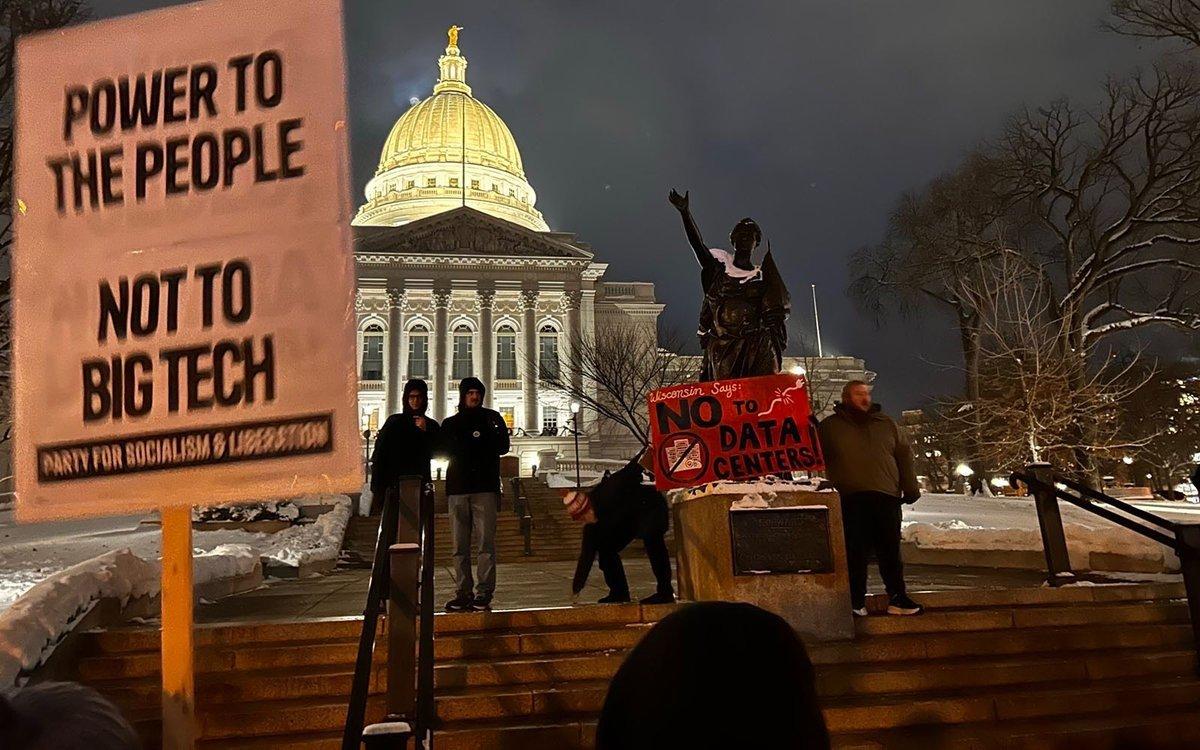
On December 2, 2025, PSL Madison joined 350 Wisconsin and 50501 Madison to rally at the Wisconsin state Capitol and press for a construction freeze on new data centers. Isthmus, WORT-FM, and WKOW all named the PSL chapter as a lead organizer. Within weeks, the Madison Common Council passed a one-year moratorium. Nearby Dane County, where the PSL had established an especially strong ground game, followed with an 18-month moratorium on data centers in June 2026.58
Case Study #7: DeForest, Wisconsin
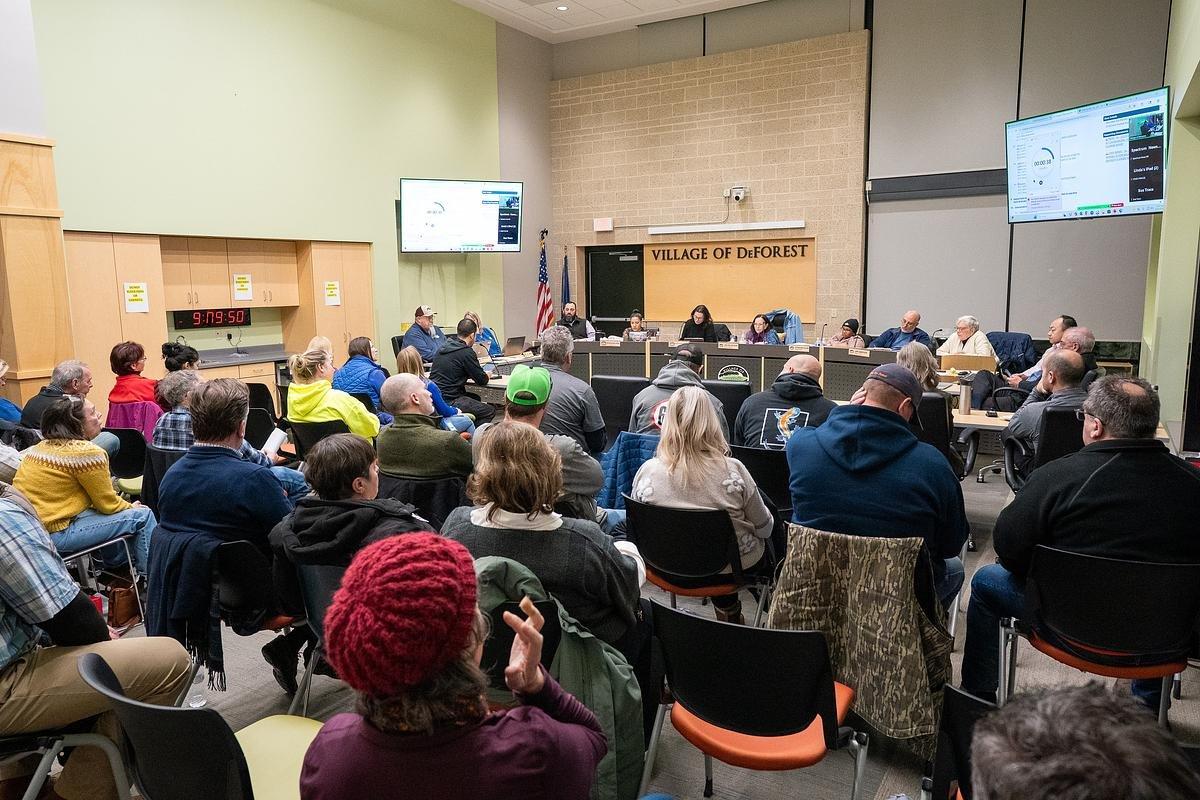
Dane County includes the village of DeForest, home to one of the PSL's biggest Midwest fights: the campaign that helped block the QTS data center. The Blackstone-backed project would have been a $12 billion hyperscale campus, annexing 1,600 acres from the neighboring town of Vienna into the Madison suburb of DeForest. The PSL started warning residents in November 2025, and after that, the organization turned up all over the local coverage. The Daily Cardinal quoted PSL Madison's Eli Morey casting the fight as a question of democracy. "We haven't gotten a single opportunity to vote or participate in a democratic process around AI," he said. "We're being force-fed this new technology with zero say in how or where it's used or [if] we want to use it at all." The paper said PSL Madison was providing support for DeForest and other communities around the state fighting data centers.
WORT-FM reported that the PSL was backing a statewide effort to help communities fight data-center projects. Covering a DeForest village board meeting so packed that attendees overflowed into the hallway, with more than 250 watching online, the news station identified PSL Madison organizer Fon Fleck among the attendees. DeForest was a standout for community engagement, Fleck said, and "the response is honestly very inspiring." That party organizing ran alongside the grassroots "No Data Center in DeForest" group. After months of opposition, and a Wisconsin Watch investigation exposing the nondisclosure agreements behind the deal, the village declared the project "not feasible" on January 27, 2026, and moved to reject the annexation, forcing QTS to withdraw its bid.59
Case Study #8: Athens-Clarke County, Georgia
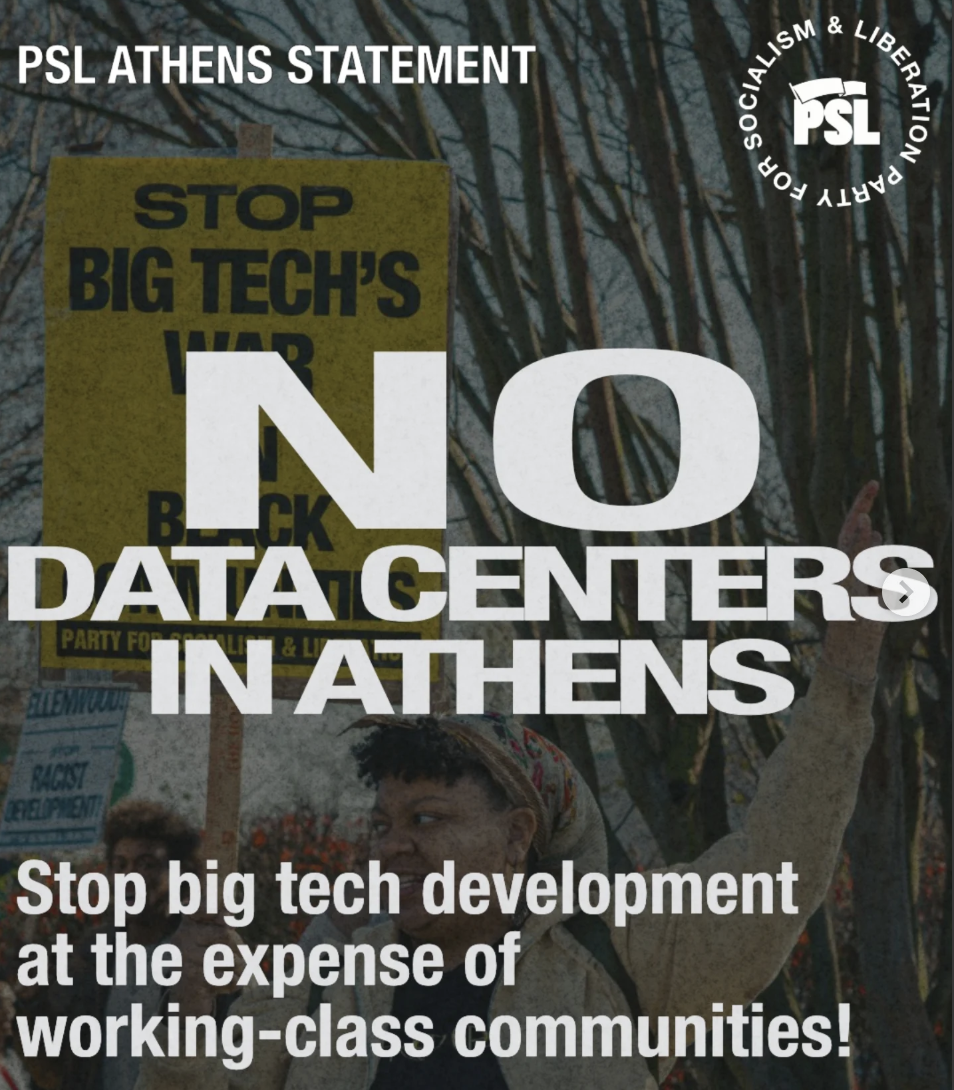
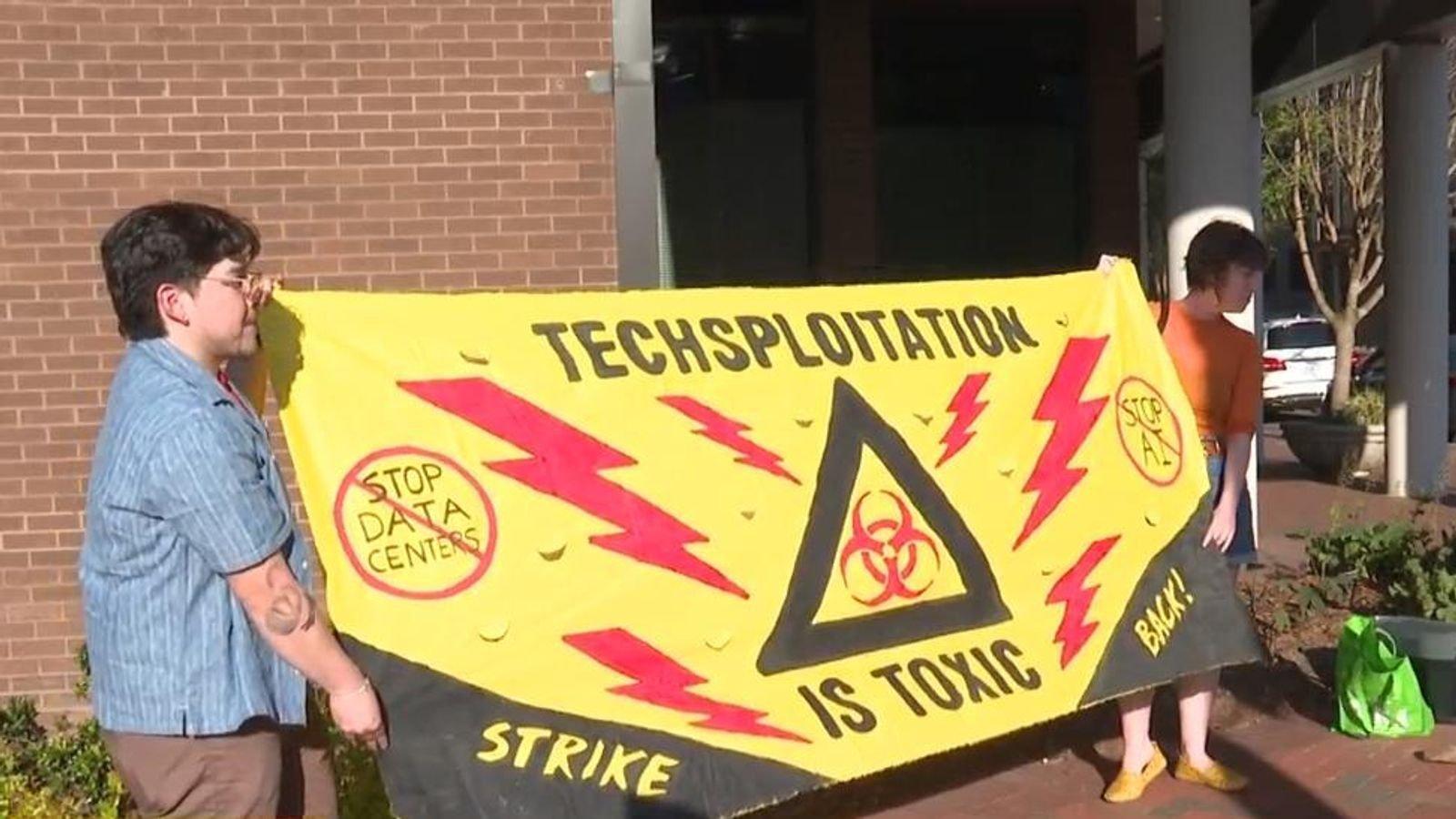
Athens PSL was among several vocal organizers against a Reynolds Capital plan to convert the Athena Studios lot into a roughly 1.3 million square-foot data center beside a trailer-park community, and a chapter member testified at the Mayor and Commission hearing, disputing the developer's environmental claims. The county adopted a temporary moratorium on December 2, 2025. The chapter then publicized the win on its own channels and is now demanding a permanent ban. In an official statement from PSL Athens, the chapter said: “Through the power of grassroots pressure, the Athens community forced Athens-Clarke County to approve a moratorium on new data centers in Athens. But the moratorium is temporary. We must continue to fight back and ensure that no data centers are built in Athens at the cost of working-class communities!”60
Case Study #9: DeKalb County, Georgia
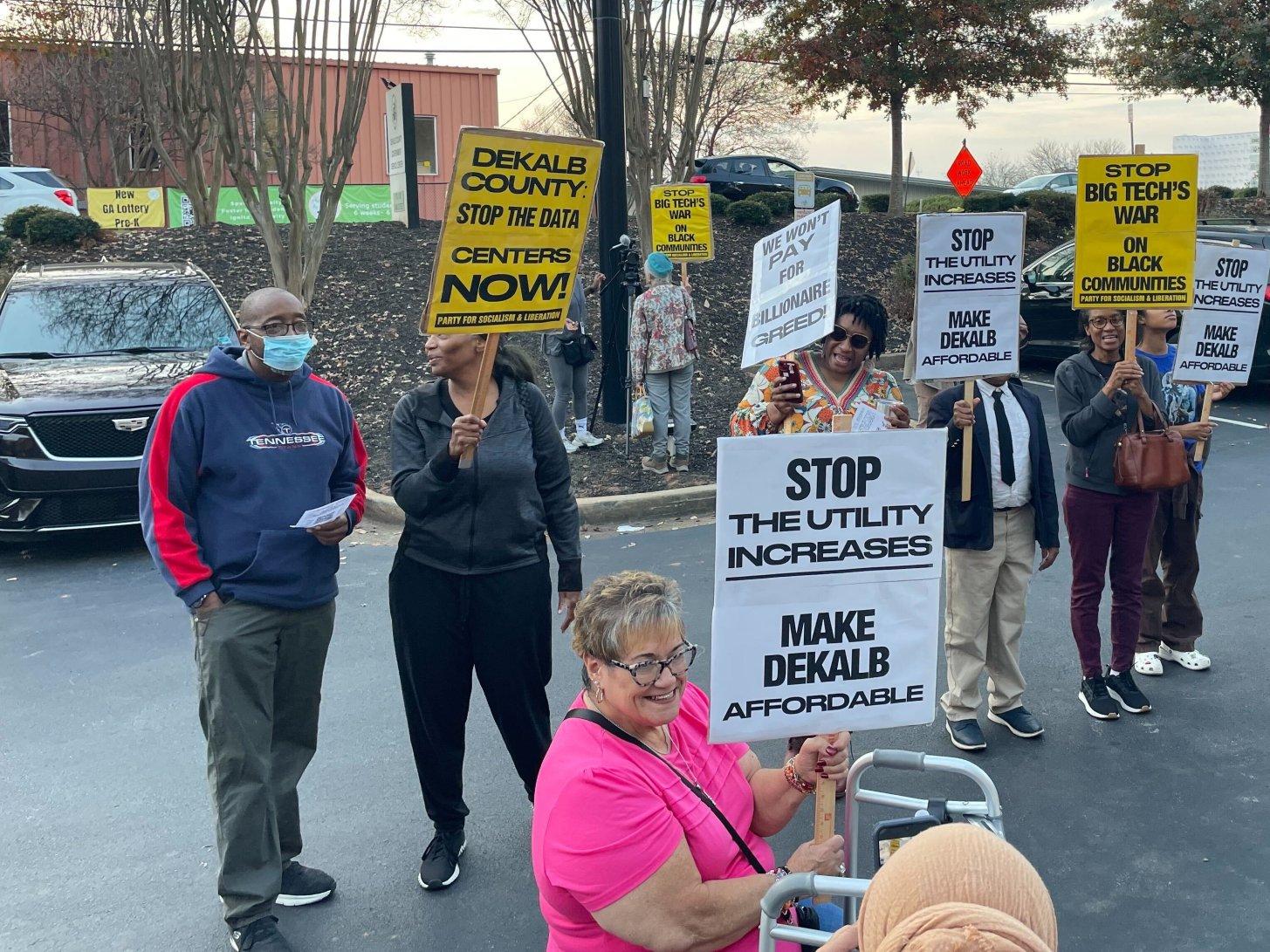
Capital B News reported that "local groups including Renew DeKalb and the Party for Socialism and Liberation went door-to-door, hosted town halls, and mobilized residents to attend county meetings" against a roughly 2 million square-foot Ellenwood project. PSL member Ngaya Swai described the work: "We hosted biweekly community meetings and town halls … bus stops, grocery stores, wherever people were," adding that "once people understand the ramifications … it gives people a lot of fire." PSL members protested outside the November 21, 2025 zoning meeting, where the vote was deferred. In an interview with Capital B News, Swai said the organizing helped extend the county's data-center moratorium, which the commission pushed to June 2026.61
Case Study #10: Durham, North Carolina
PSL Triangle signed on as a named supporter of the "Stop Data Centers and Crypto Mining in Durham" coalition petition, which demanded a 32-month moratorium. Before the hearing, PSL Triangle put out a call to "Pack Durham City Hall" and organized a community rally outside the building before the hearing, where the chapter handed out food and protest supplies to local residents. On May 4, 2026, the Durham City Council voted unanimously for a 60-day moratorium on new data center development, pausing those applications while planning staff-drafted zoning rules. In June the council extended the pause by about ten months, making it a roughly year-long ban. Durham County, a separate body, has since moved toward a data center pause of its own. The PSL chapter documented its turnout calls on its own channels.62
Case Study #11: Cumberland County and Fayetteville, North Carolina
Because the city of Fayetteville sits inside Cumberland County, PSL's fight there unfolded on two levels at once. PSL Fayetteville and Action NC ran one of the state's more sustained anti-data-center campaigns, repeatedly turning residents out to demand a moratorium — most visibly before the June 8, 2026 city council meeting, when 60 to 70 protesters rallied outside City Hall in the rain, a demonstration the Fayetteville Observer reported was "organized by the Party for Socialism and Liberation and Action NC," before they packed the chamber chanting "No UDO." "We want a moratorium because it would allow us to have the necessary discussion and research that would help us understand the impact of data centers," PSL organizer Isaac Lapac told the paper.63
That organizing paid off at the county level. PSL Fayetteville was one of a coalition — with Action NC, the Fayetteville NAACP, and Fayetteville Freedom for All — credited with the win when the Cumberland County Board of Commissioners voted 7–0 in June 2026 to enact a six-month moratorium on new data centers across the county's unincorporated areas, through December 15, 2026.64 Within the city of Fayetteville, the work continues. The council has so far declined to pass its own moratorium, opting instead for a 120-day pause and zoning revisions that would regulate rather than halt data centers, with a public hearing set for August 10. In the meantime, PSL keeps mobilizing for a full city moratorium.65
Case Study #12: Denver, Colorado
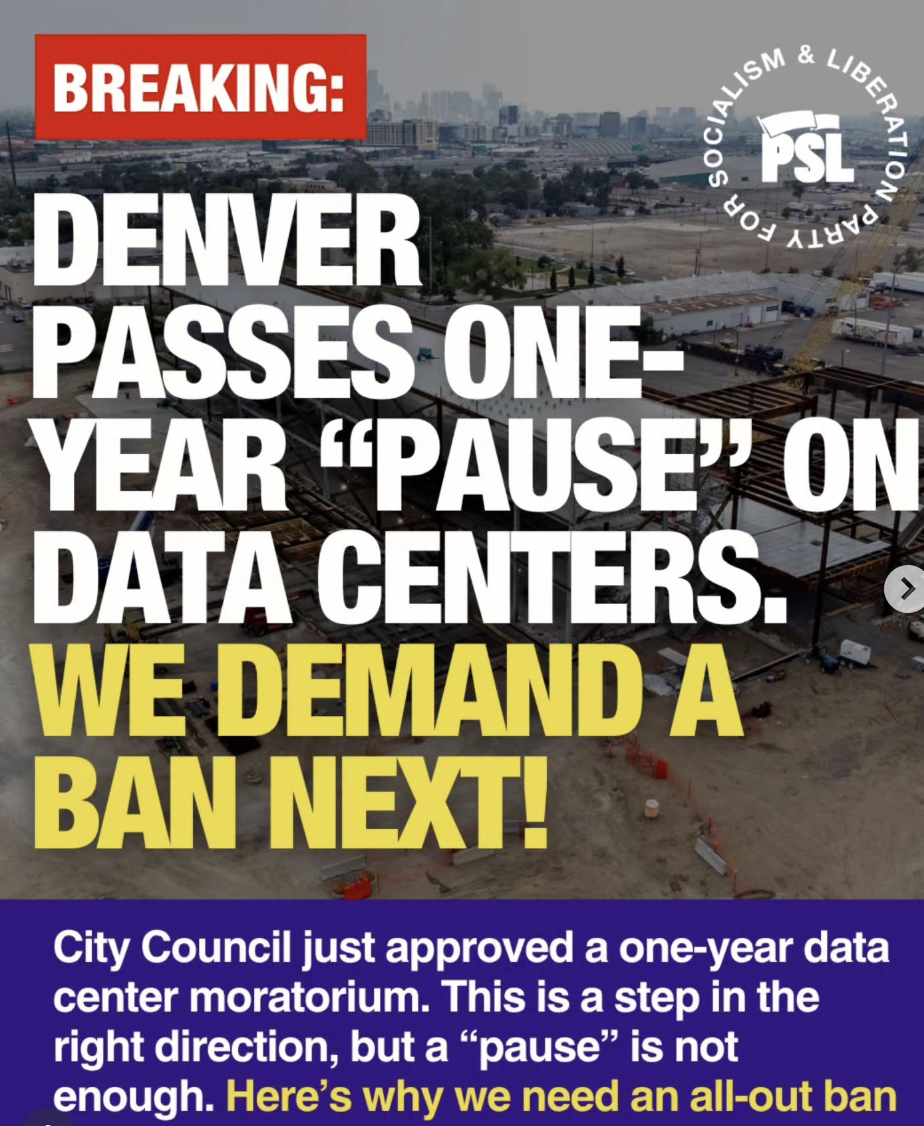
PSL Denver organized alongside the Globeville–Elyria-Swansea Coalition against CoreSite's DE3 project, a Stonepeak joint venture valued at more than $250 million, publishing a viral video that directed residents to email the council, sign up for public comment, and pack the City and County Building on May 18. The council voted unanimously that night for a one-year moratorium, with 58 public-comment speakers largely in support. Not content with a moratorium alone, PSL demanded an outright ban afterwards and encouraged its followers to write the city council to enact one. The chapter is still pushing for a full data center ban.66
Case Study #13: Monterey Park, California
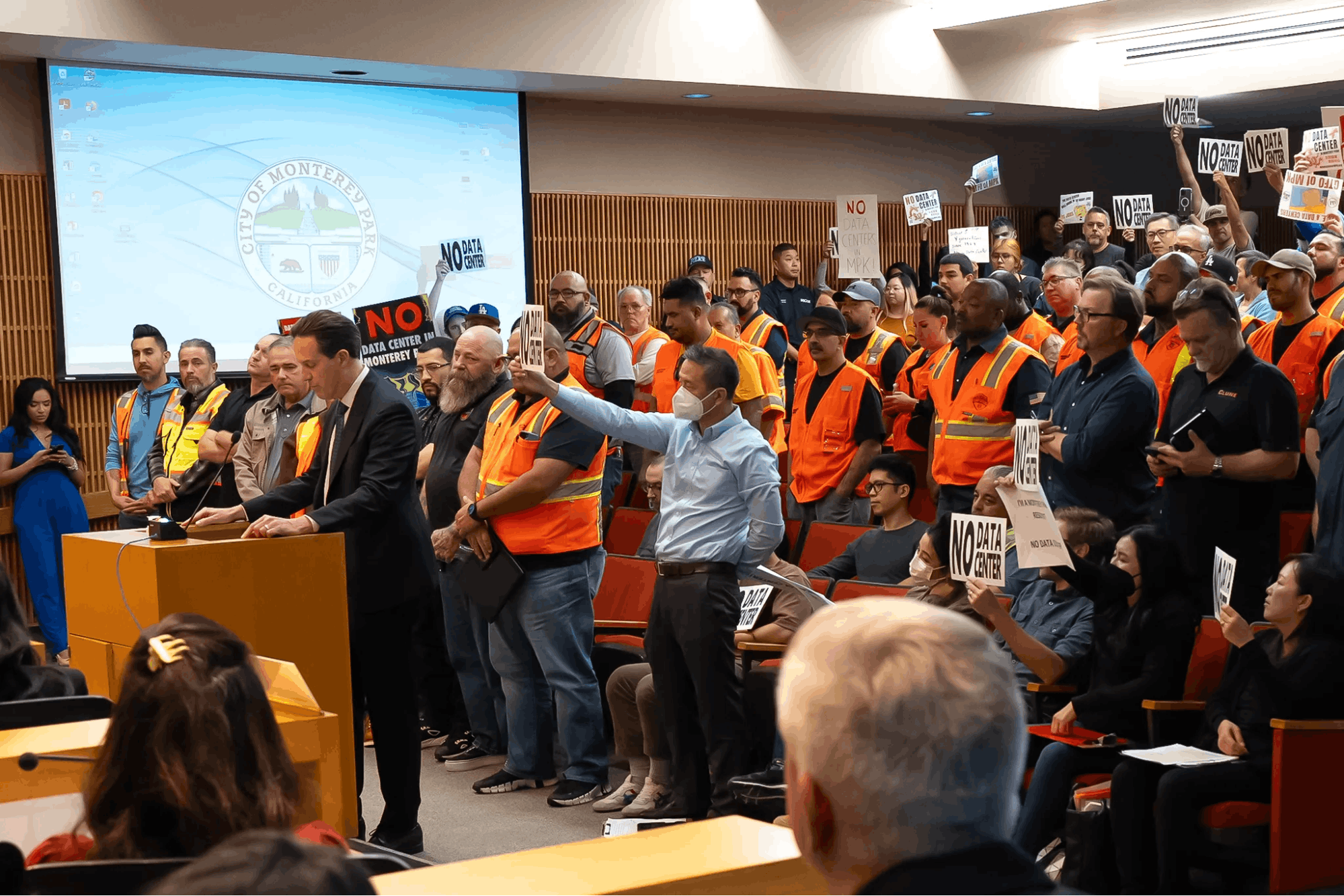
The No Data Centers SGV Coalition, which lists the PSL's Los Angeles chapter as one of six partners, ran teach-ins, a roughly 4,500-signature petition, records requests, and a ballot campaign against a 250,000-square-foot project. The developer withdrew its application in March 2026, and in June, Monterey Park voters approved Measure NDC, a permanent data center ban, with roughly 86% support. The coalition's organizing also rippled into data center moratoria in neighboring El Monte, Baldwin Park, and Montebello and a zoning ban in Alhambra.67
Case Study #14: Box Elder County, Utah

Salt Lake PSL helped sponsor the mass rallies against Kevin O'Leary's "Wonder Valley" campus — a natural gas-powered computing center with a proposed valuation of up to $100 billion — co-sponsoring the May 23 demonstration on the Utah Capitol steps, turning out hundreds, and helping generate more than 3,000 public comments. After the state Senate president demanded a 75% reduction in the data center project’s size, O'Leary agreed to roughly halve the proposed footprint, and the county passed a moratorium that exempts O’Leary’s project. The project continues in reduced form, and PSL Salt Lake was one of several named coalition members in the fight.68
Ongoing Campaigns
The PSL’s nationwide campaign includes several data center fights that are still ongoing.
Case Study #15: New Orleans, Louisiana
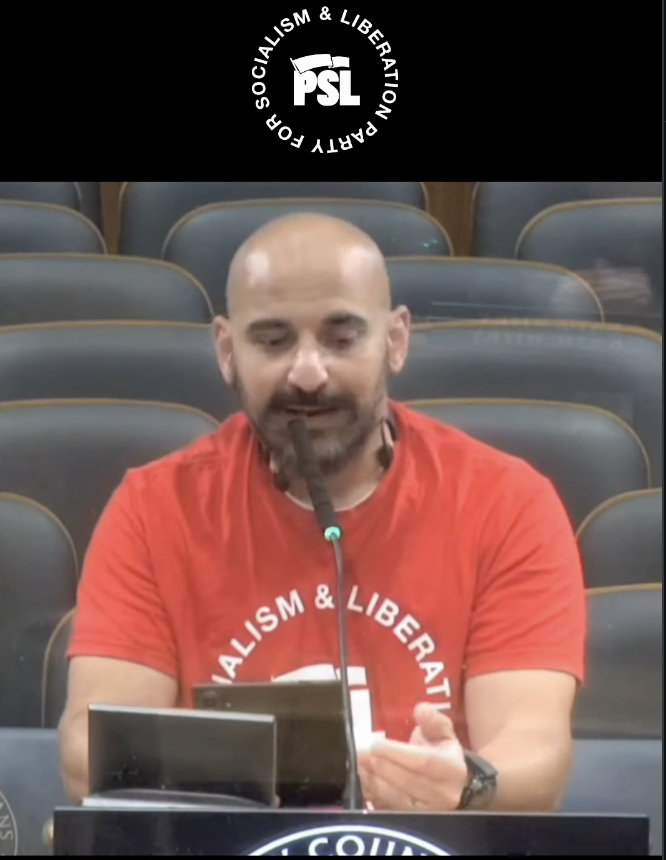
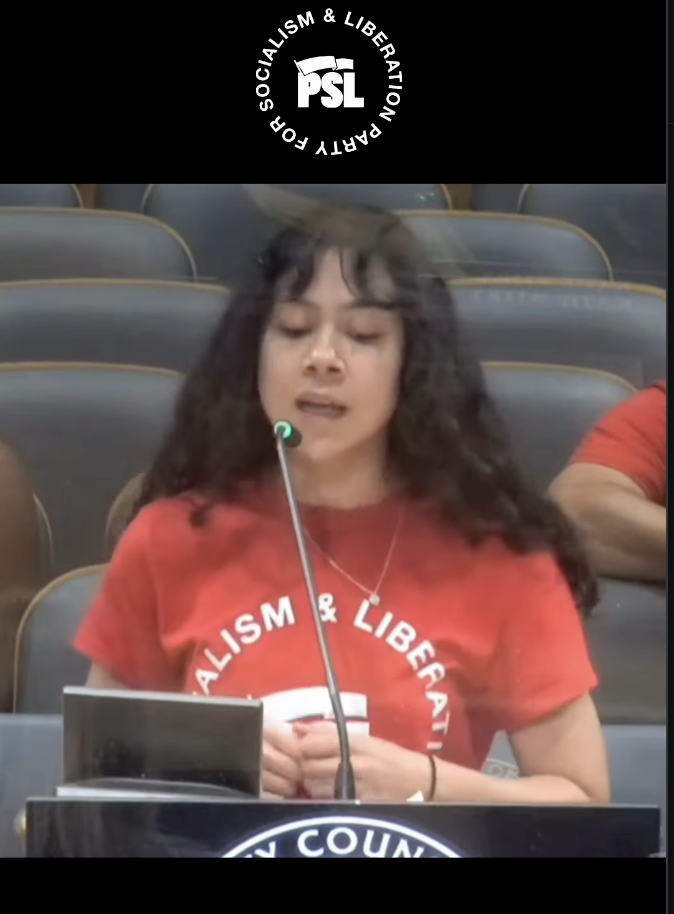
In New Orleans, Louisiana, the PSL is campaigning for an outright, permanent data center ban. PSL expressed early opposition to the construction of the MS Solar Grid Data project in New Orleans East, which the community successfully blocked in January 2026. That same month, the city council passed a one-year moratorium on data center construction. PSL members have since given public comments at the City Planning Commission's late-March hearings demanding the city reject data centers entirely, calling them "industrial projects that drain and pollute resources while pushing the cost onto working-class communities."69
Case Study #16: Cleveland, Ohio
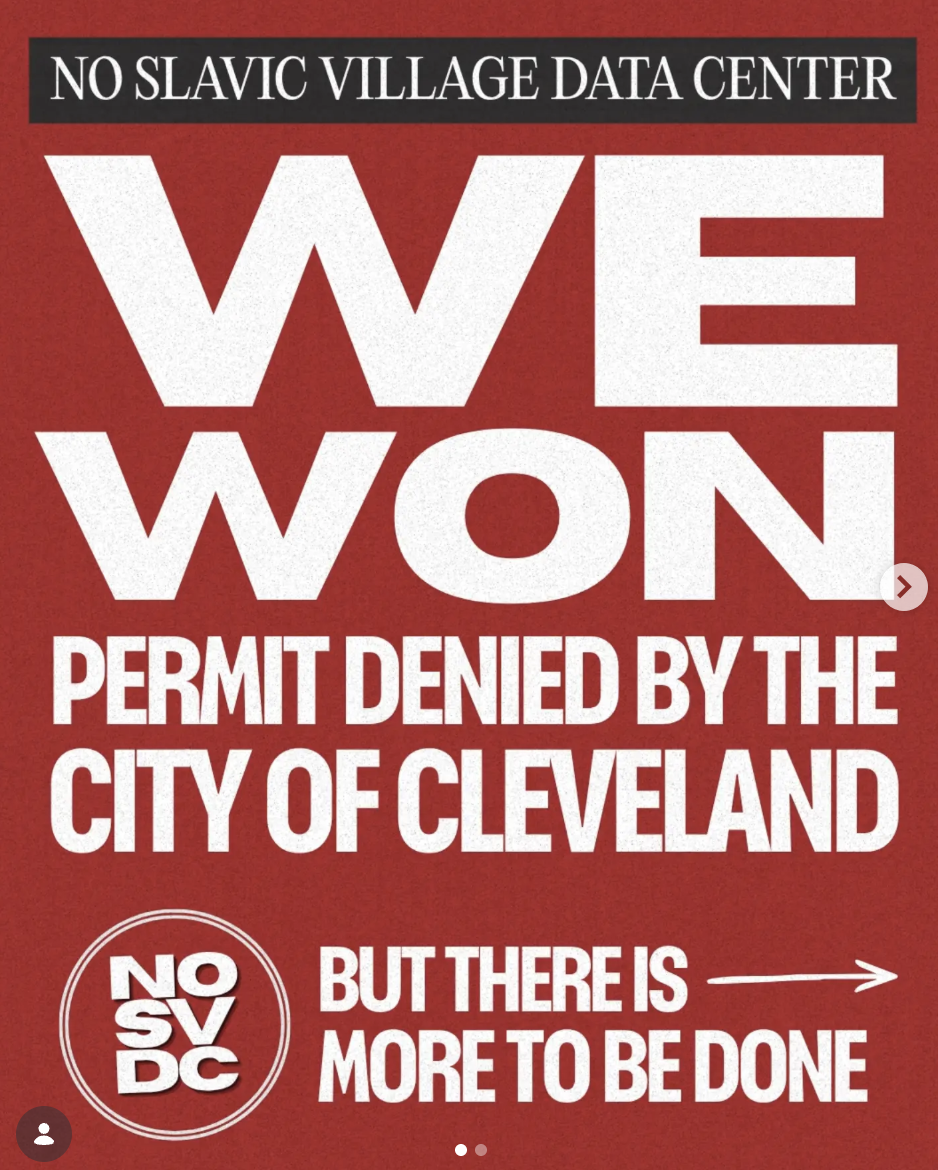
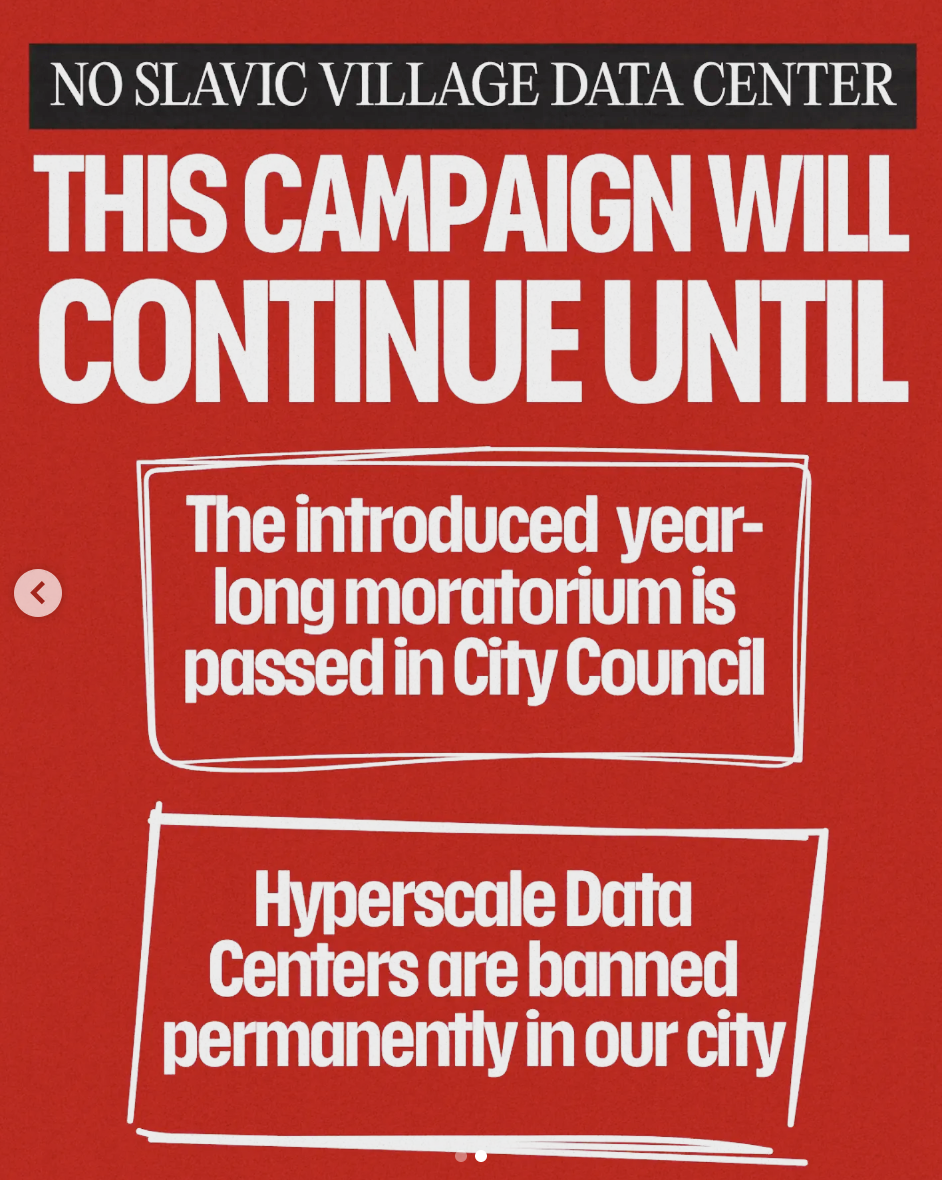
In Cleveland, Ohio, the newest front opened in May 2026, when a $1.6 billion, 35-acre hyperscale data center surfaced for the Slavic Village neighborhood. PSL Cleveland moved within days, publishing viral videos, standing up a dedicated "No Slavic Village Data Center" account (now called "No CLE Data Centers"), canvassing residents, and calling for "all residents" to attend a May 23 townhall to protest the project. On May 14, before that townhall could be held, the Office of Mayor Justin Bibb announced that the city had denied the developer's permit, his office citing a failed zoning review and "serious concerns about hyperscale, standalone data centers being placed in residential neighborhoods." Local coverage did not credit the PSL or any specific organization, but the party nonetheless claimed the victory as its own, posting a "WE WON" graphic the day the permit was denied. PSL is now pushing for a citywide ban on all hyperscale data centers in the city and is gathering petition signatures and driving attendance at public gatherings to increase support for a citywide ban.70
Case Study #17: Milwaukee, Wisconsin, and Wisconsin-Statewide (Two Campaigns)
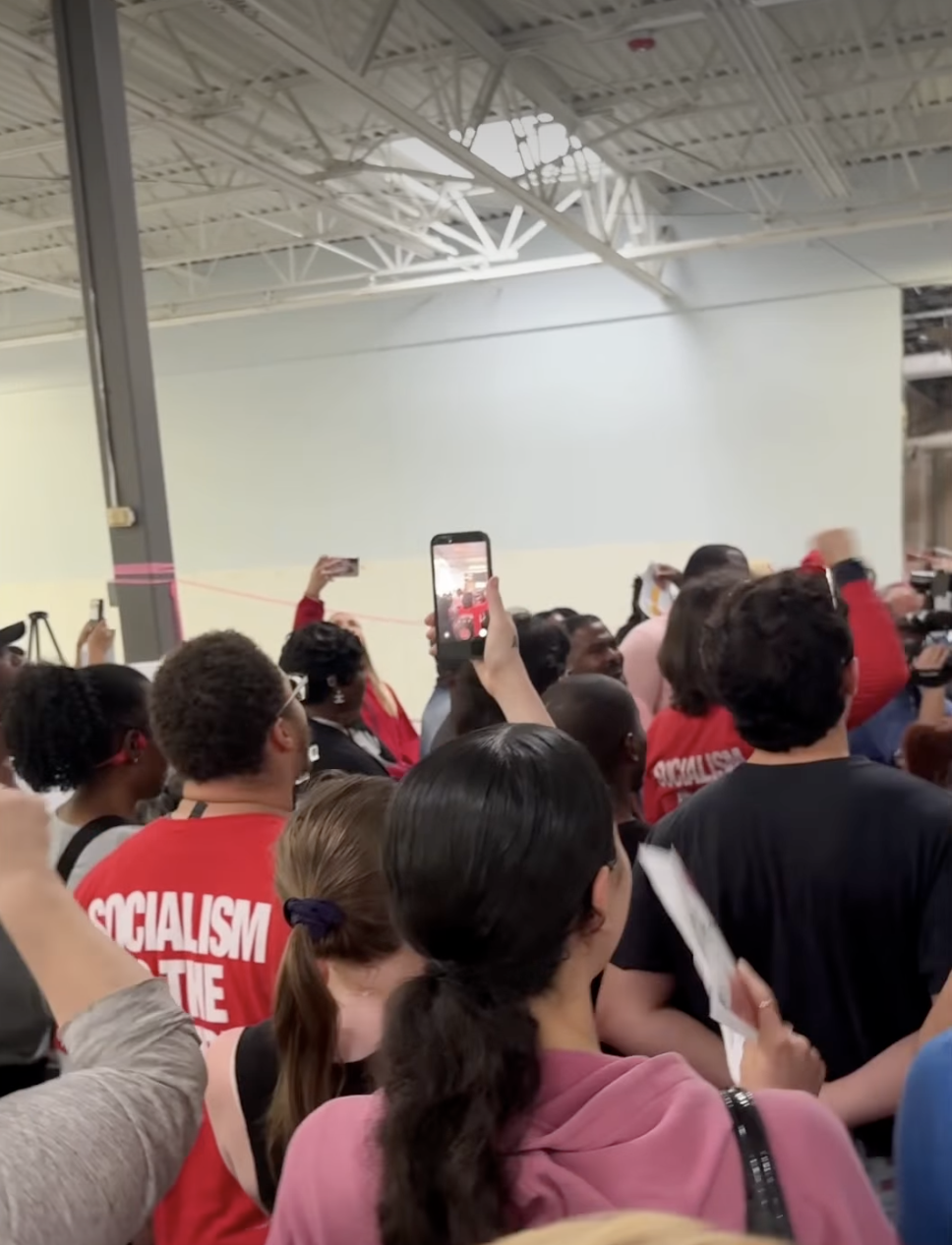
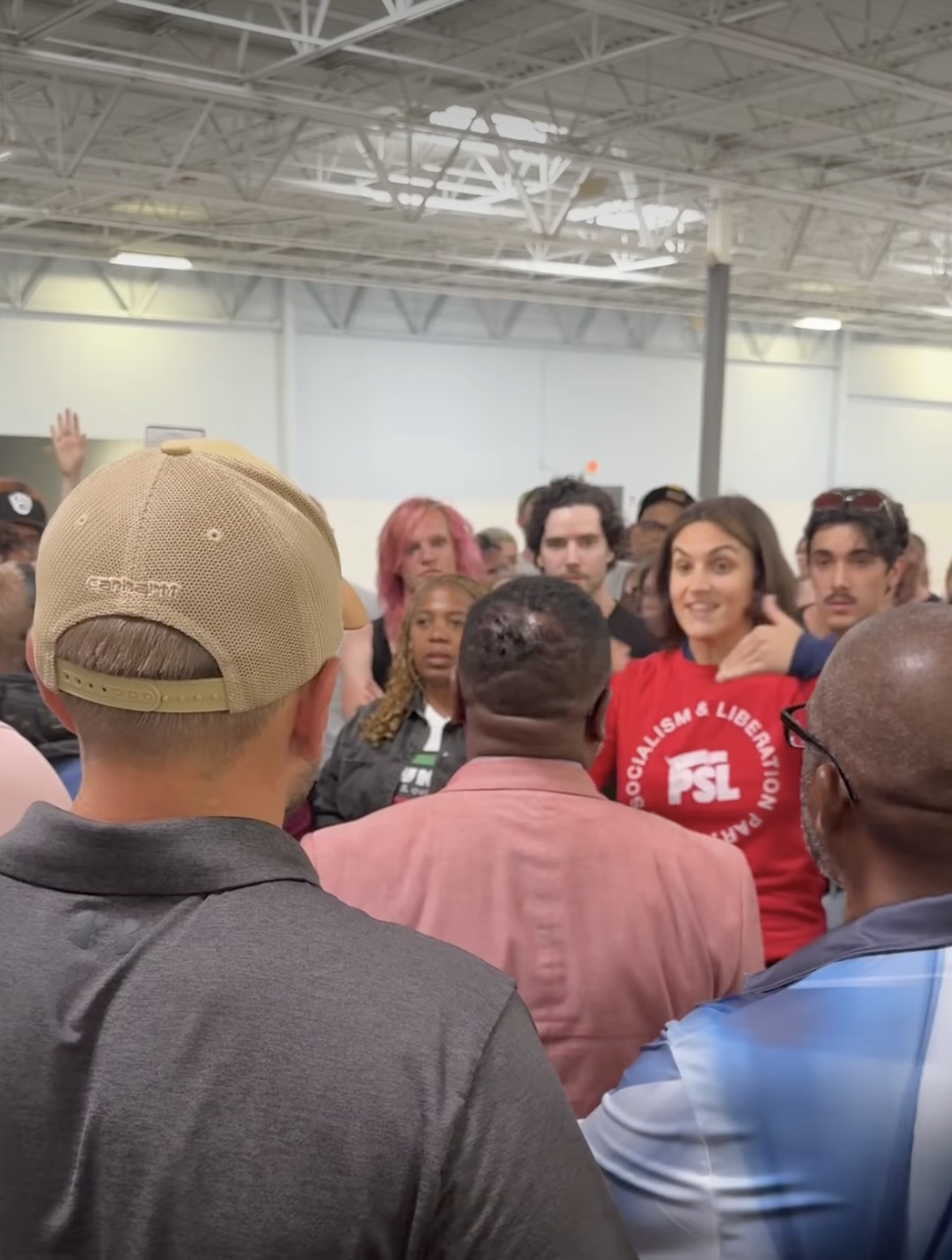
In Milwaukee, Wisconsin, PSL Milwaukee is named as one of two activist groups that called for community action against a Midtown data center, including a viral social media post that gained more than 10,000 views overnight. The community organizing succeed in pushing the Midtown data center proposal off the Common Council agenda in May 2026, but the fight that is still live.71 Across Wisconsin, the party has acted as a deliberate statewide organizer, coining the slogan "America's Dairyland, not America's Data Land," running "Data Center Playbook" teach-ins with the Sierra Club, and holding a statewide day of action at the Capitol. As reported by Shepherd Express, “Community-driven organizations have mobilized in opposition to these data centers statewide. The Party for Socialism and Liberation (PSL) is heavily involved in such campaigns … . Janesville was the first place the PSL joined with organizers last summer, and now they are partnered with organizers statewide.72
Case Study #18: Prichard, Alabama

In Prichard, Alabama, PSL Mobile helped gather more than 3,000 petition signatures and issued a call to its members to “Pack the Townhall” of a June 2026 city hall meeting against a roughly $93 million Edged Energy project, alongside the lead groups MEJAC and the NAACP. The PSL also mobilized volunteers to canvass the community to raise awareness for the data center proposal. At the standing-room-only June 11 townhall, residents pressed Edged officials over power demand, electricity bills, and environmental impact. The local news featured PSL member Michael Tobias, who raised his concerns about the impact of the data center on the local economy: “I wanted to make sure that, of course, these jobs would be coming from Prichard.” Edged described the project as a networking facility rather than an AI data center, but it has promised to build its sites with an "AI-ready" waterless cooling system designed for the high-density loads "required from Artificial Intelligence and high-performance GPU-based computing," leaving the door open to future AI use.73
Where the PSL Failed
Capturing the full picture of PSL activism requires documenting failed campaigns as well. In Sangamon County, Illinois, PSL Central Illinois rallied before the vote and protested outside the regional growth alliance, but the county board approved a roughly $500 million CyrusOne project 17–10 in April 2026.74 In Louisville, Kentucky, the local chapter delivered public comment and called supporters to pack the planning commission, but the project was approved in March 2026.75 The party shows up and loses sometimes, but its record shows it wins far more often than not.
A theme runs through the wins: where a city or county passes a temporary moratorium, the PSL does not declare victory and leave. In Charlotte, Denver, Prince George's County, and Athens, the party has pivoted immediately to demanding a permanent ban. For the PSL, the pause is more of a beachhead than an endpoint.
Scale and Significance
BPI's first report on foreign influence showed how the Singham network and other CCP-aligned actors have worked to shape public discourse to influence public policy. It also raised a fair question: what is the material impact, if any, of the Singham network's anti-data-center advocacy?
This report answers that question directly. Across 21 documented campaigns in 14 states, PSL-led and PSL-supported protests, petitions, and public demonstrations have dealt a significant blow to America's AI buildout. Consider the damage wrought by the campaigns PSL participated in: $23.6 billion in proposed AI investment delayed or blocked; 10 local moratoria and 1 permanent data center ban; 2 city-council zoning rejections and 2 large projects scrapped outright (Google's $1 billion Franklin Township campus and QTS's $12 billion DeForest campus), with the wins spread across 9 states.
Here it should also be noted that the $23.6 billion figure is conservative. BPI was able to calculate delayed or blocked funding only for projects that publicly reported proposed investment amounts but not for the 5 data center projects included in the above case studies that did not disclose proposed investment amounts.
Beyond the financial damage, the political terrain is shifting against the buildout. A Gallup poll in March 2026 found that 71 percent of Americans would oppose an AI data center in their own area, 48 percent strongly.76 Only 32 percent of US adults now say they trust AI, and just 17 percent say they want to embrace it, according to research from Edelman.77 The PSL and the rest of the Singham network are far from the only forces behind these numbers. But they show up at fight after fight, and that makes them a real part of the story.
The data center debate is so contentious that it is likely the findings of this report will be misrepresented upon publication. So among the many clarifications already outlined, it is necessary to add one more: this report does not assert that members of the PSL are Chinese operatives. To be sure, many members of the organization are likely completely unaware of the CCP-aligned nonprofit system that supports it. But it does assert that the party draws its leadership from the nonprofit network of a Shanghai-based Marxist whose groups produce content aligned with the Chinese government’s positions and who is the subject of multiple federal investigations as a result.
We have documented above the role this activist network has played in opposition to data center development in the United States. Reasonable observers may disagree about the precise scale of the PSL’s influence, or about how much weight to assign to its activity in particular local fights. But the broader concern persists, whether or not the PSL alone determined any specific outcome. The concern is that an explicitly Marxist-Leninist organization, with documented ties to China and a stated objective of abolishing America’s “economy, state and governmental system,” has become an active participant in the politics of data center development, including campaigns for permanent bans. At the same time, the public has little visibility into who funds the organization’s activities outside the narrow confines of federal election reporting. That combination raises serious transparency concerns. At a minimum, policymakers, journalists, and the public should have a clearer understanding of who is financing organized campaigns that shape the future of America’s AI infrastructure.
Conclusion: A Call For Transparency
In 1999, two colonels in the People’s Liberation Army published Unrestricted Warfare, a book arguing that modern conflict would increasingly move beyond the battlefield. Future wars, they wrote, would not be limited to armies, missiles, or conventional military confrontation. They would extend into finance, law, media, technology, public opinion, and the political life of rival societies.
That insight is more relevant today than it was when the book was published. Great power competition in the 21st century is subtle, distributed, and memetic. It operates through narratives as much as weapons, through local institutions as much as national governments, and through social fracture as much as direct coercion. A campaign need not look like traditional espionage to serve the strategic interests of a foreign adversary. It can instead look like a series of isolated townhall disputes, zoning fights, petitions, viral videos, and city-council moratoria.
That is why the pattern documented in this report deserves national attention. The opposition to data centers in the United States is not monolithic, and much of it is plainly organic. Americans have legitimate concerns about water use, electricity prices, land use, noise, and the character of their communities. Those concerns should be taken seriously. But legitimate local grievances can also be identified, amplified, and redirected by organized actors whose objectives are not local, environmental, or even democratic. The presence of authentic civic concern does not preclude the presence of foreign-aligned influence. In fact, the former is often the raw material upon which the latter depends.
This report has shown that a Marxist-Leninist organization with documented ties to the Singham network, overlapping leadership with China-aligned nonprofit entities, and undisclosed general funding has become a recurring force in campaigns to block, delay, or permanently ban data center development across the country. In some cases, the PSL led from the front. In others, it operated inside broader coalitions. But across case after case, the same pattern appears: a national political organization with documented ties to China inserting itself into local disputes over the infrastructure needed to sustain American leadership in artificial intelligence.
The central question is not whether every resident who opposes a data center is acting in bad faith. They are not. Nor is the question whether the PSL alone determined the outcome of every moratorium, zoning rejection, or cancelled project discussed in this report. It did not. The central question is whether the United States can afford to remain indifferent when a foreign-aligned activist network with opaque funding repeatedly intervenes in the politics of critical technological infrastructure.
We believe the answer is no.
America’s AI buildout is no longer a narrow question of local land use. It is a strategic contest over compute, energy, industrial capacity, and national power. The city-council fights described in this report may appear small when viewed one at a time. Taken together, they form part of a broader political struggle over whether the United States will build the infrastructure required to compete in the 21st century.
The purpose of this report is to bring those segmented disputes into a larger national frame. Lawmakers, journalists, and concerned citizens should be able to evaluate local data center fights with full knowledge of the organized interests participating in them. That requires transparency into who is funding these campaigns, how foreign-aligned networks are shaping the debate, and whether America’s adversaries are exploiting legitimate domestic concerns to weaken the country’s technological position.
A free society depends on open debate. But open debate also depends on knowing who is speaking, who is organizing, and who is paying. Americans deserve that transparency before the infrastructure of the AI age is delayed, restricted, or banned in their name.
Addendum:
A Breakdown of the Topline Numbers
Across 21 documented local campaigns in 14 states, the Party for Socialism and Liberation has been a critical mobilizer in efforts that delayed or blocked roughly $23.6 billion in proposed AI / data-center investment, secured 10 local moratoria and 1 permanent data center ban, and forced 2 city-council zoning rejections and 2 project withdrawals — with 5 campaigns still active and 2 losses. The wins are concentrated in nine states (NC, MD, AZ, IN, WI, GA, CO, CA, UT).
How the $23.6 Billion Adds Up
The figure counts only projects that had a publicly disclosed dollar value and were stalled, rejected, or withdrawn in connection with PSL-involved organizing. Each amount is the developer's or reported estimate.
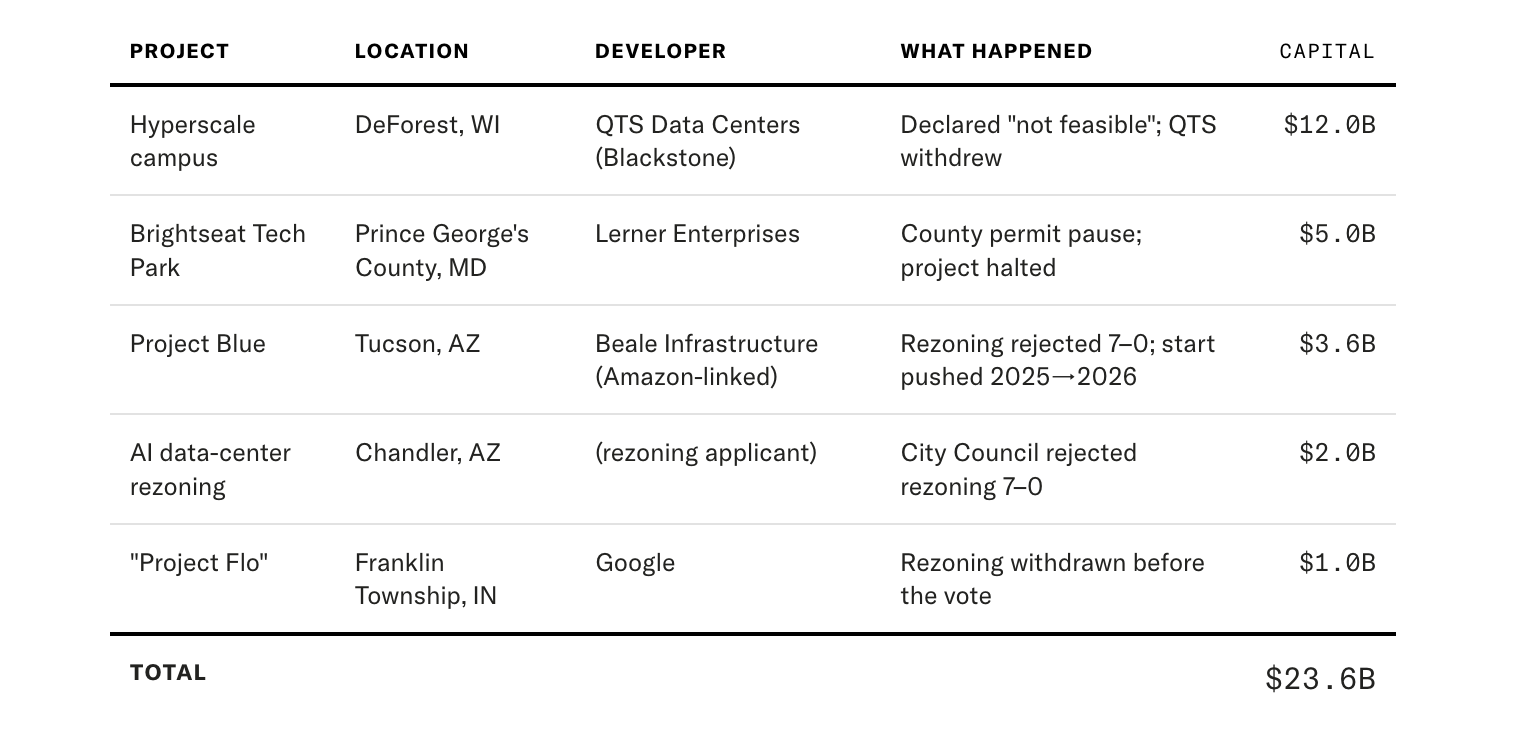
Not summed in: moratoria with no disclosed figure; Box Elder's "Wonder Valley" megasite (scaled back but continuing); and early-stage proposals never under contract. At least five additional stalled-or-blocked projects had no disclosed dollar value, so the $23.6B is conservative.
What Each Number Counts
10 moratoria (city/county pauses on new data centers): Prince George's County, MD · Charlotte, NC · Madison, WI · Dane County, WI · Athens-Clarke County, GA · DeKalb County, GA · Durham, NC · Cumberland County, NC · Denver, CO · Box Elder County, UT.
1 permanent ban: Monterey Park, CA
4 rejected or scrapped: Tucson, AZ and Chandler, AZ (city-council zoning rejections); Franklin Township, IN and DeForest, WI (projects withdrawn before a vote).
5 active campaigns (ongoing, no final outcome): Cleveland, OH · New Orleans, LA · Milwaukee, WI · Wisconsin (statewide) · Prichard, AL.
2 losses (approved despite PSL opposition): Sangamon County, IL (CyrusOne) · Louisville, KY.
____________________________________________________________________________
1. The People’s Forum (@PeoplesForumNYC), X (formerly Twitter), December 22, 2021. https://x.com/PeoplesForumNYC/status/1473312812944531457.
2. Party for Socialism and Liberation, Program and About pages. https://pslweb.org/program/ and https://pslweb.org/about/
3. Party for Socialism and Liberation, Program and About pages. https://pslweb.org/program/ and https://pslweb.org/about/
4. Bitcoin Policy Institute, Foreign Influence in the Campaign against American AI (May 2026). https://www.btcpolicy.org/articles/foreign-influence-in-the-campaign-against-american-ai
5. Sale price and buyer: New York Times, "How a U.S. Tech Mogul Used Nonprofits to Sow Chinese Propaganda," Aug. 5, 2023, https://www.nytimes.com/2023/08/05/world/europe/neville-roy-singham-china-propaganda.html; Jason Smith, Chairman, House Committee on Ways and Means, to Manolo De Los Santos, The People's Forum, September 4, 2025, https://waysandmeans.house.gov/wp-content/uploads/2025/09/9.4.25-The-Peoples-Forum-Letter.pdf.
6. Vijay Prashad (@vijayprashad), X, Dec. 2021. https://x.com/vijayprashad/status/1473292369466478598
7. New York Times, "How a U.S. Tech Mogul Used Nonprofits to Sow Chinese Propaganda," Aug. 5, 2023 (Mara Hvistendahl, David A. Fahrenthold, Lynsey Chutel, Ishaan Jhaveri). https://www.nytimes.com/2023/08/05/world/europe/neville-roy-singham-china-propaganda.html. The Singham–Jodie Evans marriage and CodePink funding are documented in the same investigation.
8. New York Times, "How a U.S. Tech Mogul Used Nonprofits to Sow Chinese Propaganda," Aug. 5, 2023. https://www.nytimes.com/2023/08/05/world/europe/neville-roy-singham-china-propaganda.html
9. Fox News Digital review of IRS filings (March 2026), documenting ~$278 million from Singham-controlled entities into six US nonprofits (BreakThrough/BT Media, CodePink, the Justice and Education Fund, The People's Forum, the People's Support Foundation, and Tricontinental), 2017–2023. https://www.foxnews.com/politics/lawmakers-raise-alarm-neville-roy-singhams-278m-network-spreading-ccp-propaganda-us
10. House Committee on Energy and Commerce, "Chairmen Guthrie, Joyce, and Latta Request Investigation of Foreign Adversaries' Efforts to Block American Data Center Buildout," June 4, 2026. https://energycommerce.house.gov/posts/chairmen-guthrie-joyce-and-latta-request-investigation-of-foreign-adversaries-efforts-to-block-american-data-center-buildout
11. Office of Sen. Tom Cotton, "Cotton to DOJ: Investigate Communist China Influence on Data Center Development," June 10, 2026. https://www.cotton.senate.gov/news/press-releases/cotton-to-doj-investigate-communist-china-influence-on-data-center-development
12. House Ways and Means Committee (May 5, 2026), https://waysandmeans.house.gov/2026/05/05/chairman-smith-reasserts-demands-for-ccp-linked-non-profits-to-comply-with-committee-oversight/; House Oversight Committee (Comer and Luna to Treasury, Sept. 15, 2025), https://oversight.house.gov/release/comer-and-luna-ramp-up-probe-into-ccp-linked-funding-fueling-civil-unrest-in-the-united-states/; Senate Judiciary (Grassley to DOJ/FBI, spring 2025), https://www.grassley.senate.gov/imo/media/doc/grassley_to_doj_fbi_-_code_pink_and_the_peoples_forum.pdf
13. Party for Socialism and Liberation, Program. https://pslweb.org/program/
14. Party for Socialism and Liberation, Program. https://pslweb.org/program/
15. Party for Socialism and Liberation, Program. https://pslweb.org/program/
16. "Party for Socialism and Liberation's 2024 Campaign Sets Party Record and Recent High Mark for Socialist Candidates," Independent Political Report, December 2024, https://independentpoliticalreport.com/2024/12/party-for-socialism-and-liberations-2024-campaign-sets-party-record-and-recent-highmark-for-socialist-candidates/; 2020 result (La Riva, 84,905): Ballotpedia, https://ballotpedia.org/Gloria_La_Riva; 2024 result (De la Cruz/Garcia, 167,772; on the ballot in 19 states; tallied in 36): Ballot Access News (Dec. 22, 2024), https://ballot-access.org/2024/12/22/claudia-de-la-cruz-receives-official-vote-tallies-in-36-states/
17. Hudson Crozier, "China-Linked Group's Socialist 'Liberation Centers' Coming to a Town Near You," Daily Caller News Foundation / Daily Signal, May 19, 2026 (count of "at least 28" centers; the description of the centers as places to "cultivate 'revolutionary' thought and attract new local followers"; and the Stu Smith quote). https://www.dailysignal.com/2026/05/19/liberation-centers-town-near-you/
18. International Peoples' Assembly founding and Caracas 2019 (Maduro address): Peoples Dispatch, Feb. 28, 2019, https://peoplesdispatch.org/2019/02/28/international-peoples-assembly-gives-clarion-call-for-solidarity-with-venezuela/.
19. People's Forum as North American chapter host: https://peoplesforum.org/events/building-working-class-internationalism-today-intro-to-the-international-peoples-assembly/.
20. Cuba's Granma (March 11, 2026): https://en.granma.cu/cuba/2026-03-11/the-international-peoples-assembly-stands-in-solidarity-with-cuba
21. George Martin Fell Brown, "Socialists and the War in Ukraine: A Response to the Party for Socialism and Liberation," Socialist Alternative, Apr. 4, 2022. https://www.socialistalternative.org/2022/04/04/socialists-and-the-war-in-ukraine-a-response-to-the-party-for-socialism-and-liberation/.
22. Megan Cornish, "A Political Critique of the Party for Socialism and Liberation," Freedom Socialist, Feb. 2013. https://socialism.com/fs-article/a-political-critique-of-the-party-for-socialism-and-liberation/.
23. Nathaniel Flakin, "The PSL Is Not A Vote for Class Independence," Left Voice, Nov. 3, 2024. https://www.leftvoice.org/the-psl-is-not-a-vote-for-class-independence/.
24. David Rye and Clara Weiss, "The Party for Socialism and Liberation (PSL): The alliance of Stalinism and middle-class radicalism," World Socialist Web Site, July 22, 2024. https://www.wsws.org/en/articles/2024/07/23/lisq-j23.html.
25. Vote Socialist 2024 campaign account (@votesocialist24), Oct. 16, 2024 ("our Vice Presidential candidate Karina and her husband Ben"). https://x.com/votesocialist24/status/1846627532671480058. Ben Becker's role: ADL backgrounder on the PSL, https://www.adl.org/resources/backgrounder/party-socialism-and-liberation-psl
26. New York Times, "How a U.S. Tech Mogul Used Nonprofits to Sow Chinese Propaganda," Aug. 5, 2023. https://www.nytimes.com/2023/08/05/world/europe/neville-roy-singham-china-propaganda.html (documents the Singham–Jodie Evans marriage and CodePink funding).
27. Eugene Puryear's Radio Sputnik program: InfluenceWatch, https://www.influencewatch.org/person/eugene-puryear/. FARA registration of Sputnik's US operators (RIA Global LLC and Reston Translator LLC, 2017–2018): RFE/RL, https://www.rferl.org/a/sputnik-partner-says-required-to-register-united-states-fara-law/28967234.html; Washington Post, https://www.washingtonpost.com/local/dcs-russia-funded-fm-station-expands-to-am-after-partners-register-as-foreign-agents/2017/12/01/cdf1da8c-d3a8-11e7-b7e9-7a29f2f57869_story.html
28. Manolo De Los Santos and the 2023 May Day Brigade meeting with Díaz-Canel: Toward Freedom, https://towardfreedom.org/story/archives/americas/cuban-president-spoke-with-solidarity-activists-who-traveled-for-international-workers-day/. The account of years lived studying in Matanzas derives from movement profiles and is presented as his own account.
29. Fox News Digital, "CodePink's Medea Benjamin confirms getting 'serious' Treasury Department query over Cuba trip" (May 2026), https://www.foxnews.com/politics/codepinks-medea-benjamin-confirms-getting-serious-treasury-department-query-cuba-trip; "Feds subpoena Hasan Piker, Medea Benjamin over Cuba trips," https://www.foxnews.com/politics/feds-subpoena-hasan-piker-medea-benjamin-over-cuba-trips
30. ANSWER Coalition, Cuba and Venezuela Solidarity Committee, https://www.answercoalition.org/announcing_our_new_organization; InfluenceWatch profiles of Gloria La Riva and Brian Becker.
31. Stu Smith (@thestustustudio), X, May 25, 2026, https://x.com/thestustustudio/status/2059018248478146896.
32. Jereme "Fergie" Chambers (@jccfergie), X, https://x.com/jccfergie/status/2049932859473788999; context in City Journal, "Jim 'Fergie' Chambers, Neville Roy Singham, and the Protests," https://www.city-journal.org/article/jim-fergie-chambers-neville-roy-singham-protests
33. Jereme “Fergie” Chambers (@jccfergie), X, https://x.com/jccfergie/status/2049364501875572917.
34. Singham's funding of the network: New York Times, "How a U.S. Tech Mogul Used Nonprofits to Sow Chinese Propaganda," Aug. 5, 2023, https://www.nytimes.com/2023/08/05/world/europe/neville-roy-singham-china-propaganda.html; IRS filings reviewed by Fox News Digital documenting roughly $278 million into six U.S. nonprofits, 2017–2023, https://www.foxnews.com/politics/lawmakers-raise-alarm-neville-roy-singhams-278m-network-spreading-ccp-propaganda-us; The nonprofits' function as the movement's research and education apparatus: Tricontinental: Institute for Social Research, https://thetricontinental.org/, and the PSL's Liberation School, https://liberationschool.org/; Leadership overlap between the nonprofits and the party: ADL backgrounder on the Party for Socialism and Liberation, https://www.adl.org/resources/backgrounder/party-socialism-and-liberation-psl; Singham's directing role is documented in the Times investigation and corroborated by former insider Jereme "Fergie" Chambers, https://www.city-journal.org/article/jim-fergie-chambers-neville-roy-singham-protests; The "intellectual backbone" characterization is the author's synthesis of the funding, the nonprofits' output, and the personnel overlap, not a phrase drawn from these sources.
35. As of June 2026, a search of ProPublica's Nonprofit Explorer (which mirrors IRS Form 990 data) returns no tax-exempt organization under the name "Party for Socialism and Liberation"; the only similarly named entity, the "PSL Foundation" of Columbia, SC, is an unrelated economics project and is excluded. See https://projects.propublica.org/nonprofits/search?q=party+for+socialism+and+liberation.
36. The PSL solicits contributions directly through its donation page, which states that "Contributions are not tax deductible," https://www2.pslweb.org/donate. The party describes its funding model (annual member fund drives and a stated refusal of corporate or foundation money) in its National Fund Drive appeals; see Liberation News, "Donate to the PSL's National Fund Drive," https://liberationnews.org/donate-to-the-psls-national-fund-drive/, and the PSL Indianapolis branch's statement that it is "entirely funded by our members and supporters," https://indyliberationcenter.org/psl-indianapolis/.
37. Tricontinental: Institute for Social Research, Dossier no. 46 (Nov. 2021), https://thetricontinental.org/dossier-46-big-tech/; Breaking the Stranglehold (Mar. 27, 2026), https://thetricontinental.org/asia/breaking-the-stranglehold-how-china-is-shattering-us-technological-hegemony/
38. CodePink, "The War Intervention: AI, Data Centers, and the Environment," Jan. 27, 2026. https://codepink.substack.com/p/the-war-intervention-ai-data-centers
39. Peoples Dispatch, "Kill Chain: Silicon Valley, AI, and the war on Iran," Mar. 27, 2026. https://peoplesdispatch.org/2026/03/27/kill-chain-silicon-valley-ai-and-the-war-on-iran/
40. Don Gross, "In Illinois, energy-hungry data centers fuel spike in electric bills," Liberation News, July 5, 2025, https://liberationnews.org/in-illinois-energy-hungry-data-centers-fuel-spike-in-electric-bills/.
41. Samantha Doucas, "The nationwide fight against AI data centers is a struggle for who controls the future," Liberation News, April 28, 2026, https://liberationnews.org/the-nationwide-fight-against-ai-data-centers-is-a-struggle-for-who-controls-the-future/.
42. Hudson Crozier, "China-Linked Group's Socialist 'Liberation Centers' Coming to a Town Near You," Daily Caller News Foundation / Daily Signal, May 19, 2026 (Stu Smith quote). https://www.dailysignal.com/2026/05/19/liberation-centers-town-near-you/
43. Carolina Public Press, "Data center moratorium fever for NC local governments," June 11, 2026 (identifies PSL Charlotte as the organizer; quotes member Dana Alhasan; notes the 150-day moratorium and the state-law limit on pausing pipeline projects), https://carolinapublicpress.org/75853/data-centers-moratorium-fever-for-nc-local-governments/; WBTV, June 9, 2026, https://www.wbtv.com/2026/06/09/charlotte-city-council-approves-150-day-moratorium-new-data-centers/; A.P. Dillon, https://apdillon.substack.com/p/quick-hit-socialist-group-behind
44. Carolina Public Press, "Data center moratorium fever for NC local governments," June 11, 2026. https://carolinapublicpress.org/75853/data-centers-moratorium-fever-for-nc-local-governments/
45. “Charlotte residents demand data center moratorium at public hearing,” Yahoo News, Caroline Bowyer, May 26, 2026, https://www.yahoo.com/news/us/articles/charlotte-residents-demand-data-center-020813478.html
46. Carolina Public Press, "Data center moratorium fever for NC local governments," June 11, 2026 (Alhasan quote; 11–0 vote, 150-day moratorium). https://carolinapublicpress.org/75853/data-centers-moratorium-fever-for-nc-local-governments/; WBTV, June 9, 2026, https://www.wbtv.com/2026/06/09/charlotte-city-council-approves-150-day-moratorium-new-data-centers/
47. A.P. Dillon, "Quick Hit: Socialist group behind…," https://apdillon.substack.com/p/quick-hit-socialist-group-behind; Carolina Public Press, https://carolinapublicpress.org/75853/data-centers-moratorium-fever-for-nc-local-governments/
48. WAMU, "This socialist party is leading the fight against data centers in Prince George's County," Dec. 3, 2025 (the Bladensburg Library canvass training; the viral videos and 20,000-plus-signature petition; quotes from organizers Isabella Dominique and Selah Goodson Bell). https://wamu.org/story/25/12/03/this-socialist-party-is-leading-the-fight-against-data-centers-in-prince-georges-county/
49. Commercial Observer, "Lawmakers Pause Data Center Development in Maryland County in Wake of $5B Megaproject," Sept. 2025 (Brightseat Tech Park, a ~$5 billion data center campus by a Lerner Enterprises affiliate at the former Landover Mall site). https://commercialobserver.com/2025/09/data-center-pause-prince-george-maryland/.
50. NBC4 Washington, "Data center meeting in Prince George's County draws massive crowd," Sept. 11, 2025 (the PSL rally, chants and signs, "shown up 100-fold," dozens turned away). https://www.nbcwashington.com/news/local/prince-georges-county/data-center-meeting-in-prince-georges-county-draws-massive-crowd/3987073/
51. WAMU, Dec. 3, 2025 (Isabella Dominique quotes). https://wamu.org/story/25/12/03/this-socialist-party-is-leading-the-fight-against-data-centers-in-prince-georges-county/
52. Maryland Matters / WTOP, "Prince George's County moves to put data center development on pause," Sept. 17, 2025 (County Executive Braveboy's permit pause and "huge mistake" quote; Lerner Enterprises; three sites in process), https://marylandmatters.org/2025/09/17/prince-georges-county-moves-to-put-data-center-development-on-pause/; task-force recommendations, https://marylandmatters.org/2025/11/30/report-offers-14-recommendations-to-guide-data-centers-in-prince-georges-county/; Commercial Observer ($5B), https://commercialobserver.com/2025/09/data-center-pause-prince-george-maryland/
53. WAMU, Dec. 3, 2025 (Selah Goodson Bell quote). https://wamu.org/story/25/12/03/this-socialist-party-is-leading-the-fight-against-data-centers-in-prince-georges-county/
54. Project Blue's construction was originally slated to begin in 2025: the City of Tucson's July 2025 Project Blue fact sheet anticipated "3,000 direct construction jobs created during the multi-year construction period anticipated to take place between 2025–2028." https://www.tucsonaz.gov/files/sharedassets/public/v/1/government/city-manager-office/documents/project-blue-updated-fact-sheet_250714.pdf. After the City Council rejected the annexation in August 2025 and the project rerouted to county land, Pima County's Project Blue FAQ revised the construction window to "2026–2028," https://www.pima.gov/3552/Project-Blue-FAQ, and ground was not broken until April 24, 2026, https://constructionreviewonline.com/construction-begins-on-project-blue-pima-countys-first-hyperscale-data-center/.
55. Data Center Dynamics (7–0 rejection), https://www.datacenterdynamics.com/en/news/residents-cheer-as-tucson-rejects-amazons-massive-project-blue-data-center-campus-in-arizona/; Construction Review ($3.6B; county reroute), https://constructionreviewonline.com/construction-begins-on-project-blue-pima-countys-first-hyperscale-data-center/; Tucson Spotlight (construction-site protest; photo courtesy PSL Tucson), https://www.tucsonspotlight.org/tucson-protesters-rally-against-project-blue-data-center/; CaloNews (PSL among the grassroots groups that surfaced the project and filled city halls), https://www.calonews.com/arizona/amid-proposals-and-deals-a-grassroots-movement-to-stop-data-centers-intensifies-in-arizona/article_c89b16b4-1b48-450b-936f-4704f32ce8e9.html; PSL Tucson (Instagram), rally to fight outside law firm: https://www.instagram.com/reel/DRzsNW4iW3V/; Sierra Blaser, "Project Blue protest in Tucson turns physical," Arizona Daily Star (tucson.com), May 9, 2026 (roughly 20 protesters at the offices of Lazarus and Silvyn P.C., the Tucson firm working with Project Blue developer Beale Infrastructure). https://tucson.com/news/local/government-politics/article_2172e9cb-0f0f-4e73-9142-f14e54037d02.htmlhttps://www.instagram.com/p/DYsFzhrmkic/?img_index=10. KOLD (Amazon withdrawal), https://www.kold.com/2025/12/02/county-city-leaders-amazon-pulls-out-embattled-project-blue/; KJZZ, https://www.kjzz.org/fronteras-desk/2025-12-02/amazon-web-services-reportedly-pulls-out-of-tucson-project-blue-data-center-proposal; PSL Tucson Instagram, https://www.instagram.com/p/DXhV4nunKSE/.
56. CaloNews ("at the forefront of the fight against AI data centers in the Valley and across Arizona"; Lexsiri Coronado quote), https://www.calonews.com/arizona/amid-proposals-and-deals-a-grassroots-movement-to-stop-data-centers-intensifies-in-arizona/article_c89b16b4-1b48-450b-936f-4704f32ce8e9.html; 12News ($2B; 7–0 rejection), https://www.12news.com/article/news/local/valley/chandler-arizona-city-council-unanimously-rejects-proposed-2-billion-ai-data-center-but-questions-remain/75-ac766643-9879-4f7e-997e-a2a79132799a
57. WFYI, https://www.wfyi.org/news/articles/indianapolis-council-google-data-center-vote-withdrawl; Fox59 ($1B), https://fox59.com/news/google-withdraws-franklin-township-rezoning-proposal-future-of-potential-data-center-uncertain/; Indianapolis Liberation Center, https://indyliberationcenter.org/against-google-data-center/; PSL Indianapolis (Facebook, victory post), https://www.facebook.com/PSLIndianapolis/photos/-indianapolis-fought-googleand-won-google-has-pulled-its-rezoning-plan-for-a-mas/1198825118942656/; PSL National (X), https://x.com/pslnational/status/1970972008352559273
58. Isthmus, https://isthmus.com/news/news/madison-moves-to-enact-one-year-moratorium-on-data-center-construction/; WKOW, https://www.wkow.com/news/top-stories/wisconsinites-push-back-against-data-center-expansion/article_f2aae428-5a12-4526-a266-af5b59423eec.html; WORT-FM, https://www.wortfm.org/protesters-state-democrats-join-data-center-day-of-action/;
59. Wisconsin Watch, "DeForest announces it won't move forward with controversial $12 billion data center," Jan. 28, 2026 (the village's "not feasible" statement, the 1,600-acre Vienna annexation, the staff recommendation to reject, and the secret nondisclosure agreements), https://wisconsinwatch.org/2026/01/deforest-wisconsin-data-center-project-village-board-government/; Village of DeForest statement, https://www.deforestwi.gov/m/newsflash/home/detail/75; The Daily Cardinal, "DeForest residents organize to stop proposed data center after emails go public," Jan. 2026 (quotes PSL Madison's Eli Morey; notes the Dec. 2 statewide day of action), https://www.dailycardinal.com/article/2026/01/deforest-residents-organize-to-stop-proposed-data-center-after-emails-go-public; WORT-FM, "DeForest data center petition hits snag" (quotes PSL Madison organizer Fon Fleck at the village board meeting; the "No Data Center in DeForest" group; 250+ watching online), https://www.wortfm.org/deforest-data-center-petition-hits-snag/; PSL/coalition organizing (Facebook), https://www.facebook.com/groups/1140996281561878/posts/1162805662714273/
60. The Red & Black, https://www.redandblack.com/athensnews/athens-mayor-and-commission-approves-data-center-moratorium-discusses-homewood-village-shopping-center-at-regular/article_5eed1cc2-fc7c-4a36-9da4-120981e5f44a.html; Athens PSL (Instagram), https://www.instagram.com/p/DSbCV1mCbT9/
61. Capital B News (quotes PSL member Ngaya Swai; "went door-to-door, hosted town halls, and mobilized residents"; efforts "contributed to the extension of the county's data center moratorium"), https://atlanta.capitalbnews.org/atlanta-communities-fight-data-centers/; WABE, https://www.wabe.org/dekalb-extends-data-center-moratorium-defers-regulations/; WSB-TV, https://www.wsbtv.com/news/local/dekalb-county/dekalb-county-neighbors-rallying-fight-against-proposed-data-center/5NXHLT7VI5D5FD3S2IVNXXE77Q/
62. Action Network, "Stop Data Centers and Crypto Mining in Durham" petition (PSL Triangle listed as a supporting organization), https://actionnetwork.org/petitions/stop-data-centers-durham "Durham City Council passes 60-day moratorium on data center development," WRAL, May 4, 2026, https://www.wral.com/news/local/durham-city-council-data-center-meeting-may-2026/; "City of Durham Passes 60-Day Data Center Moratorium," INDY Week, https://indyweek.com/news/durham-passes-data-center-ban/; on the ~10-month extension and Durham County's separate move, WRAL, June 2026, https://www.wral.com/news/local/durham-county-approves-rule-change-future-development-moratoriums-easier-june-2026/. PSL Triangle's "Pack Durham City Hall" rally and turnout calls are documented on its own channels (Instagram): https://www.instagram.com/reels/DX8JmZqtiH7/ and https://www.instagram.com/reels/DX5XKGXtmNb/.
63. Fayetteville Observer, "Fayetteville protesters wanted moratorium, but council OKs UDO hearing," June 10, 2026 (the June 8 rally of 60–70 "organized by the Party for Socialism and Liberation and Action NC," per PSL organizer Isaac Lapac; the 8–2 vote to set an Aug. 10 UDO hearing), https://www.fayobserver.com/story/news/local/2026/06/10/fayetteville-nc-data-center-protesters-demand-moratorium-as-udo-hearing-set/90463770007/; CityView, "Fayetteville Approves 4-Month Delay for Data Center Moratorium," Apr. 28, 2026, https://www.cityviewnc.com/stories/fayetteville-city-council-approves-4-month-delay-in-data-center-moratorium/; CityView, "Data Centers Are Eyeing Fayetteville" (the Fayetteville Cumberland EDC's Robert Van Geons on the $6.4 billion Energy Storage Solutions Dunn Road proposal: "that has never been a project that was actually under contract"), https://www.cityviewnc.com/stories/how-to-learn-more-about-data-centers-in-fayetteville/; PSL Fayetteville and coalition social posts documenting the campaign and the county-moratorium win: https://www.instagram.com/p/DZqSDK-y-NH/ , https://www.instagram.com/reels/DZLP12cAGh8/ , https://www.instagram.com/reel/DZP74iAAvmy/ , https://www.instagram.com/p/DZapidTmj6d/ , and Fayetteville Freedom for All (Facebook), https://www.facebook.com/FayettevilleFreedomForAll/posts/991162367050728/
64. CityView, "Cumberland County Enacts 6-Month Data Center Moratorium" (the Board of Commissioners voted 7–0; the moratorium covers the county's unincorporated areas through December 15, 2026), https://www.cityviewnc.com/stories/cumberland-county-enacts-6-month-data-center-moratorium/. PSL's role: the Fayetteville Observer's account of the May 18 public hearing names "Angela Freckelton, an organizer with the Socialism and Liberation Party," among the speakers urging a moratorium, https://www.fayobserver.com/story/news/local/2026/05/20/cumberland-county-considers-moratorium-on-data-centers/90103391007/; the coalition group Fayetteville Freedom for All credited "PSL Fayetteville NC" among the organizations behind the win, https://www.facebook.com/FayettevilleFreedomForAll/posts/991162367050728/
65. Fayetteville Observer, "Fayetteville protesters wanted moratorium, but council OKs UDO hearing," June 10, 2026 (the June 8 rally of 60–70 "organized by the Party for Socialism and Liberation and Action NC," per PSL organizer Isaac Lapac; the 8–2 vote to set an Aug. 10 UDO hearing), https://www.fayobserver.com/story/news/local/2026/06/10/fayetteville-nc-data-center-protesters-demand-moratorium-as-udo-hearing-set/90463770007/; CityView, "Fayetteville Approves 4-Month Delay for Data Center Moratorium," Apr. 28, 2026, https://www.cityviewnc.com/stories/fayetteville-city-council-approves-4-month-delay-in-data-center-moratorium/; CityView, "Data Centers Are Eyeing Fayetteville" (the Fayetteville Cumberland EDC's Robert Van Geons on the $6.4 billion Energy Storage Solutions Dunn Road proposal: "that has never been a project that was actually under contract"), https://www.cityviewnc.com/stories/how-to-learn-more-about-data-centers-in-fayetteville/; PSL Fayetteville and coalition social posts documenting the campaign and the county-moratorium win: https://www.instagram.com/p/DZqSDK-y-NH/ , https://www.instagram.com/reels/DZLP12cAGh8/ , https://www.instagram.com/reel/DZP74iAAvmy/ , https://www.instagram.com/p/DZapidTmj6d/ , and Fayetteville Freedom for All (Facebook), https://www.facebook.com/FayettevilleFreedomForAll/posts/991162367050728/
66. Denverite, https://denverite.com/2026/05/18/denver-data-center-moratorium-passes-ban/; Data Center Dynamics (project cost), https://www.datacenterdynamics.com/en/news/stonepeak-and-coresite-form-jv-for-denver-data-center-development/; PSL Denver (Instagram toolkit reel), https://www.instagram.com/reel/DYXcsEZt6w9/; PSL Denver (Instagram, ban call), https://www.instagram.com/p/DYiJIKRHCZn/
67. LA Public Press (names the PSL's Los Angeles chapter), https://lapublicpress.org/2026/06/monterey-park-data-center-ban-elections-2026/; ABC7, https://abc7.com/post/monterey-park-voters-approve-measure-ndc-banning-power-hungry-data-centers-within-city-limits/19229466/; Los Angeles Times, https://www.latimes.com/delos/story/2026-05-05/san-gabriel-valley-residents-rally-protest-data-centers-puente-hills-mall; "About," No Data Centers SGV Coalition, accessed June 24, 2026, https://www.nodatacenterssgvcoalition.org/about.
68. KSL (scale-back), https://www.ksl.com/article/51506884/kevin-oleary-agrees-to-cut-box-elder-county-data-center-project-area-in-half; Salt Lake Tribune (moratorium), https://www.sltrib.com/news/2026/06/10/box-elder-county-consider/; Cache Valley Daily (PSL among sponsors of the May 23 Capitol-steps demonstration), https://www.cachevalleydaily.com/news/new-box-elder-data-center-protest-slated-for-may-23-on-state-capitol-steps-in/article_efdf8088-cf9b-4dd3-bda2-f65145ac49b3.html; PSL Salt Lake social channels: https://www.instagram.com/p/DYfsPZLqbXA/; https://www.instagram.com/p/DYX3AOPFjQ3/?img_index=1; https://www.instagram.com/p/DYsICLtKWd6/.
69. WWNO, "New Orleans City Council bans data center development for a year," Jan. 29, 2026, https://www.wwno.org/economy/2026-01-29/new-orleans-city-council-bans-data-center-development-for-a-year-heres-why; PSL Louisiana (Instagram), https://www.instagram.com/p/DT_rFFPDjk4/ , https://www.instagram.com/p/DWUchrpCocf/ , and https://www.instagram.com/p/DWWoSSqB9-J/
70. Signal Cleveland, "Cleveland rejects Slavic Village data center permit," May 14, 2026, https://signalcleveland.org/cleveland-rejects-data-center-permit-for-slavic-village/; Cleveland Magazine / NEOTrans, "Cleveland's Largest and Most Expensive Data Center May Rise Near Slavic Village," May 6, 2026, https://clevelandmagazine.com/articles/cleveland-s-largest-and-most-expensive-data-center-may-rise-near-slavic-village/; PSL Cleveland / "No CLE Data Centers" (Instagram), https://www.instagram.com/p/DYU1ViUlbi-/ , https://www.instagram.com/p/DYNddHjD7vh/ , https://www.instagram.com/p/DYQZIYSRcFw/ , and https://www.instagram.com/p/DYTDVaNnTSB/
71. Milwaukee Journal Sentinel, https://www.jsonline.com/story/news/local/milwaukee/neighborhoods/2026/05/14/milwaukee-removes-midtown-data-center-proposal-from-meeting-agenda/90082119007/; PSL Milwaukee (Instagram), https://www.instagram.com/reels/DZbiyJwR_18/
72. Shepherd Express, "The Struggle Against Hyperscale Data Centers Across Wisconsin," https://shepherdexpress.com/news/features/the-struggle-against-hyperscale-data-centers-across-wisconsin/; WORT-FM (statewide day of action), https://www.wortfm.org/protesters-state-democrats-join-data-center-day-of-action/; Getty Images (statewide "Data Center Day of Action"), https://www.gettyimages.ae/detail/news-photo/protesters-gather-for-a-statewide-data-center-day-of-action-news-photo/2261467689
73. WPMI/UTV44, https://utv44.com/news/local/the-community-has-spoken-prichard-residents-push-back-on-proposed-data-center; Fox10 ($93M), https://www.fox10tv.com/2026/04/11/data-center-project-proposed-prichard-estimated-93-million-investment/; MEJAC, https://www.mejacoalition.org/2026/05/26/africatown-data-center/; PSL Mobile (Instagram, petition + canvass), https://www.instagram.com/p/DZBTNDJqLwH/; https://www.instagram.com/p/DZD-WgalDm8/?img_index=1; and https://www.instagram.com/p/DY5x4EalBLI/; For more information on the developer’s “AI-ready” waterless cooling system special-built for “advanced machine learning and specialized GPU-intensive infrastructure” see “Edged Partner ThermalWorks Launches AI-Ready Waterless Cooling System Worldwide," Edged (press release), October 20, 2023, https://edged.us/news/edged-partner-thermalworks-launches-advanced-waterless-cooling-system-worldwide.
74. NPR Illinois, https://www.nprillinois.org/sangamon-county/2026-04-07/sangamon-county-board-approves-a-controversial-data-center-project; Illinois Times, https://www.illinoistimes.com/news/sangamon-county-approves-data-center/; State Journal-Register (March 23 tabling), https://www.sj-r.com/story/news/local/2026/03/23/sangamon-county-board-tables-vote-on-controversial-data-center/89232894007/; PSL Central Illinois (Facebook), https://www.facebook.com/PSL.CIL/videos/1287057536686274/; https://www.facebook.com/PSL.CIL/videos/community-members-rallied-in-springfield-at-the-sangamon-county-board-meeting-to/906945385652071/.
75. Louisville Public Media, https://www.lpm.org/news/2026-03-05/west-louisville-data-center-approved-despite-opposition; LEO Weekly, https://www.leoweekly.com/news/west-louisville-data-center-approved-despite-heated-community-opposition/; PSL Louisville (Facebook), https://www.facebook.com/psl.louisville/posts/911105874863505/
76. Gallup, "Americans Oppose Data Centers in Their Area" (fielded Mar. 2–18, 2026; released May 13, 2026). https://news.gallup.com/poll/709772/americans-oppose-data-centers-area.aspx
77. Trust figure (32% of US adults trust AI, vs. 72% in China): 2025 Edelman Trust Barometer, reported by Axios, Feb. 13, 2025, https://www.axios.com/2025/02/13/trust-ai-china-us, and The Hill, https://thehill.com/policy/technology/5146380-ai-study-edelman-trust-barometer/. "Embrace" figure (17% of Americans): Edelman Trust Barometer 2025 AI flash poll, https://www.edelman.com/trust/2025/trust-barometer/flash-poll-trust-artifical-intelligence