

Executive Summary
Since its inception, Bitcoin has evolved from a niche digital currency for cypherpunks to a strategic asset for nation states. In the process, leading financial firms have adopted Bitcoin as a fixture of the modern financial portfolio. But a gap remains between the institutions that have adopted Bitcoin and the clients they seek to serve, many of whom still do not understand what Bitcoin is or how it could benefit their lives. This report aims to close that gap by identifying the narratives that resonate most with individuals who are just starting their Bitcoin education.
Cygnal, Neighborhood Bitcoin, and the Bitcoin Policy Institute together launched a national research campaign to: 1) identify the next audience interested in Bitcoin; 2) understand that audience’s top concerns; and 3) address those concerns in an accessible way.
In searching for the messages that resonate most with Bitcoin-curious audiences, our survey uncovered three major research findings:
1. Engagement Areas
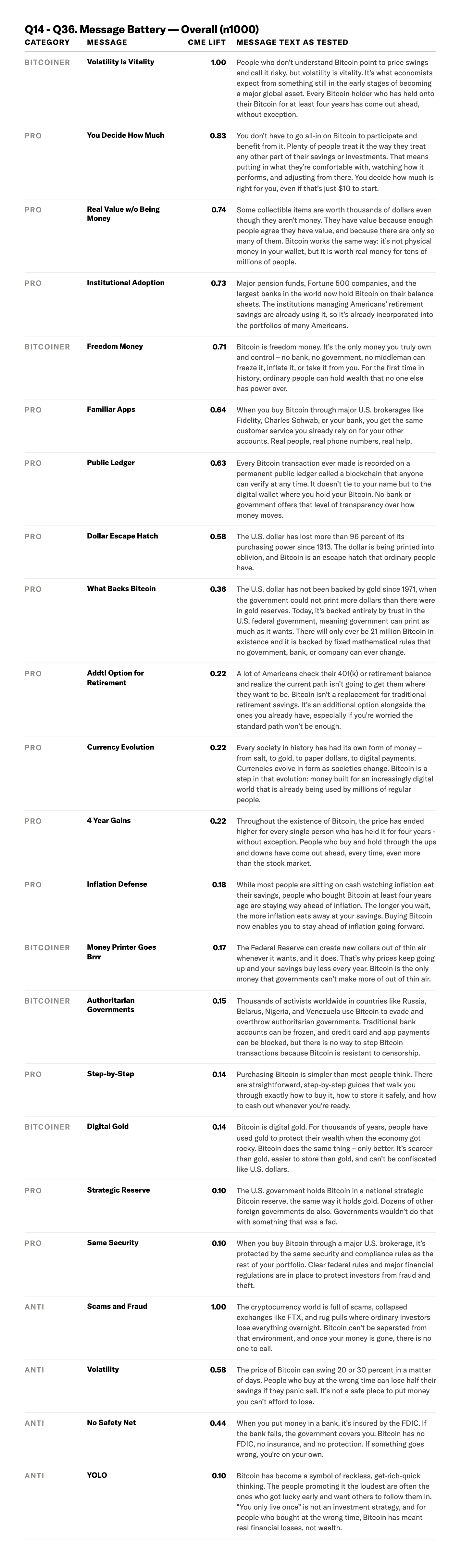
The primary concerns voiced by parties interested in Bitcoin were, in the following order: control, safety (proven performance), security, access, and ease of use. In addressing these concerns, potential holders resonated with messages about Bitcoin as an asset that empowers users to take greater ownership/control of their financial futures. Messages such as “You decide how much,” “You decide how,” and “You can track the activity yourself” were especially popular in the focus groups. Audiences also resonated with messages about volatility as normal for an early-stage asset.
2. The Best Messenger: Everyday Bitcoiners
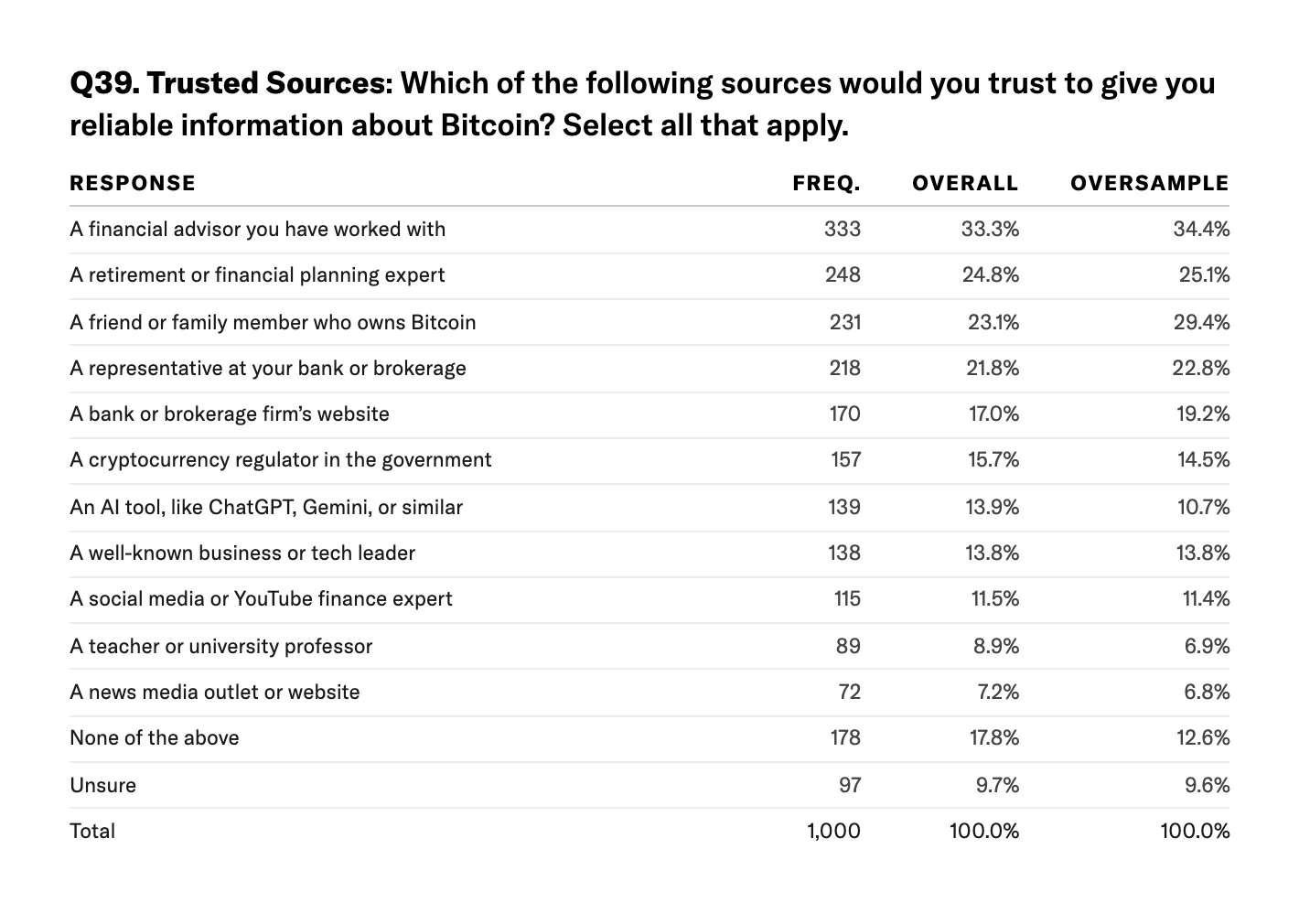
According to the final survey (and corroborated by all focus groups), the most powerful advocate for the next wave of Bitcoin adoption is not an influencer or CEO but Bitcoiners who are trusted friends, family members, or financial advisors sharing their own experience with Bitcoin.
3. Rising Interest
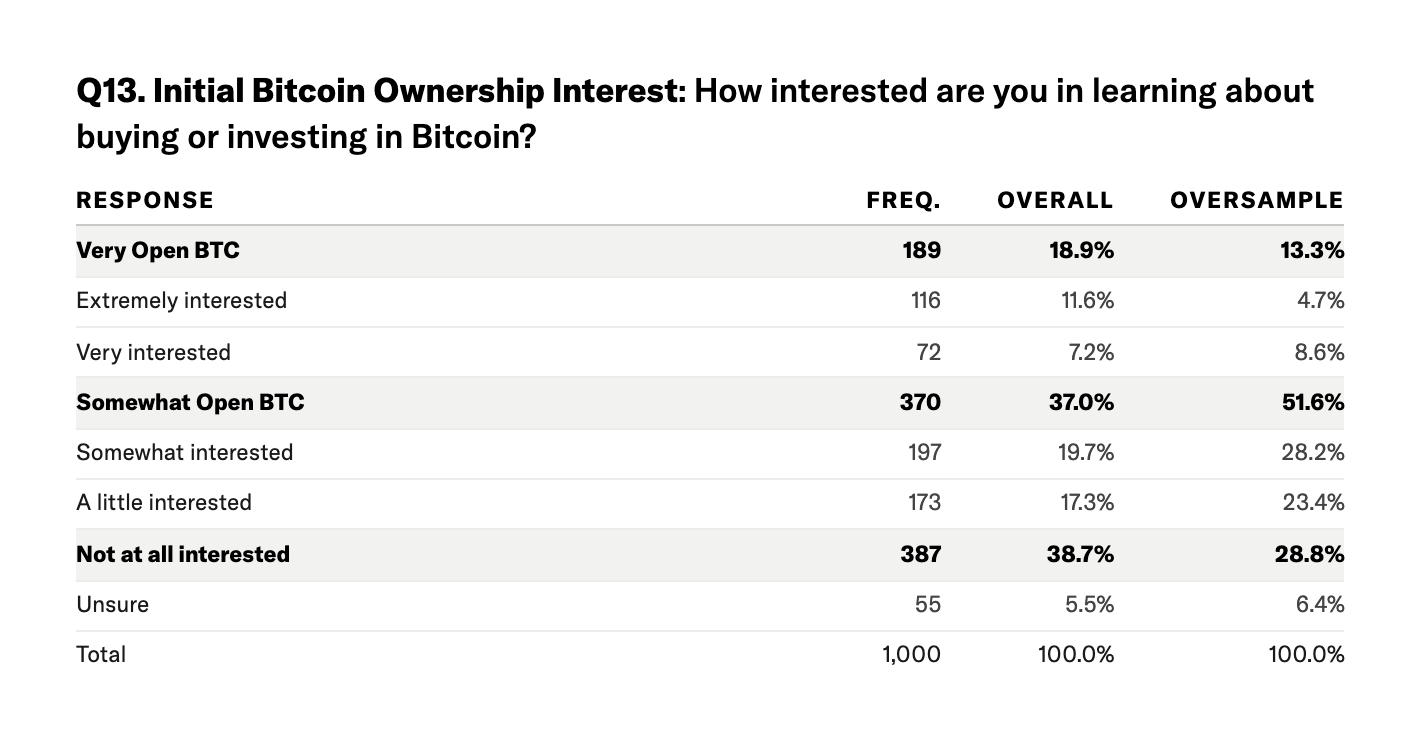
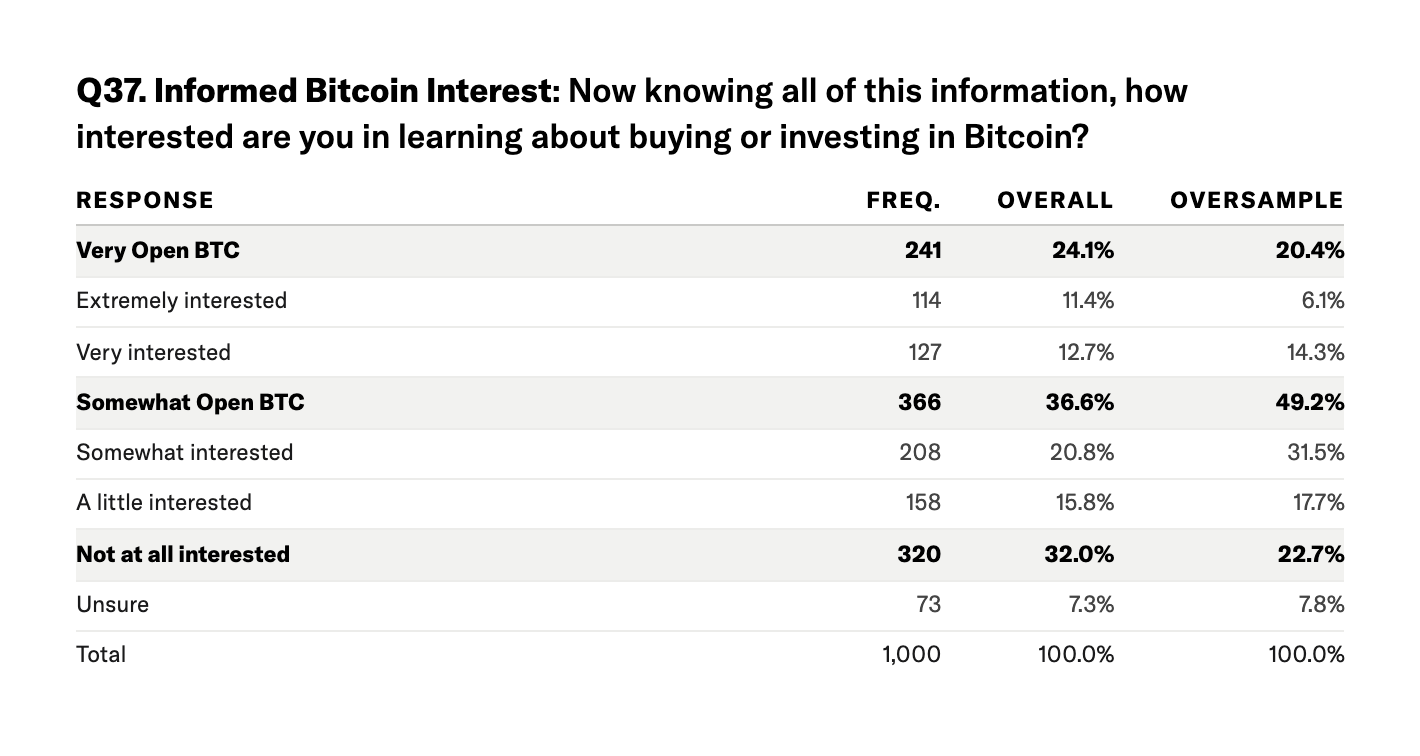
After presenting 19 Bitcoin messages in the final survey, close to two-thirds of the respondents wanted to learn more about owning Bitcoin, with “not interested at all” falling from 39% to 32% and “very or extremely interested” rising from 19% to 24%, a net shift from both categories of about 12 points toward interest.
These survey results corroborated what Cygnal heard in the focus groups: in preparing for the next wave of Bitcoin adoption, the goal should be to address people’s concerns about the asset instead of focusing on the generic merits of Bitcoin, as important as they are.
Research Design
The findings of this report draw on qualitative and quantitative work conducted by Cygnal from March – June 2026.
Phase 1: National Segmentation Survey
Phase 1 was a national segmentation survey of 1,516 registered voters ages 18 to 64, fielded March 19-21, 2026, via a blended SMS, online, and live-phone methodology, with results weighted to the national registered-voter population. Its purpose was to map awareness, knowledge, and perceptions of Bitcoin across the electorate and to locate the persuadable middle. A latent class analysis of the weighted data produced a four-class solution: Ideological Rejecters (~30%), Financially Stressed Disengaged (~20%), Curious Fence-Sitters (~32%), and Active Believers (~18%). The segmentation survey signaled whom to talk to and what barriers to probe.
Phase 2: In-Person Focus Groups
Phase 2 was eight in-person focus groups conducted from April 21–28, 2026, four in Columbus, Ohio, and four in Nashville, Tennessee, that included roughly 80 Bitcoin-persuadable non-owners in total.
Each focus group ran 95 minutes and was moderated in person by Cygnal CEO Brent Buchanan. Groups were single-gender and segmented by age and financial situation, drawing on the divides Phase 1 identified as meaningful. Seven groups were screened for neutral baseline impressions of Bitcoin; one Nashville group was screened for negative impressions to test whether that audience was reachable or should be deprioritized.
Each group worked through a common moderator guide covering financial worldview, institutional trust, dollar trust, Federal Reserve knowledge, Bitcoin first impressions, reaction to a shared Bitcoin definition, learning sources, and a tagline activity testing early message concepts. This phase came second because the quantitative map showed where the openings were but not the language, metaphors, or trust thresholds behind them. The group discussions surfaced how people actually talk about Bitcoin and generated the raw message concepts the final phase would test at scale.
Phase 3: National Message Validation
Phase 3 was a national message-validation survey testing the messages developed from the focus group findings, fielded May 29 – June 2, 2026, via online panel and SMS to a national sample of 1,000 registered voters ages 18 to 64, with a margin of error of ±3.08% and a cumulative oversample of 832 in the target persuadable audience so movement could be read reliably within the segments that matter. Results were weighted to a national registered-voter 18-to-64 universe. Each of the 23 tested messages was ranked by Cygnal Message Effectivity, a Shapley-value measure of each message’s predictive power on outcome movement. This phase came last because it existed to answer the one question the first two cannot: not who is persuadable or how they talk, but which specific messages actually move opinion, for whom, and by how much? Its output is the empirical foundation for the messaging framework.
Key Findings from Focus Groups and Surveys
The Bitcoin Messages that Resonate
Cygnal tested 19 Bitcoin messages in the final survey. The nine messages that resonated with audiences most are grouped into the four themes below. These themes reflect not only stated interest but also popularity and practicality for well-rounded engagement.
1. Control
Blends the messages “Freedom Money” + “You Decide How Much”
Freedom Money: Bitcoin is freedom money. It’s the only money you truly own and control. No bank, no government, no middleman can freeze it, inflate it, or take it from you. For the first time in history, ordinary people can hold wealth that no one else has power over.
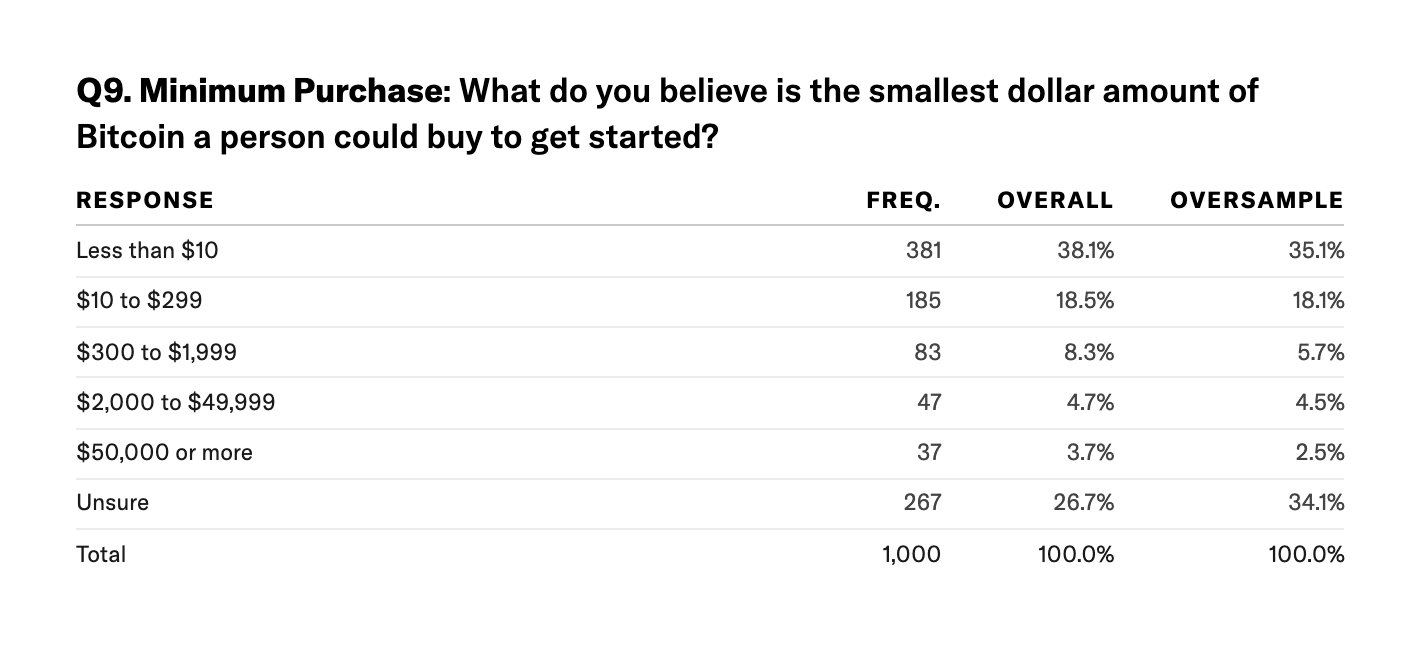
You Decide How Much: You don’t have to go all-in on Bitcoin to participate and benefit from it. Plenty of people treat it the way they treat any other part of their savings or investments. That means putting in what they’re comfortable with, watching how it performs, and adjusting from there. You decide how much is right for you, even if that’s just $10 to start.
2. Safety (Proven Performance)
Blends the messages “Volatility Is Vitality” + “4-Year Gains”
Volatility Is Vitality: People who don’t understand Bitcoin point to price swings and call it risky, but volatility is vitality. It’s what economists expect from something still in the early stages of becoming a major global asset. Every Bitcoin holder who has held onto their Bitcoin for four years has come out ahead, without exception.
4-Year Gains: Throughout the existence of Bitcoin, the price has ended higher for every single person who has held it for four years – without exception. People who buy and hold through the ups and downs have come out ahead, every time… even more than the stock market.
3. Security
Blends the messages “Same Security” + “Institutional Adoption”
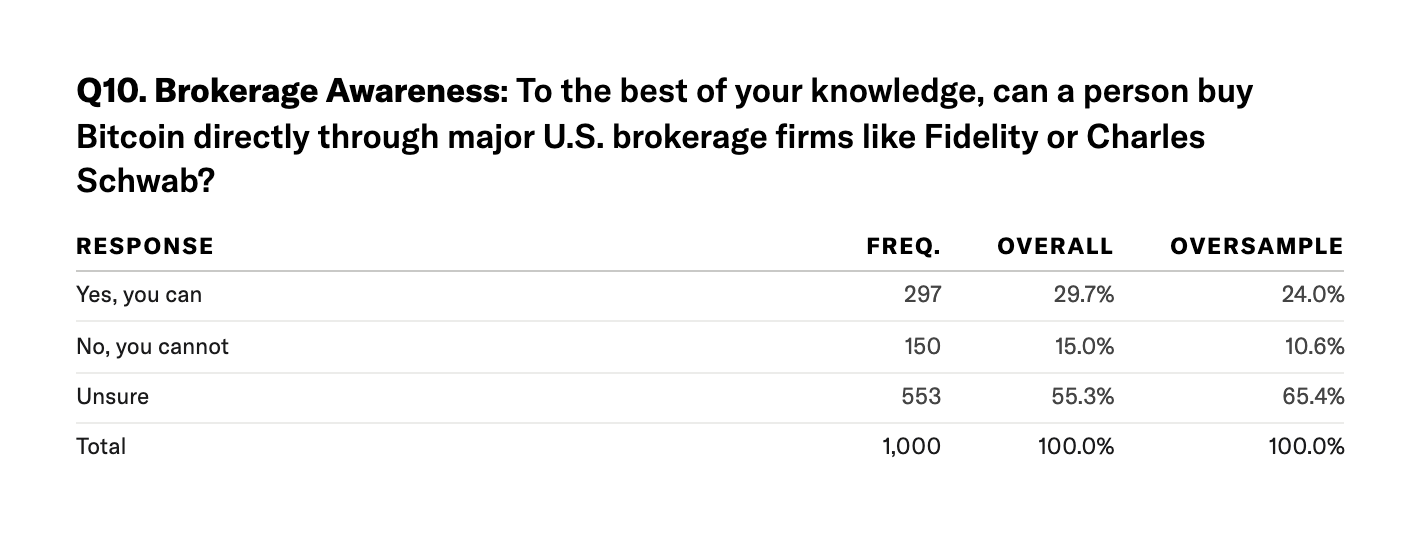
Same Security: When you buy Bitcoin through a major U.S. brokerage, it’s protected by the same security and compliance rules as the rest of your portfolio. Clear federal rules and major financial regulations are in place to protect investors from fraud and theft.
Institutional Adoption: Major pension funds, Fortune 500 companies, and the largest banks in the world now hold Bitcoin on their balance sheets. The institutions managing Americans’ retirement savings are already using it, so it’s already incorporated into the portfolios of many Americans.
4. Access / Ease of Use
Blends the messages “Inflation Defense” + “Familiar Apps” + “Step-by-Step”
Inflation Defense: While most people are sitting on cash watching inflation eat their savings, people who bought Bitcoin at least four years ago are staying ahead of inflation. The longer you wait, the more inflation eats away at your savings. But purchasing Bitcoin has historically enabled holders to stay ahead of inflation.
Familiar Apps / Step-by-Step: When you buy Bitcoin through major U.S. brokerages like Fidelity and Charles Schwab, you get the same customer service you already rely on for your other accounts. These services provide real people, real phone numbers, and real help. In fact, purchasing Bitcoin directly through an exchange is simpler than most people think. There are straightforward, step-by-step guides that walk you through exactly how to buy it, how to store it safely, and how to cash out whenever you’re ready.
A note on “Digital Gold” messaging
“Digital Gold” messaging confused focus group participants, despite them being given time to think through what the term means. Also, on the national survey, “digital gold” terminology ranked close to last.
The Bitcoin Messengers that Resonate
The final survey also assessed the most effective Bitcoin messengers and discovered that trusted peers and local professionals carry the most weight for engaging others about Bitcoin.
Trusted peers and local professionals
Friends and family who already own Bitcoin are among the most powerful advocates. Asked who they would trust for reliable information about Bitcoin, respondents name a financial advisor they have worked with (33%), a retirement or financial planning expert (25%), and a friend or family member who owns Bitcoin (23%), well ahead of any media figure or public official.
Younger family members count
Several participants cited children, grandchildren, or younger siblings as influential in their exposure to Bitcoin.
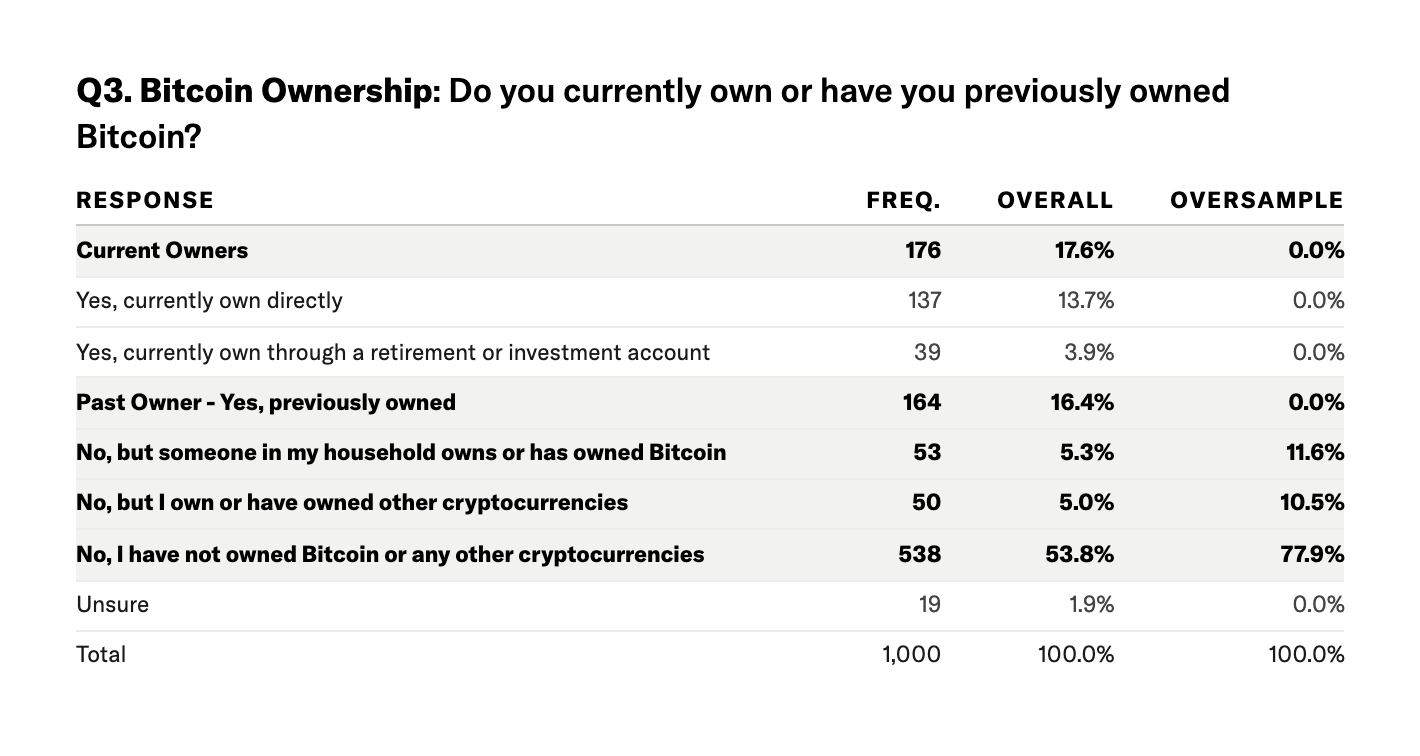
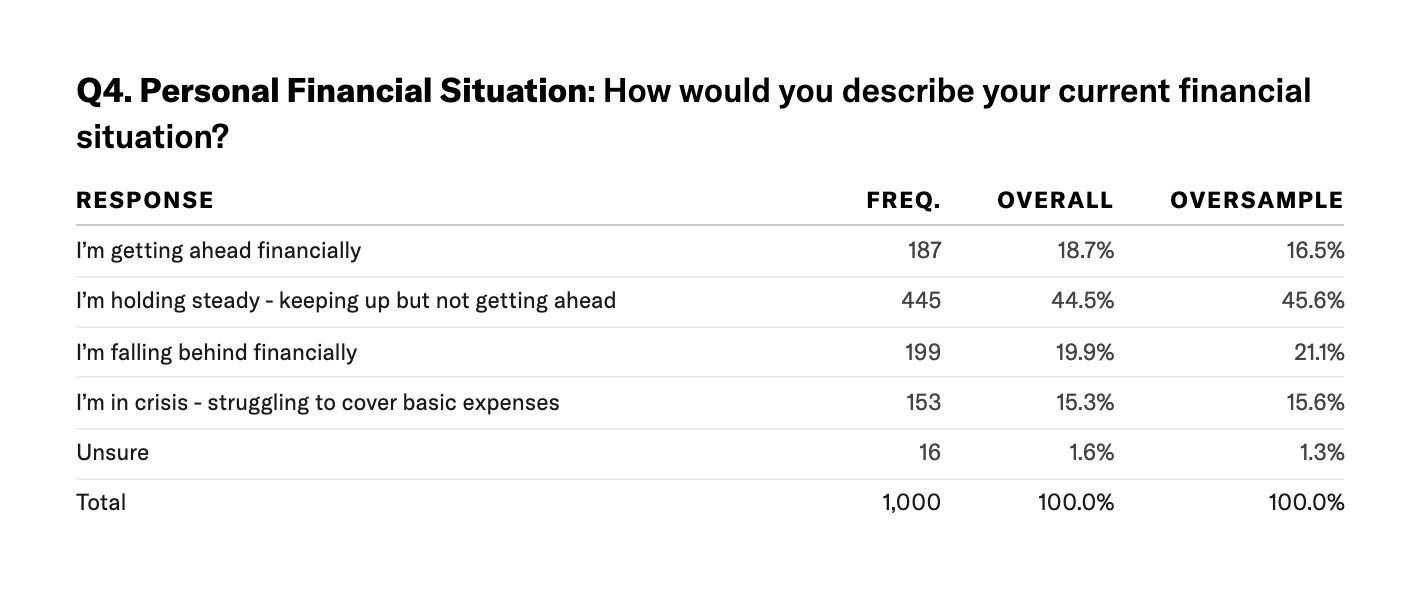
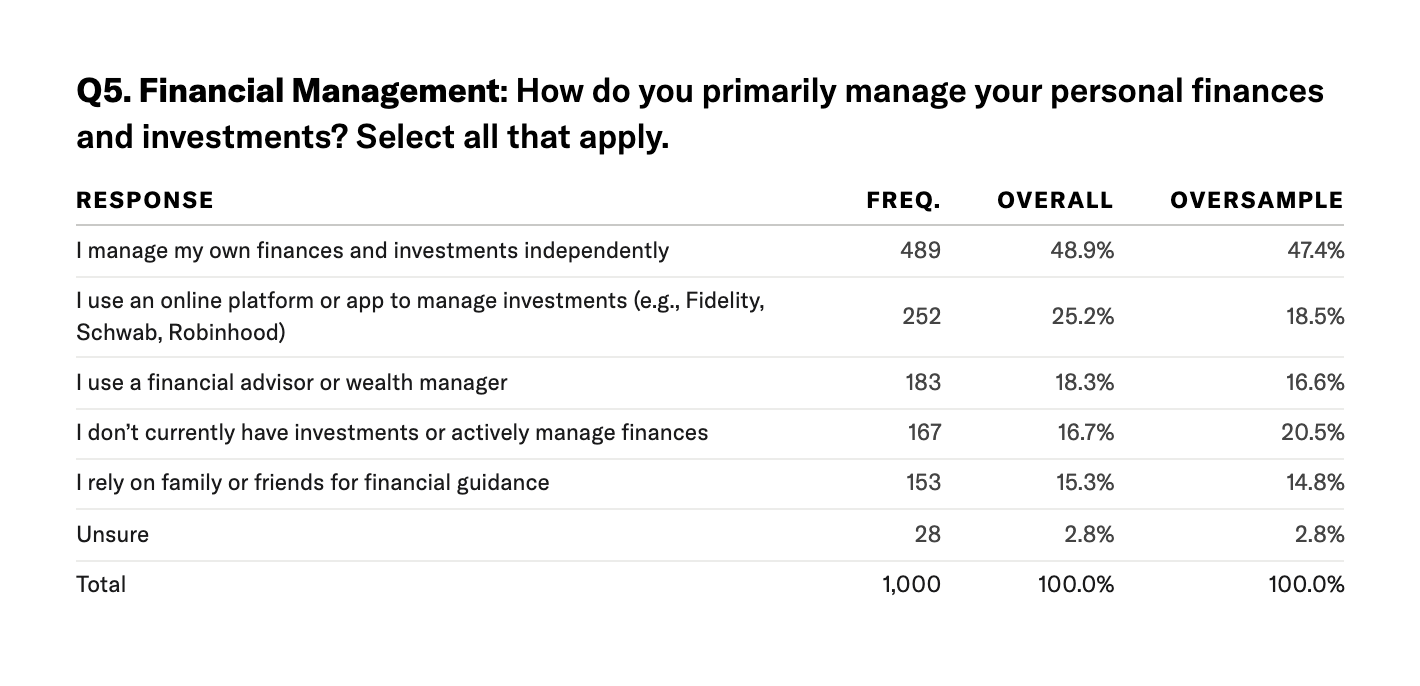
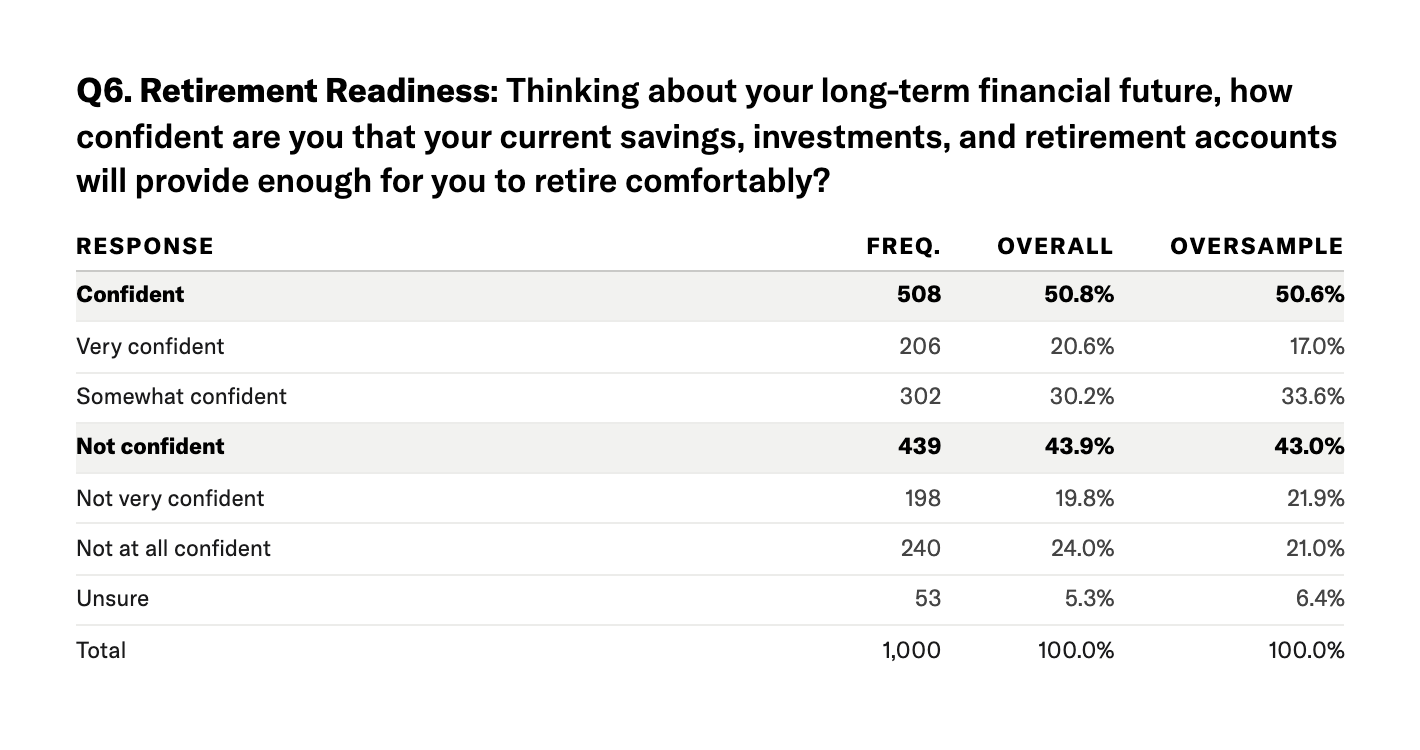
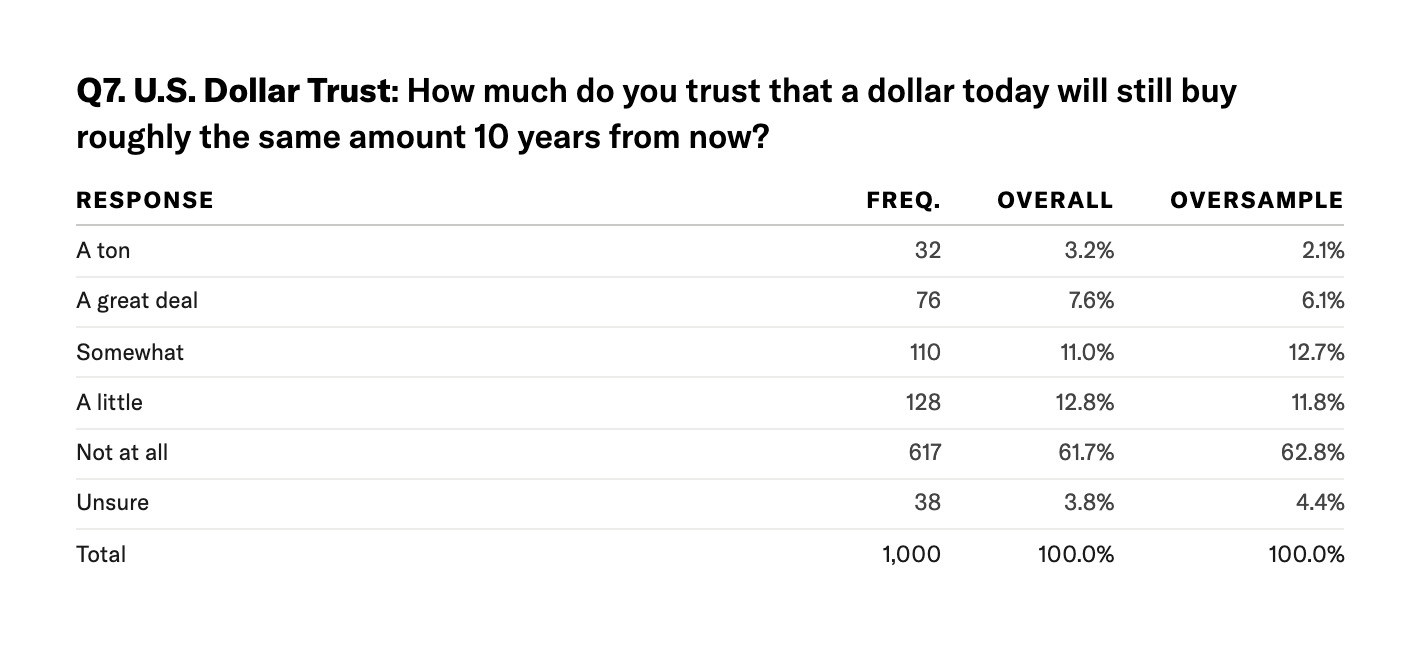
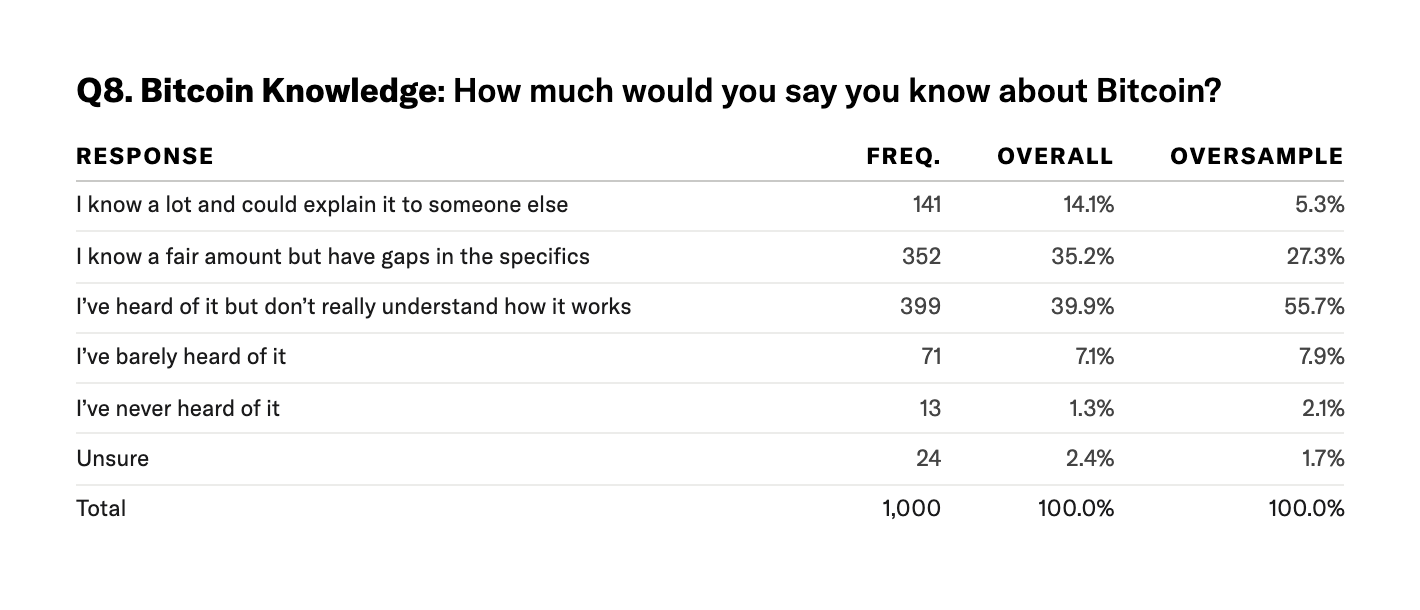
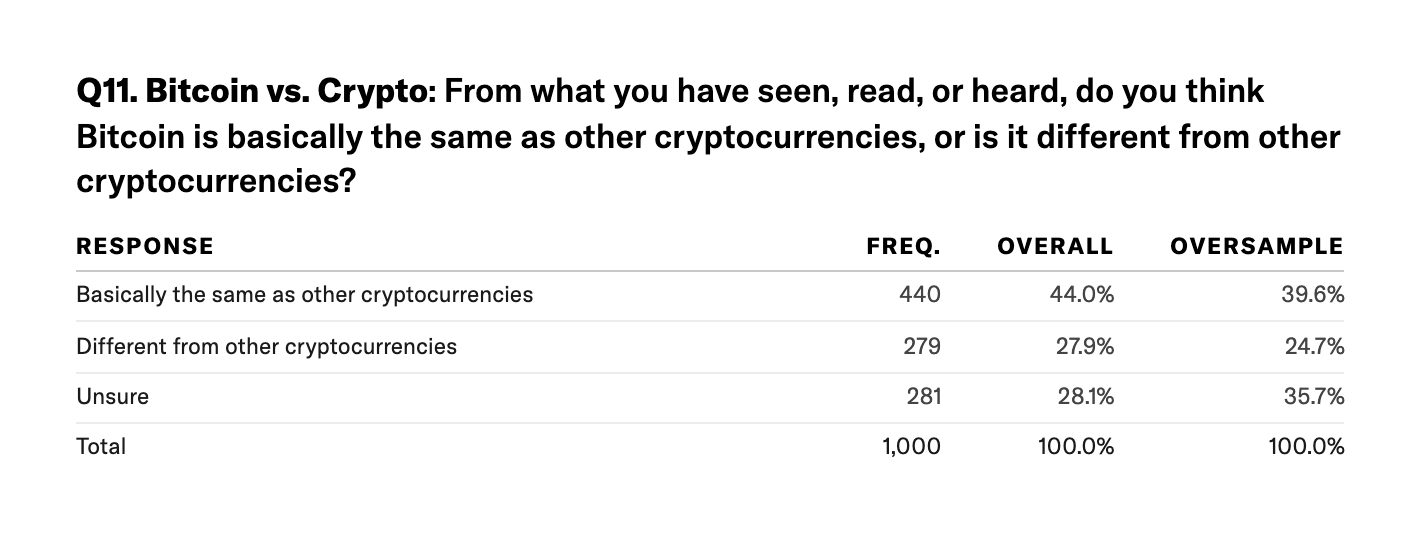
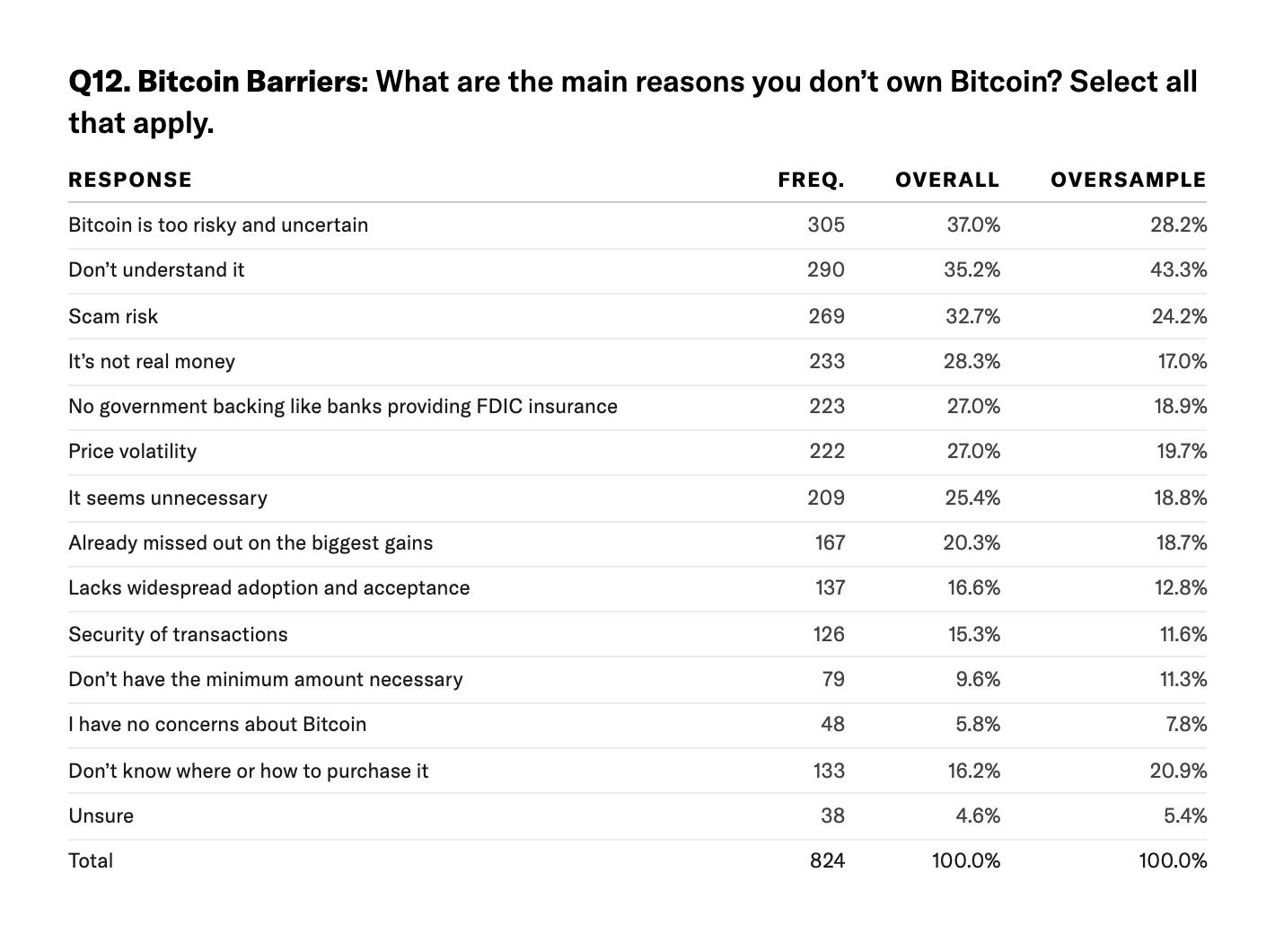
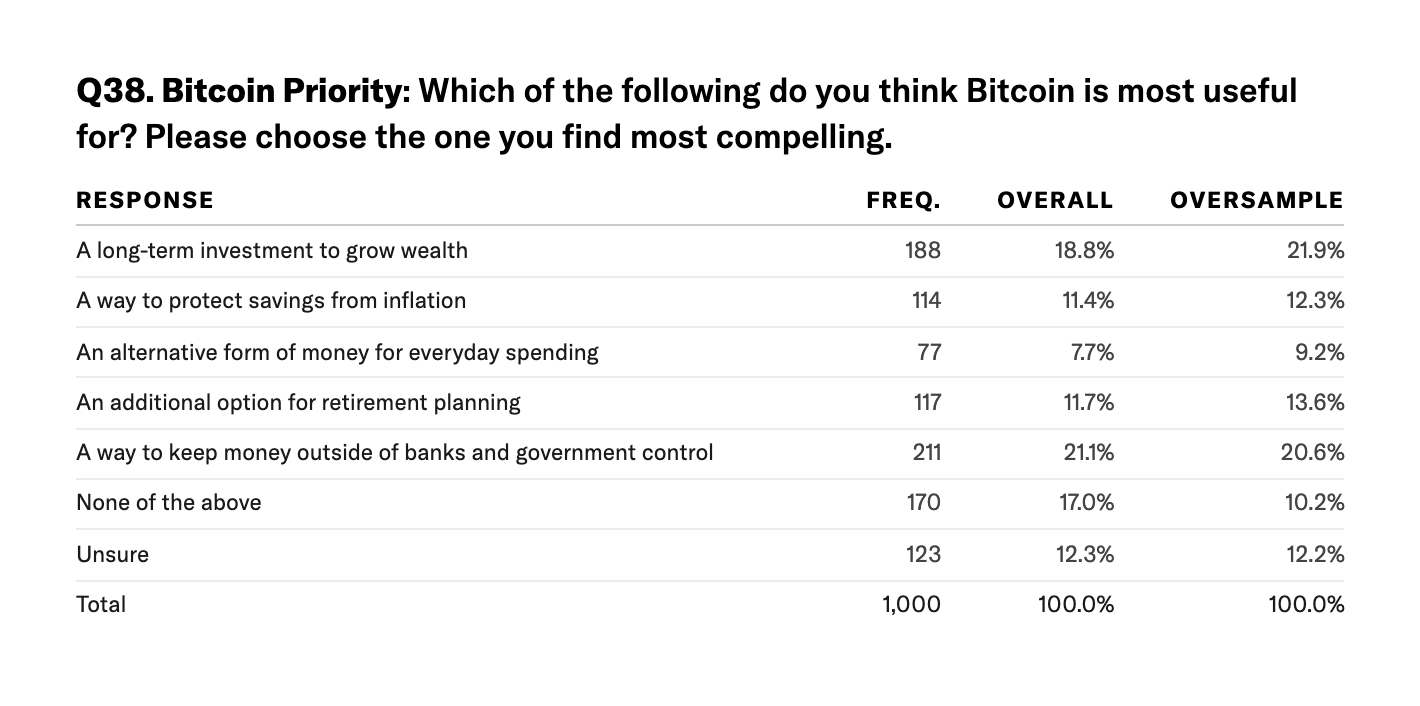
For a comprehensive breakdown of results from the final survey, see Cygnal’s topline findings below:
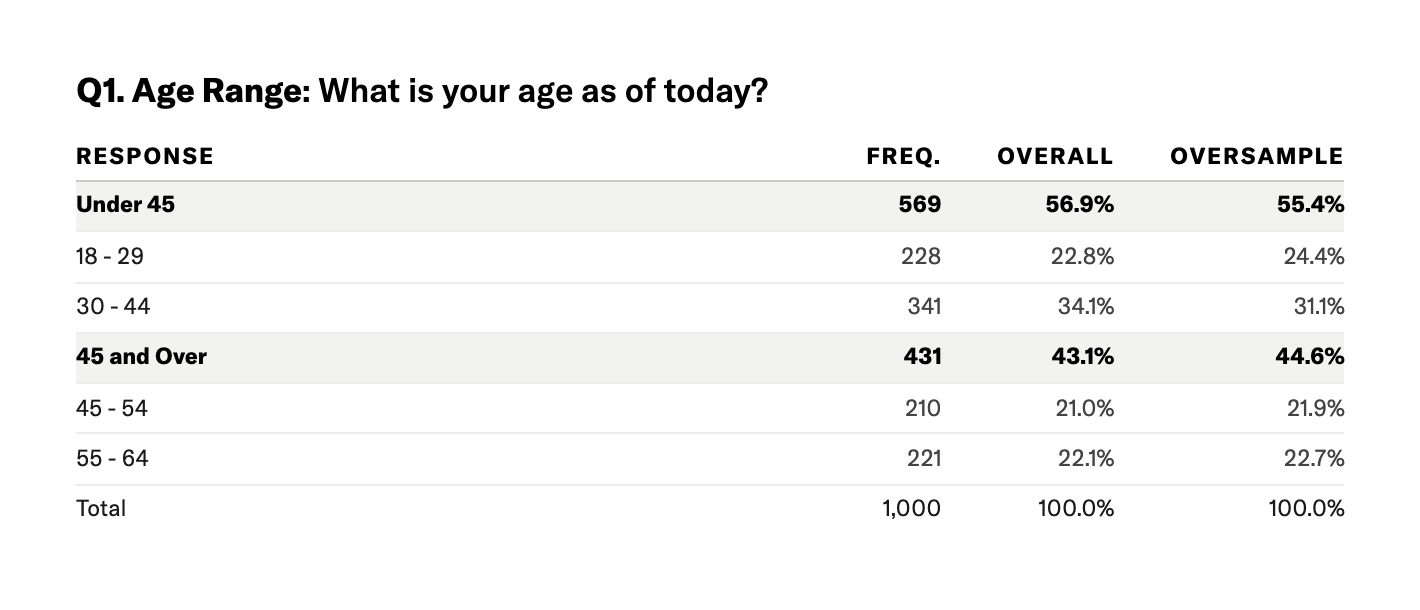
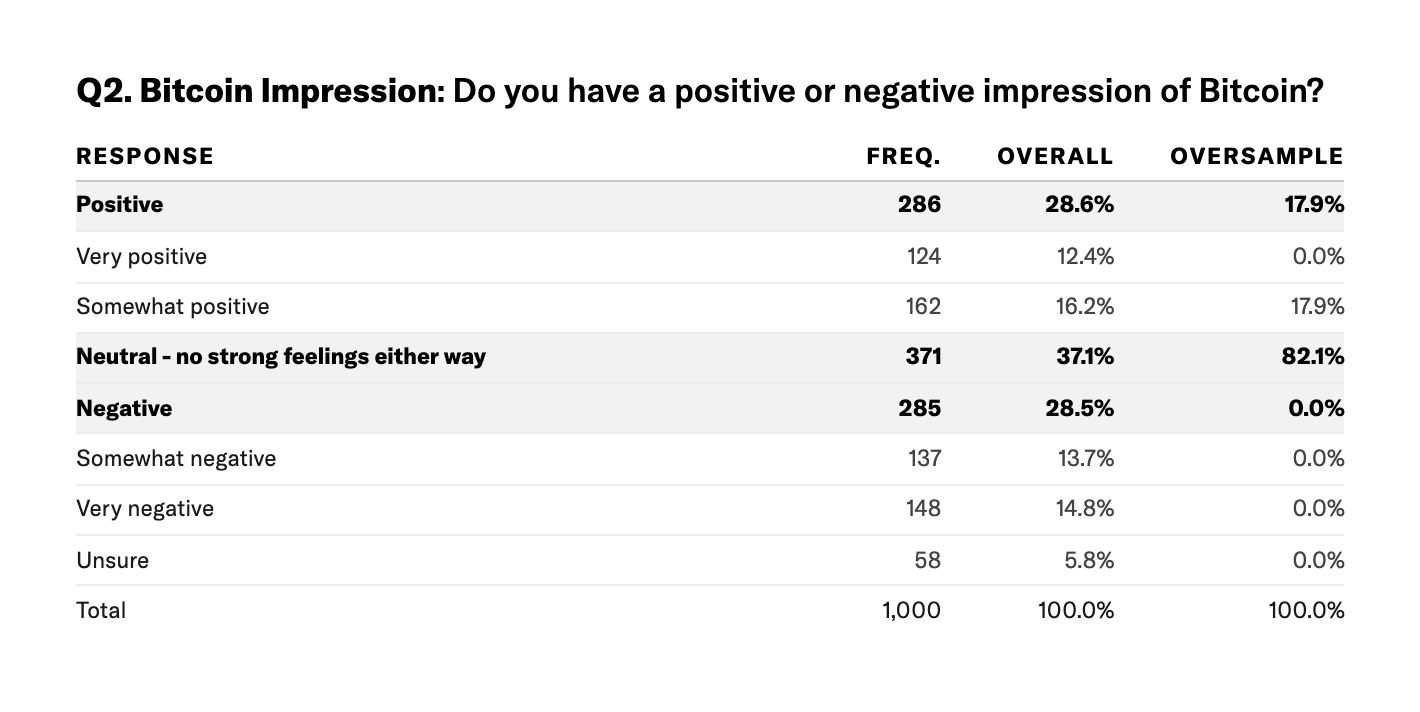
Survey of Registered Voters — Ages 18-64 · National
May 29 – June 2, 2026 | N=1000 | ±3.10%
Methodology
This probabilistic survey was conducted May 29 – June 2, 2026, with 1000 registered voters ages 18-64. It has a margin of error of ±3.10%. Known registered voters were interviewed via online panel and SMS. This survey was weighted to a registered voters ages 18-64 universe.
About our Organizations
Bitcoin Policy Institute is the leading non-profit, non-partisan think tank dedicated to advancing sound Bitcoin policy through research, education, and direct engagement with policymakers.
Based in Washington, DC, the Bitcoin Policy Institute (BPI) has worked since 2021 to bridge the critical knowledge gap between Bitcoin’s technical reality and its policy implications. Our location in the nation’s capital enables us to work directly with Congress, federal agencies, and policymakers to ensure that legislative and regulatory decisions are informed by accurate, unbiased analysis that serves the public interest.
As Bitcoin becomes increasingly central to America’s economic and strategic future — from the proposed Strategic Bitcoin Reserve to its role in energy infrastructure — the need for informed policy has never been more urgent. BPI provides the research, education, and expertise necessary to help America lead in the digital asset revolution while protecting consumers and preserving individual liberty.
Cygnal is an award-winning international polling, public opinion, and predictive analytics firm that pioneered multi-mode polling, text-to-web collection, and emotive analysis. Cygnal consistently ranks as the most accurate firm, and clients rely on Cygnal’s ability to create intelligence for action. Its team members have worked in all 50 states and multiple countries on more than 3,000 corporate, public affairs, and political campaigns.
Neighborhood Bitcoin is a nonprofit research and education initiative. Its goal is to identify people interested in using Bitcoin, understand their concerns, and address them through education. The research and education that Neighborhood Bitcoin makes available for free is commissioned to benefit others in their understanding of Bitcoin.