
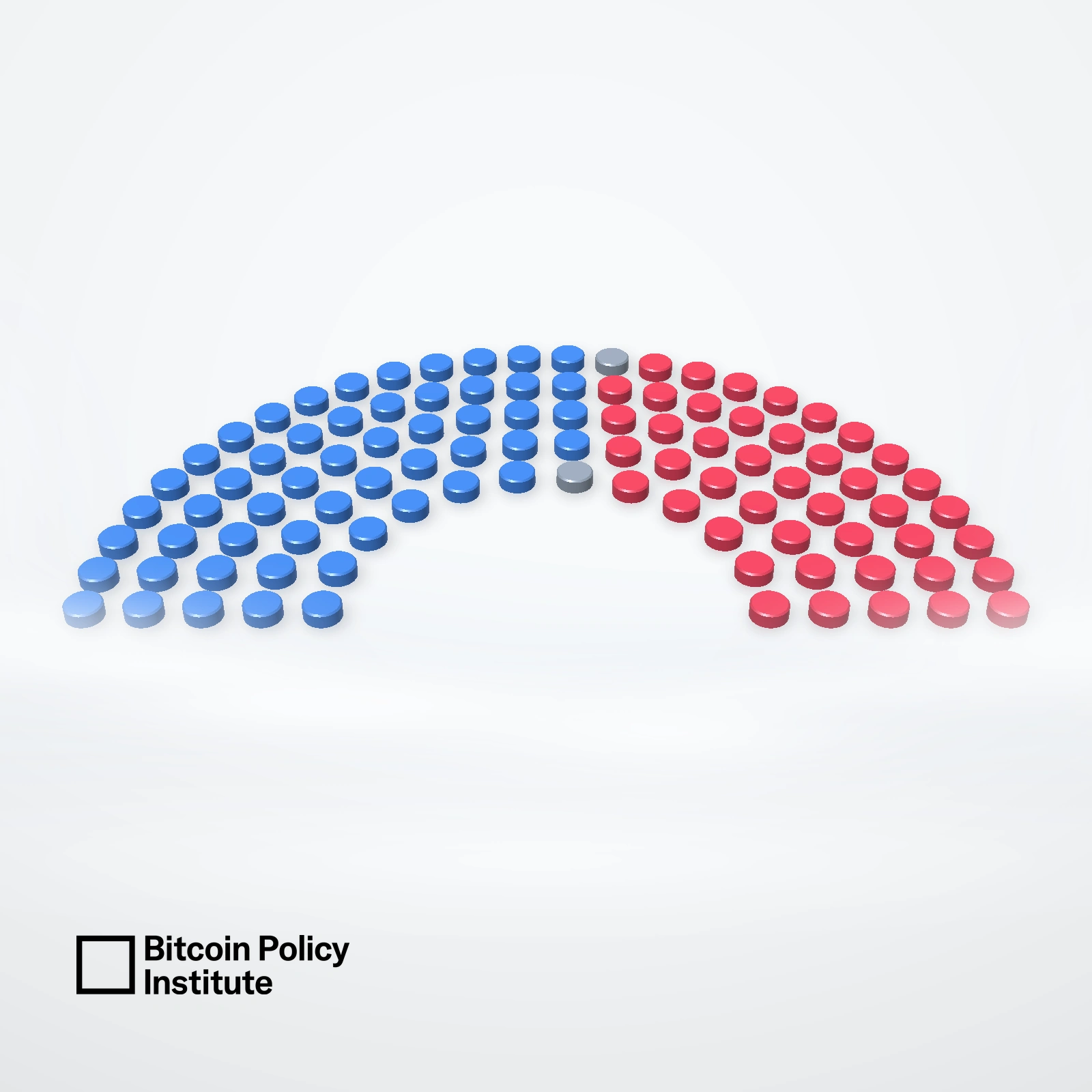
Two years ago, the Trump administration came into office promising to make America the crypto capital of the planet. Yesterday, Americans voted, as they seem to enjoy doing, for change. What does a blue wave say about President Trump's promise and America's take on bitcoin?
1. Affordability was on the ballot.
Affordability defined the election. In one NBC exit poll, 89% of voters called the cost of living a “crucial or major factor in their vote”. In the last Harvard CAPS/Harris survey before the vote, price increases led every other issue.
Prices are in part a question of monetary design — do we inflate away or not? And that's where bitcoin comes in. Bitcoin is a money whose supply no one can inflate at will. It's capped, and new supply is governed by rules, not rulers. A fixed supply does not lower grocery prices. But it does offer savers of any political orientation a unit that no administration can debase.
2. Crypto money did not decide the outcome.
The crypto industry spent about $200 million this cycle. Its largest super PAC network alone spent more than $170 million: about $75 million backing Republicans and $36 million opposing Democrats, against $30 million backing Democrats. Most of that money went to competitive races its candidates lost, Ohio’s Senate seat chief among them.
3. A wide swath of Americans hold bitcoin.
The Nakamoto Project’s national surveys find that bitcoin owners belong to no political tribe. In 2024, ownership was highest among the very liberal (21.9%), then the very conservative (17.6%), then moderates (14.3%); only age and gender strongly predicted it. In 2025, owners still clustered at the ideological center.
Since so many Americans hold bitcoin, across the ideological spectrum, lawmakers still have reason to enact policies that do not threaten their ability to save in bitcoin or spend it.
4. The debanking argument for bitcoin remains strong, and non-partisan.
Debanking is the exclusion of law-abiding enterprises or individuals from financial services because they are politically disfavored or otherwise distasteful. Senator Elizabeth Warren thinks that debanking is a problem. So does President Trump.
And there is, surprise surprise, a bitcoin connection here as well. Because bitcoin is money no one can block you from using, it serves as a useful backup for anyone at risk of being debanked, and an alternative to traditional financial institutions.
5. Trust is low; alternatives are enticing.
Americans have never trusted institutions less. And arguably, those institutions — from higher education to Washington — have failed to earn trust. Though it rotates in degree as parties swap places on the Hill, this erosion in trust remains a broad trend.
Bitcoin, mercifully, was not on the ballot. In a way, it can't be. Because bitcoin is money that lies outside institutions. You can hold it yourself. You can spend it without anyone's permission. For that reason, it remains an enticing alternative for Americans looking for change.